



Weebles Wobble, But They Don’t Fall Down
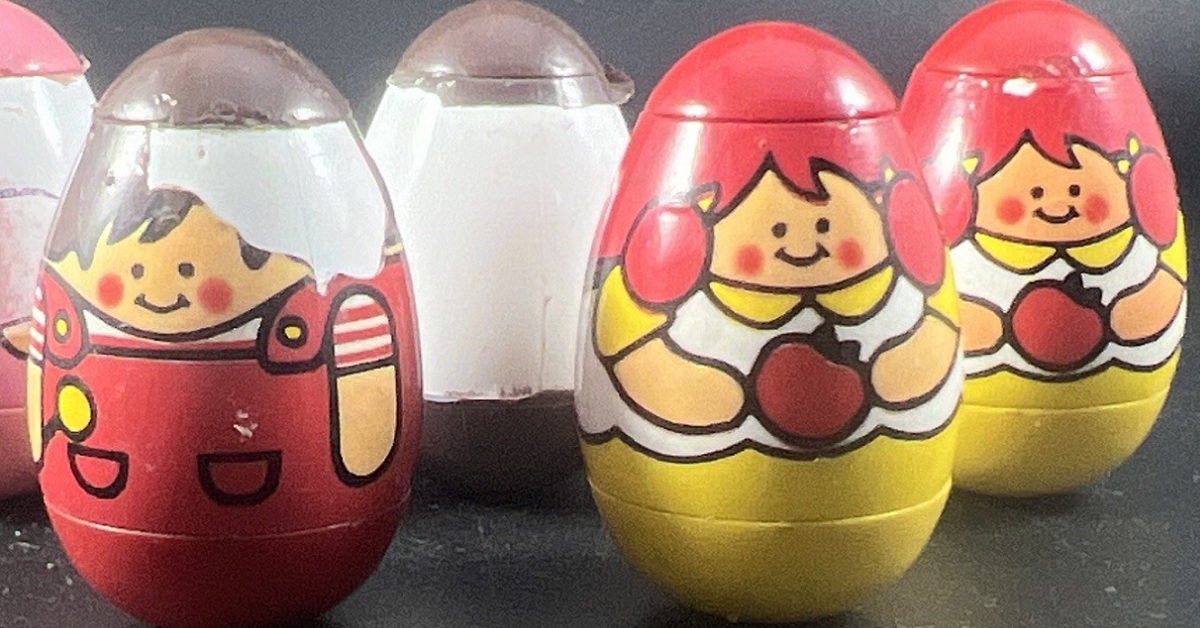
Weebles are egg shaped roly-poly toys that have entertained children with their wobbly fun for nearly 55 years. The toys contain a weighted bottom center so that when someone tilts the toy, the center mass rises and then when the person lets go, gravity returns to its original position without falling over.
To work properly, the Weeble needs a smooth hemisphere on the bottom so that it can roll around, and it needs to be the same shape along its vertical axis to keep it balanced. The inside of the toy contains two types of solid material with the higher density material on the bottom. The last important component is that the bottom must be the only position in which it can achieve its equilibrium.
This simple but clever design led to the toy’s catchphrase, “Weebles wobble, but they don’t fall down.” Advertising executive J. Mitchell Reed coined the line, which was used in advertising from its introduction in the early 1970s through the relaunches in the 2000s.
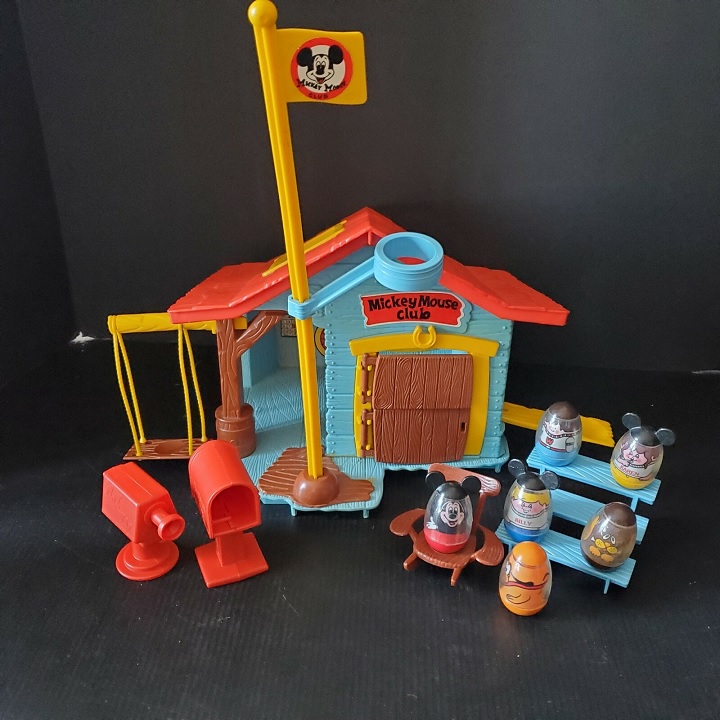
The Weeble first hit the market in 1971 as a part of Milton Bradley’s Playskool line, and continued under Playskool after Hasbro acquired the subsidiary in 1984. Many themed versions of the Weeble have been released over the years including a playground, circus, western, haunted house, camper, and licensed versions based on the Mickey Mouse Club and Tarzan.
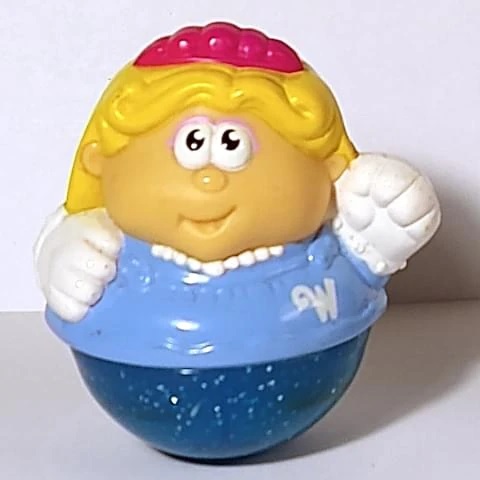
When the Weeble was revived in the 2000s, there were releases of a Weemobile, Weebly Wobbly Tree House, and several other designs. Playskool introduced a storybook line with characters like Cinderella, Hansel and Gretel, Goldilocks, and Jack and Jill.

Popular Topics
Overstreet Access Quick Links
Weebles Wobble, But They Don’t Fall Down
Weebles are egg shaped roly-poly toys that have entertained children with their wobbly fun for nearly 55 years. The toys contain a weighted bottom center so that when someone tilts the toy, the center mass rises and then when the person lets go, gravity returns to its original position without falling over.
To work properly, the Weeble needs a smooth hemisphere on the bottom so that it can roll around, and it needs to be the same shape along its vertical axis to keep it balanced. The inside of the toy contains two types of solid material with the higher density material on the bottom. The last important component is that the bottom must be the only position in which it can achieve its equilibrium.
This simple but clever design led to the toy’s catchphrase, “Weebles wobble, but they don’t fall down.” Advertising executive J. Mitchell Reed coined the line, which was used in advertising from its introduction in the early 1970s through the relaunches in the 2000s.
The Weeble first hit the market in 1971 as a part of Milton Bradley’s Playskool line, and continued under Playskool after Hasbro acquired the subsidiary in 1984. Many themed versions of the Weeble have been released over the years including a playground, circus, western, haunted house, camper, and licensed versions based on the Mickey Mouse Club and Tarzan.
When the Weeble was revived in the 2000s, there were releases of a Weemobile, Weebly Wobbly Tree House, and several other designs. Playskool introduced a storybook line with characters like Cinderella, Hansel and Gretel, Goldilocks, and Jack and Jill.
Popular Topics
Overstreet Access Quick Links