



Valiant Comics Retro Review: Solar, Man of the Atom: Alpha and Omega
This week, our Off the Presses section is diving into the original Valiant comics line. Valiant told superhero tales within science fiction and fantasy genres with heroes like X-O Manowar, Shadowman, Bloodshot, and Eternal Warrior, humorous characters like Archer and Armstrong, and villains such as Toyo Harada and Master Darque. For these reviews, we are taking a look at some of our favorite characters and issues from Valiant's original line that was published in the early 1990s.
Valiant; $9.95 SC and $25.00 HC
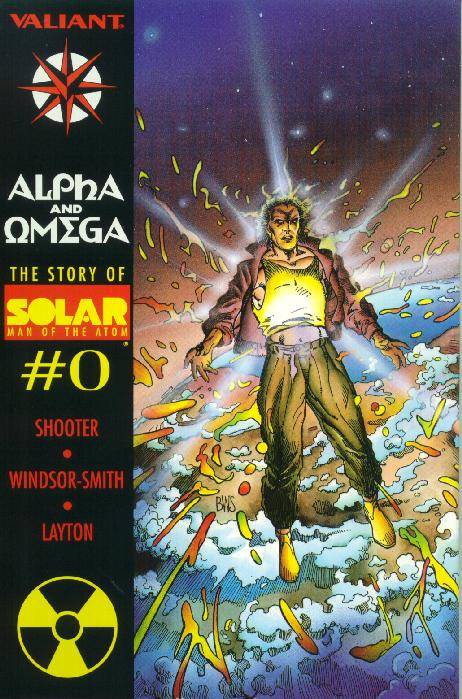
Easily some of the best science fiction to ever appear in a superhero comic book, Solar, Man of the Atom: Alpha and Omega collects the origin story for Solar. Originally serialized as inserts in Solar, Man of the Atom #1–10, it is an epic, morally complex tale born of casual neglect, a catastrophic accident, and a man coming into incalculable powers.
Valiant's introduction of commonly used #0 issues (Archer & Armstrong, Harbinger, and Magnus Robot Fighter, for example) was a first for a major publisher. Alpha and Omega is effectively Solar, Man of the Atom #0.
Building on writer Jim Shooter's long-nurtured love of science and Barry Windsor-Smith's incredible art, the story not only introduced scientist Phil Seleski (Solar) and a support cast, it set in place key elements that would later lead to the successful Unity crossover.
As was a key in Shooter's writing – and this was very much evident in his pre-Unity and Unity-era work at Valiant – Seleski is neither perfect nor entirely flawed. Instead, his own good impulses get him into trouble because he fails to ask that age-old question: "What could possibly go wrong?" He doesn't exist in a world in which everyone is rooting him on. All of the supporting characters have their own limiting humanity as well.
In other words, the characters aren't cardboard cut-outs. They have emotions and motivations that mirror the real world. It just so happens that Seleski, like a few other characters in the early Valiant universe, remembers the Gold Key comic book Doctor Solar, Man of the Atom when he comes into his powers. A bit of trivia here: Shooter wrote Magnus Robot Fighter to pick-up from the original Russ Manning material, but the original Solar was instead a comic book in their existence, just as it was in ours.
Windsor-Smith, if anything, had improved with age. His storytelling brought out the best in Shooter's script and moved from panel to panel in rich cinematic fashion. Colorist JayJay (Janet) Jackson added to its richness.
The hardcover edition of the collection comes in a slipcase. In the back issue market, it's getting increasingly difficult to locate high grade copies of this version. To be clear, they're neither impossible to find, nor very expensive, but copies in grade are certainly not as plentiful as they once were.
The soft cover version, which features the all black cover from Solar, Man of the Atom #10, is easier to locate, though it, too, is becoming harder to find in grades 8.0 and higher.
Both versions come with a fold-out poster of the concluding panel, originally billed as the world's largest comic book panel. It's a devastating end to the story, one that firmly sets up and informs the first story arc in the ongoing series, "Second Death."
Either in the form of the individual issues or this collection, this material is definitely worth tracking down. If you haven't read it previously, I envy you the experience of discovering it.
– J.C. Vaughn

Popular Topics
Overstreet Access Quick Links
Valiant Comics Retro Review: Solar, Man of the Atom: Alpha and Omega
This week, our Off the Presses section is diving into the original Valiant comics line. Valiant told superhero tales within science fiction and fantasy genres with heroes like X-O Manowar, Shadowman, Bloodshot, and Eternal Warrior, humorous characters like Archer and Armstrong, and villains such as Toyo Harada and Master Darque. For these reviews, we are taking a look at some of our favorite characters and issues from Valiant's original line that was published in the early 1990s.
Valiant; $9.95 SC and $25.00 HC
Easily some of the best science fiction to ever appear in a superhero comic book, Solar, Man of the Atom: Alpha and Omega collects the origin story for Solar. Originally serialized as inserts in Solar, Man of the Atom #1–10, it is an epic, morally complex tale born of casual neglect, a catastrophic accident, and a man coming into incalculable powers.
Valiant's introduction of commonly used #0 issues (Archer & Armstrong, Harbinger, and Magnus Robot Fighter, for example) was a first for a major publisher. Alpha and Omega is effectively Solar, Man of the Atom #0.
Building on writer Jim Shooter's long-nurtured love of science and Barry Windsor-Smith's incredible art, the story not only introduced scientist Phil Seleski (Solar) and a support cast, it set in place key elements that would later lead to the successful Unity crossover.
As was a key in Shooter's writing – and this was very much evident in his pre-Unity and Unity-era work at Valiant – Seleski is neither perfect nor entirely flawed. Instead, his own good impulses get him into trouble because he fails to ask that age-old question: "What could possibly go wrong?" He doesn't exist in a world in which everyone is rooting him on. All of the supporting characters have their own limiting humanity as well.
In other words, the characters aren't cardboard cut-outs. They have emotions and motivations that mirror the real world. It just so happens that Seleski, like a few other characters in the early Valiant universe, remembers the Gold Key comic book Doctor Solar, Man of the Atom when he comes into his powers. A bit of trivia here: Shooter wrote Magnus Robot Fighter to pick-up from the original Russ Manning material, but the original Solar was instead a comic book in their existence, just as it was in ours.
Windsor-Smith, if anything, had improved with age. His storytelling brought out the best in Shooter's script and moved from panel to panel in rich cinematic fashion. Colorist JayJay (Janet) Jackson added to its richness.
The hardcover edition of the collection comes in a slipcase. In the back issue market, it's getting increasingly difficult to locate high grade copies of this version. To be clear, they're neither impossible to find, nor very expensive, but copies in grade are certainly not as plentiful as they once were.
The soft cover version, which features the all black cover from Solar, Man of the Atom #10, is easier to locate, though it, too, is becoming harder to find in grades 8.0 and higher.
Both versions come with a fold-out poster of the concluding panel, originally billed as the world's largest comic book panel. It's a devastating end to the story, one that firmly sets up and informs the first story arc in the ongoing series, "Second Death."
Either in the form of the individual issues or this collection, this material is definitely worth tracking down. If you haven't read it previously, I envy you the experience of discovering it.
– J.C. Vaughn
Popular Topics
Overstreet Access Quick Links