



The Messy Creation of Silly Putty
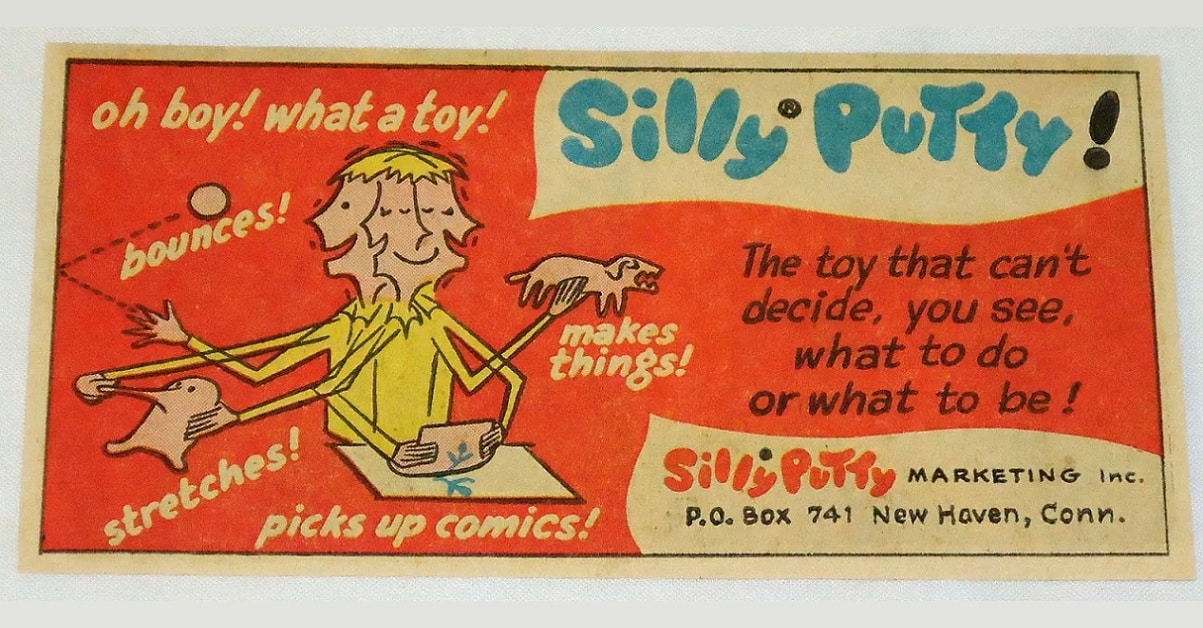
Silly Putty is an artistic toy that can be used to make all sorts of imaginative creations. The toy contains silicone polymers that can be molded into different shapes, it can stretch, bounce, tear, and even take on a liquid consistency. While the toy itself might look uncomplicated, its history is anything but.
The creation of Silly Putty dates back to World War II when Japan invaded countries that produced rubber and kept the material away from Allied Forces. Since the US needed rubber for boots, tires, aircraft parts, gas masks, and more, the government started researching ways to create synthetic rubber.
The creation of Silly Putty is in dispute between Earl Warrick, who worked with Dow Corning, and James Wright, who was with General Electric. Warrick claimed that he and coworker Rob Roy McGregor received the patent first, however the Crayola company has stated that Wright got the patent first.
Regardless of which man had the first patent, each learned that a reaction between silicone oil and boric acid produced a unique new substance. Their independent research discovered that the material stretched more than regular rubber, would bounce if it was dropped, could withstand high temperatures, and didn’t get moldy. But it did not meet the requirements to replace regular rubber, so it was shelved from production.
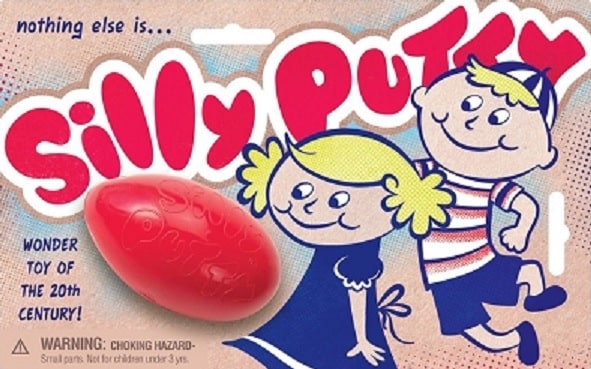
A few years later in 1949, toy store owner Ruth Fallgatter found the putty and contacted marketing consultant Peter C.L. Hodgson. Together they sold the putty as a toy and though it did well, Fallgatter decided not to continue offering it in her store. Hodgson did pursue further sales by naming it Silly Putty and packaging small portions of it into plastic eggs. Sales started slowly until it was mentioned in a New Yorker article, then Hodgson was slammed with orders for Silly Putty.
Production took a hit in 1951 during the Korean War when silicone was being rationed for the war effort, but things were back on track a year later. Silly Putty really took off as a toy for kids between 6 to 12 years old (it was originally a novelty item for adults) and Hodgson aired his first TV commercial in ’57 during an episode of Howdy Doody Show. It didn’t take long for the toy to become a worldwide sensation and was even taken into orbit by Apollo 8 in ’68.
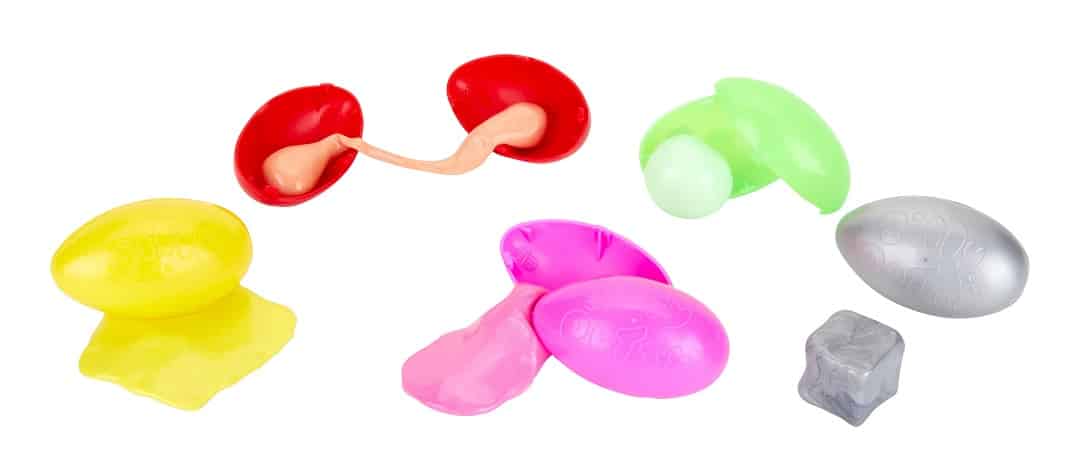
After Hodgson died in ’76, Crayola acquired the rights to Silly Putty. Crayola began to experiment with the product, adding more colors to the line and even creating a glow in the dark version in the early ‘90s.

Popular Topics
Overstreet Access Quick Links
The Messy Creation of Silly Putty
Silly Putty is an artistic toy that can be used to make all sorts of imaginative creations. The toy contains silicone polymers that can be molded into different shapes, it can stretch, bounce, tear, and even take on a liquid consistency. While the toy itself might look uncomplicated, its history is anything but.
The creation of Silly Putty dates back to World War II when Japan invaded countries that produced rubber and kept the material away from Allied Forces. Since the US needed rubber for boots, tires, aircraft parts, gas masks, and more, the government started researching ways to create synthetic rubber.
The creation of Silly Putty is in dispute between Earl Warrick, who worked with Dow Corning, and James Wright, who was with General Electric. Warrick claimed that he and coworker Rob Roy McGregor received the patent first, however the Crayola company has stated that Wright got the patent first.
Regardless of which man had the first patent, each learned that a reaction between silicone oil and boric acid produced a unique new substance. Their independent research discovered that the material stretched more than regular rubber, would bounce if it was dropped, could withstand high temperatures, and didn’t get moldy. But it did not meet the requirements to replace regular rubber, so it was shelved from production.
A few years later in 1949, toy store owner Ruth Fallgatter found the putty and contacted marketing consultant Peter C.L. Hodgson. Together they sold the putty as a toy and though it did well, Fallgatter decided not to continue offering it in her store. Hodgson did pursue further sales by naming it Silly Putty and packaging small portions of it into plastic eggs. Sales started slowly until it was mentioned in a New Yorker article, then Hodgson was slammed with orders for Silly Putty.
Production took a hit in 1951 during the Korean War when silicone was being rationed for the war effort, but things were back on track a year later. Silly Putty really took off as a toy for kids between 6 to 12 years old (it was originally a novelty item for adults) and Hodgson aired his first TV commercial in ’57 during an episode of Howdy Doody Show. It didn’t take long for the toy to become a worldwide sensation and was even taken into orbit by Apollo 8 in ’68.
After Hodgson died in ’76, Crayola acquired the rights to Silly Putty. Crayola began to experiment with the product, adding more colors to the line and even creating a glow in the dark version in the early ‘90s.
Popular Topics
Overstreet Access Quick Links