



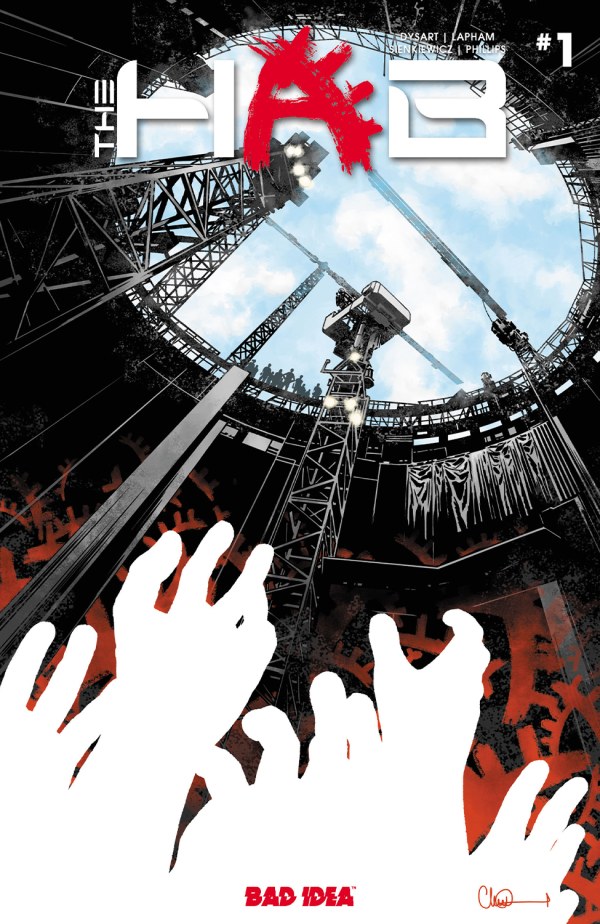
The Hab #1
Bad Idea; $5.99
Some post-apocalyptic comics throw readers directly into chaos and spend the rest of the issue explaining how the world collapsed. The Hab #1 takes a different approach. It gives you just enough information to understand the situation while intentionally leaving massive questions hanging over everything.
Written by Joshua Dysart with artwork by David Lapham and Bill Sienkiewicz, the series opens inside a sealed survival habitat built by billionaire Tuttle Barrows long before civilization began collapsing. The facility was designed to survive the end of the world, but it quickly becomes obvious that surviving outside threats may not be the group's biggest problem anymore.
What immediately works about the issue is how naturally the world-building is handled. The comic doesn't dump pages of exposition on the reader. Instead, the structure of the habitat, the personalities inside it, and the growing sense of isolation are introduced piece by piece. By the time the issue settles into its central mystery, you already understand the tension holding the place together.
At the same time, the book leaves one enormous question hanging over every scene: What actually happened to the world?
The issue gives hints, but never enough to fully explain the collapse outside the habitat walls. That uncertainty becomes part of the atmosphere. Communication issues, paranoia, illness, and strange hallucinations all start stacking on top of each other, making it difficult to tell what's truly happening and what may be unraveling psychologically inside the facility.
The set up gave me flashes of several different things while reading it. There's some of the contained survival tension of the Fallout streaming series and Paradise, mixed with old school post-apocalyptic science fiction energy that reminded me of films like Damnation Alley. Oddly enough, I even thought about the 1976 kids sci-fi series Ark II for a moment. Maybe it's the isolated survival-community atmosphere those stories share. Whatever the exact comparison is, The Hab #1 taps into that same feeling of people trying to preserve order while the world outside has already broken beyond repair.
Visually, the book has a heavy atmosphere from the start. Lapham's storytelling keeps the characters grounded while Sienkiewicz's influence adds an uneasy edge that makes the hallucination sequences and psychological tension hit harder. Color work from Bill Crabtree and Matt Hollingsworth adds to the cold, claustrophobic mood running through the issue.
What really surprised me is how invested I became in the characters by the end of the first issue. The relationships feel believable, the tension between personalities works, and there's enough emotional weight underneath the mystery to keep everything grounded. This is one of those books where I almost want to let a few issues pile up before reading further because the story feels built for a bigger binge experience.
There's also a bigger underlying theme here that makes the story hit harder. Beneath the horror and mystery is a pretty sharp reflection of real world wealth and privilege. The idea that the ultra-rich can exploit the world, profit from its collapse, and then retreat safely into protected bunkers while everyone else suffers gives the comic an uncomfortable relevance. Whether the series ultimately leans more into sickness, psychological breakdown, or full cosmic horror, the setup already feels massive in scope.
There are moments where you can easily imagine this story becoming a streaming series someday. The contained setting, layered mystery, paranoia, and escalating dread feel perfect for that kind of adaptation. There's a lot of creepiness here, but also a lot of human drama driving the story underneath it.
What makes the debut compelling is that it refuses to hand readers all the answers. The characters themselves clearly don't fully understand what's happening, and the comic puts the reader directly into that uncertainty alongside them. Instead of feeling frustrated, it actually pulls you deeper into the mystery.
There are also hints that the story could evolve into something darker and more infection-driven later on. Between the illness spreading through the habitat and the increasingly distorted reality some characters experience, there are moments that almost hint toward the psychological collapse found in films like 28 Days Later, The Crazies, or Doomsday. But the issue never fully commits to that direction yet, which makes it feel unpredictable.
The Hab #1 is a strong introduction built around mystery, isolation, paranoia, and human greed. It doesn't reveal enough to fully understand the bigger picture yet, but that feels intentional. The unanswered questions are what make the first issue linger after you finish it.
This review is based on the second printing of The Hab #1, released on May 27, 2026. The original first printing was released on April 15, 2026. If you missed it the first time around, this second print is absolutely worth picking up at your local comic shop.
–Scott Schlazer

Popular Topics
Overstreet Access Quick Links
The Hab #1
Bad Idea; $5.99
Some post-apocalyptic comics throw readers directly into chaos and spend the rest of the issue explaining how the world collapsed. The Hab #1 takes a different approach. It gives you just enough information to understand the situation while intentionally leaving massive questions hanging over everything.
Written by Joshua Dysart with artwork by David Lapham and Bill Sienkiewicz, the series opens inside a sealed survival habitat built by billionaire Tuttle Barrows long before civilization began collapsing. The facility was designed to survive the end of the world, but it quickly becomes obvious that surviving outside threats may not be the group's biggest problem anymore.
What immediately works about the issue is how naturally the world-building is handled. The comic doesn't dump pages of exposition on the reader. Instead, the structure of the habitat, the personalities inside it, and the growing sense of isolation are introduced piece by piece. By the time the issue settles into its central mystery, you already understand the tension holding the place together.
At the same time, the book leaves one enormous question hanging over every scene: What actually happened to the world?
The issue gives hints, but never enough to fully explain the collapse outside the habitat walls. That uncertainty becomes part of the atmosphere. Communication issues, paranoia, illness, and strange hallucinations all start stacking on top of each other, making it difficult to tell what's truly happening and what may be unraveling psychologically inside the facility.
The set up gave me flashes of several different things while reading it. There's some of the contained survival tension of the Fallout streaming series and Paradise, mixed with old school post-apocalyptic science fiction energy that reminded me of films like Damnation Alley. Oddly enough, I even thought about the 1976 kids sci-fi series Ark II for a moment. Maybe it's the isolated survival-community atmosphere those stories share. Whatever the exact comparison is, The Hab #1 taps into that same feeling of people trying to preserve order while the world outside has already broken beyond repair.
Visually, the book has a heavy atmosphere from the start. Lapham's storytelling keeps the characters grounded while Sienkiewicz's influence adds an uneasy edge that makes the hallucination sequences and psychological tension hit harder. Color work from Bill Crabtree and Matt Hollingsworth adds to the cold, claustrophobic mood running through the issue.
What really surprised me is how invested I became in the characters by the end of the first issue. The relationships feel believable, the tension between personalities works, and there's enough emotional weight underneath the mystery to keep everything grounded. This is one of those books where I almost want to let a few issues pile up before reading further because the story feels built for a bigger binge experience.
There's also a bigger underlying theme here that makes the story hit harder. Beneath the horror and mystery is a pretty sharp reflection of real world wealth and privilege. The idea that the ultra-rich can exploit the world, profit from its collapse, and then retreat safely into protected bunkers while everyone else suffers gives the comic an uncomfortable relevance. Whether the series ultimately leans more into sickness, psychological breakdown, or full cosmic horror, the setup already feels massive in scope.
There are moments where you can easily imagine this story becoming a streaming series someday. The contained setting, layered mystery, paranoia, and escalating dread feel perfect for that kind of adaptation. There's a lot of creepiness here, but also a lot of human drama driving the story underneath it.
What makes the debut compelling is that it refuses to hand readers all the answers. The characters themselves clearly don't fully understand what's happening, and the comic puts the reader directly into that uncertainty alongside them. Instead of feeling frustrated, it actually pulls you deeper into the mystery.
There are also hints that the story could evolve into something darker and more infection-driven later on. Between the illness spreading through the habitat and the increasingly distorted reality some characters experience, there are moments that almost hint toward the psychological collapse found in films like 28 Days Later, The Crazies, or Doomsday. But the issue never fully commits to that direction yet, which makes it feel unpredictable.
The Hab #1 is a strong introduction built around mystery, isolation, paranoia, and human greed. It doesn't reveal enough to fully understand the bigger picture yet, but that feels intentional. The unanswered questions are what make the first issue linger after you finish it.
This review is based on the second printing of The Hab #1, released on May 27, 2026. The original first printing was released on April 15, 2026. If you missed it the first time around, this second print is absolutely worth picking up at your local comic shop.
–Scott Schlazer
Popular Topics
Overstreet Access Quick Links