



RETRO REVIEW: The Sentry
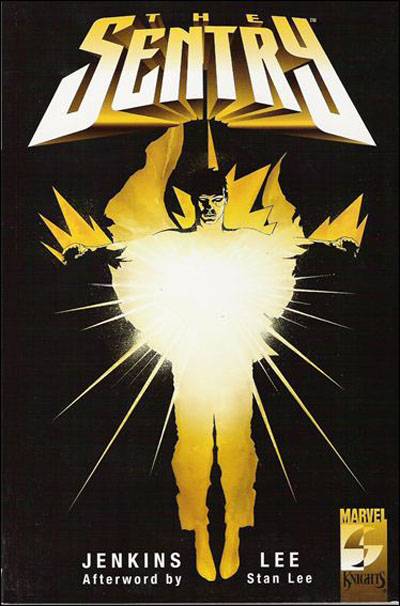
Marvel Comics; $29.99
When Joe Quesada and Jimmy Palmiotti came down from New York and talked to those of us on the Overstreet staff at the time about what they had planned for their Marvel Knights imprint, The Inhumans was the one that I didn’t see how it could work. I had loved Jae Lee’s art on his own Hellshock, but to say it didn’t come out frequently would be an understatement. I remember Jimmy pulling me aside, and he said, “Trust me.”
Of course he was right.
Writer Paul Jenkins and Lee took the visually striking characters and developed them far beyond anything we had seen with them over the entirety of their existence to that point. Complex, dynamic, bold, and compelling,
There were a number of tremendous things that came out of Marvel Knights, but The Inhumans might well be top of the line. For whatever reason, though, I thought the concept of The Sentry sounded goofy. A superhero who was part of the very fabric of the early Marvel universe but who everyone has forgotten?
Yeah, that sounded like a gimmick.
Except that it was Paul Jenkins and Jae Lee once again.
This guy wasn’t just a superhero, he was the pinnacle. The Incredible Hulk was practically his sidekick. He and his wife were best friends with Reed and Sue Richards. He wasn’t just part of the universe, he was woven into its fabric.
The reasons for the memory hole that existed around – and inside – Bob Reynolds, though, was not just a plot element. Instead, it was the crux of the story. In the hands of Jenkins and Lee, the mystery of why everyone from Reed Richards to Stephen Strange had forgotten Reynolds, The Sentry, and his enemy, The Void, was so compelling that Richards had to pursue it, even though he himself warned against it.
The original five-issue series was followed by a series of character- or team-specific one-shots
(The Sentry/Fantastic Four, The Sentry/Spider-Man, The Sentry/Hulk, and The Sentry/X-Men), all of which led to a concluding chapter, The Sentry vs. The Void. It makes for a fantastic read in the trade paperback collection.
The character’s recent appearance in The Thunderbolts film – a pale imitation of the comic story – gave me the spark to reread the trade, and boy, it stands up tremendously well. If you’ve never read it, give it a try. If you’re already familiar with it, maybe it’s time for a reread.
– J.C. Vaughn

Popular Topics
Overstreet Access Quick Links
RETRO REVIEW: The Sentry
Marvel Comics; $29.99
When Joe Quesada and Jimmy Palmiotti came down from New York and talked to those of us on the Overstreet staff at the time about what they had planned for their Marvel Knights imprint, The Inhumans was the one that I didn’t see how it could work. I had loved Jae Lee’s art on his own Hellshock, but to say it didn’t come out frequently would be an understatement. I remember Jimmy pulling me aside, and he said, “Trust me.”
Of course he was right.
Writer Paul Jenkins and Lee took the visually striking characters and developed them far beyond anything we had seen with them over the entirety of their existence to that point. Complex, dynamic, bold, and compelling,
There were a number of tremendous things that came out of Marvel Knights, but The Inhumans might well be top of the line. For whatever reason, though, I thought the concept of The Sentry sounded goofy. A superhero who was part of the very fabric of the early Marvel universe but who everyone has forgotten?
Yeah, that sounded like a gimmick.
Except that it was Paul Jenkins and Jae Lee once again.
This guy wasn’t just a superhero, he was the pinnacle. The Incredible Hulk was practically his sidekick. He and his wife were best friends with Reed and Sue Richards. He wasn’t just part of the universe, he was woven into its fabric.
The reasons for the memory hole that existed around – and inside – Bob Reynolds, though, was not just a plot element. Instead, it was the crux of the story. In the hands of Jenkins and Lee, the mystery of why everyone from Reed Richards to Stephen Strange had forgotten Reynolds, The Sentry, and his enemy, The Void, was so compelling that Richards had to pursue it, even though he himself warned against it.
The original five-issue series was followed by a series of character- or team-specific one-shots
(The Sentry/Fantastic Four, The Sentry/Spider-Man, The Sentry/Hulk, and The Sentry/X-Men), all of which led to a concluding chapter, The Sentry vs. The Void. It makes for a fantastic read in the trade paperback collection.
The character’s recent appearance in The Thunderbolts film – a pale imitation of the comic story – gave me the spark to reread the trade, and boy, it stands up tremendously well. If you’ve never read it, give it a try. If you’re already familiar with it, maybe it’s time for a reread.
– J.C. Vaughn
Popular Topics
Overstreet Access Quick Links