



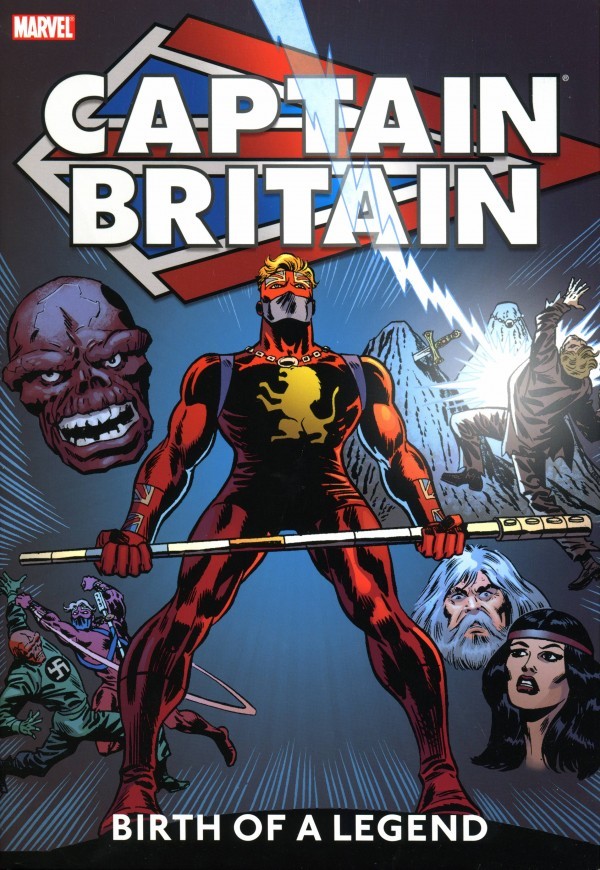
RETRO REVIEW: Captain Britain – Volume 1: Birth of a Legend
Marvel Comics; $39.99
Beginning with Captain Britain #1, cover dated October 13, 1976, Marvel Comics did something it had never done before. It released a weekly color comic in the United Kingdom featuring original material. At that point, Marvel UK was known for its weekly black and white reprint comics and little else (in fact, following the 8-page color segments, the rest of each Captain Britain issue was black and white reprints of other US Marvel series).
Then writer Chris Claremont, artist Herb Trimpe, inker Fred Kida, and editor Larry Lieber were turned loose with Captain Britain, the story of young scientist Brian Braddock. Confronted by evil and in danger of losing his life, Braddock found himself before powerful forces from Britain’s fabled past. They granted him a choice between a sword and an amulet. Rejecting death, he chose the amulet, and he was rewarded with the superpowers of Captain Britain.
As experiments go, it was a mixed bag. The character and his supporting players were fun. Some of them were merely Anglicanized versions of standard American supporting cast standards, but others were distinctly different. The stories took a bit of dip with Claremont’s last issue (#10), but new writer Gary Friedrich picked things up with Captain Britain #15, which put the good Captain squarely in the Marvel Universe with an appearance by Nick Fury. The connection goes even deeper in Captain Britain #16 with the arrival of Captain America and the revelation of the villain behind the problems, the Red Skull. That story in particular is a lot of fun, particularly on this side of the pond where these stories have never been reprinted previously.
Sales must have taken a dip because the color in the series ends with Captain Britain #23, Trimpe’s last issue. It’s a shame because he had been doing great work on the character. Adjusting for black and white, though, Marvel brought in John Buscema for six issues (inked alternately by Tom Palmer and Fred Kida), and they were typical Buscema greatness. A number of other solid creators also worked on the series. Following Captain Britain #39, the series was merged with another Marvel weekly in Super Spider-Man #231, but the characters adventures continued.
This new volume – a great missing piece of Marvel history for most American fans – is very enjoyable. There are two pages (page 21 and particularly page 30) where we can’t imagine why some color corrections weren’t done, but in the end they do little to detract from the enjoyment of Captain Britain’s earliest stories. This volume (and that one that will follow) is a “must have” for Bronze Age-era fans of Marvel and for those who want to know more about the character who has played such an important role in the X-Men side of the Marvel Universe.
And it brings up that age old question of how did Betsy Braddock, Captain Britain’s sister, become Asian as Psylocke…? But that’s a tale for a different collected edition…
By the way, for those interested in following Captain Britain after the contents of this volume, a second volume collected Super Spider-Man and Captain Britain #233-247, Marvel Team-Up #65-66, Hulk Comic #1 and #3-46, and Incredible Hulk Weekly #59-63. With the exception of the Marvel Team-Up issues, all of those were produced for Marvel UK.
–J.C. Vaughn

Popular Topics
Overstreet Access Quick Links
RETRO REVIEW: Captain Britain – Volume 1: Birth of a Legend
Marvel Comics; $39.99
Beginning with Captain Britain #1, cover dated October 13, 1976, Marvel Comics did something it had never done before. It released a weekly color comic in the United Kingdom featuring original material. At that point, Marvel UK was known for its weekly black and white reprint comics and little else (in fact, following the 8-page color segments, the rest of each Captain Britain issue was black and white reprints of other US Marvel series).
Then writer Chris Claremont, artist Herb Trimpe, inker Fred Kida, and editor Larry Lieber were turned loose with Captain Britain, the story of young scientist Brian Braddock. Confronted by evil and in danger of losing his life, Braddock found himself before powerful forces from Britain’s fabled past. They granted him a choice between a sword and an amulet. Rejecting death, he chose the amulet, and he was rewarded with the superpowers of Captain Britain.
As experiments go, it was a mixed bag. The character and his supporting players were fun. Some of them were merely Anglicanized versions of standard American supporting cast standards, but others were distinctly different. The stories took a bit of dip with Claremont’s last issue (#10), but new writer Gary Friedrich picked things up with Captain Britain #15, which put the good Captain squarely in the Marvel Universe with an appearance by Nick Fury. The connection goes even deeper in Captain Britain #16 with the arrival of Captain America and the revelation of the villain behind the problems, the Red Skull. That story in particular is a lot of fun, particularly on this side of the pond where these stories have never been reprinted previously.
Sales must have taken a dip because the color in the series ends with Captain Britain #23, Trimpe’s last issue. It’s a shame because he had been doing great work on the character. Adjusting for black and white, though, Marvel brought in John Buscema for six issues (inked alternately by Tom Palmer and Fred Kida), and they were typical Buscema greatness. A number of other solid creators also worked on the series. Following Captain Britain #39, the series was merged with another Marvel weekly in Super Spider-Man #231, but the characters adventures continued.
This new volume – a great missing piece of Marvel history for most American fans – is very enjoyable. There are two pages (page 21 and particularly page 30) where we can’t imagine why some color corrections weren’t done, but in the end they do little to detract from the enjoyment of Captain Britain’s earliest stories. This volume (and that one that will follow) is a “must have” for Bronze Age-era fans of Marvel and for those who want to know more about the character who has played such an important role in the X-Men side of the Marvel Universe.
And it brings up that age old question of how did Betsy Braddock, Captain Britain’s sister, become Asian as Psylocke…? But that’s a tale for a different collected edition…
By the way, for those interested in following Captain Britain after the contents of this volume, a second volume collected Super Spider-Man and Captain Britain #233-247, Marvel Team-Up #65-66, Hulk Comic #1 and #3-46, and Incredible Hulk Weekly #59-63. With the exception of the Marvel Team-Up issues, all of those were produced for Marvel UK.
–J.C. Vaughn
Popular Topics
Overstreet Access Quick Links