



Lost Universes: Future Comics
Former Valiant co-founder, editor, and inker Bob Layton, veteran writer David Michelinie, who had collaborated with Layton on an acclaimed run on Iron Man among other projects, and artist and former DC Comics Vice-President Dick Giordano founded Future Comics and brought in a roster of creators including Bob McLeod, Ron Lim, Mike Leeke, Bob Hall, and Brett Breeding, among them.
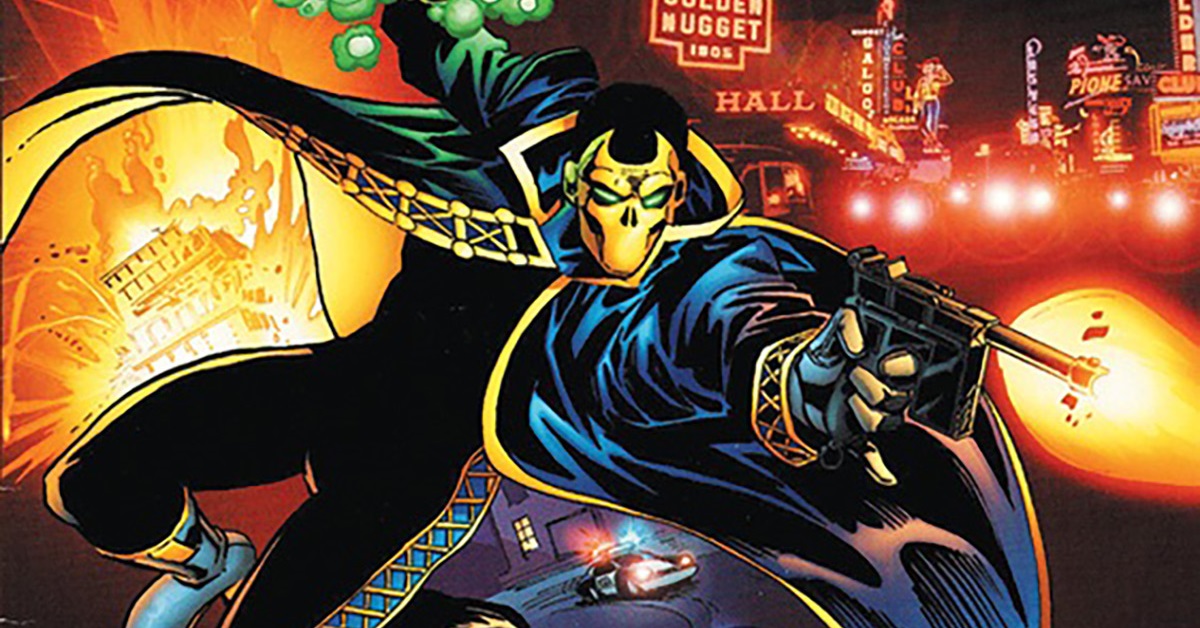
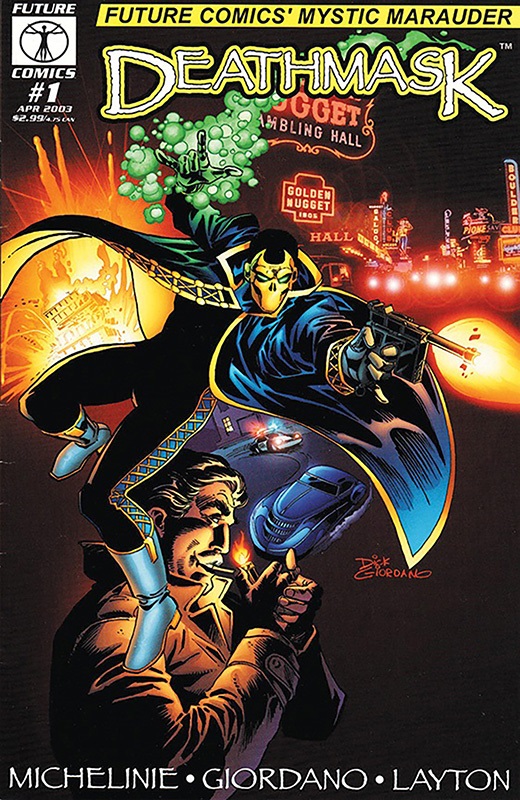
Layton and Michelinie had created Deathmask in the 1980s, but after a few false starts, nothing had happened with it. They revived their character concept for Future Comics.
“The Shadow could ‘cloud men’s minds,’ but that was as far as his preternatural abilities went. Our guy used truly fantastic unearthly powers. And while The Punisher had no problem blowing people away with various firearms, he didn’t turn bad guys’ knives into steel snakes to run them through or create mini-tornadoes that sandblasted their skin off. And though Batman had evolved into a scary creature of the night type, he was still bound by his own code of ethics. Deathmask had no such restrictions,” Michelinie said.
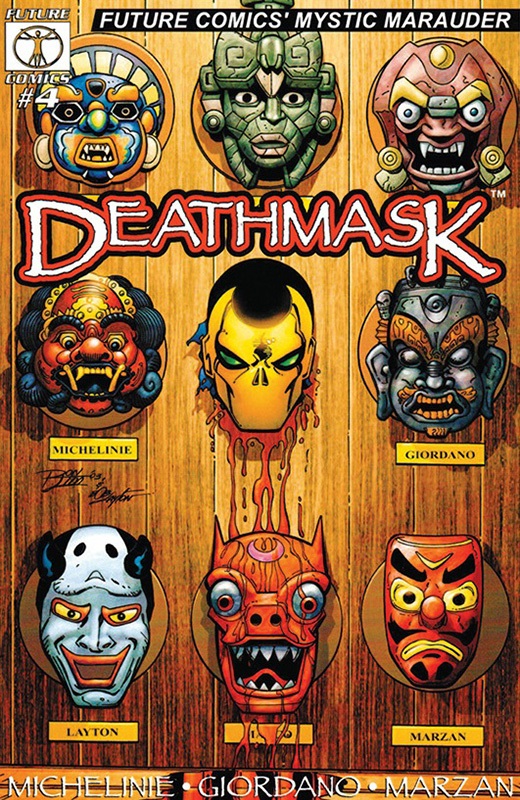
“Actually, we had planned to have the Deathmask be the thing that linked all of the original characters in the FCU. The liquid metal that formed the Metallix armour and the technology that enabled McKinsey Flint to inhabit the Edison Wilde android in Freemind were all to be linked to the source of the Deathmask power,” he said.
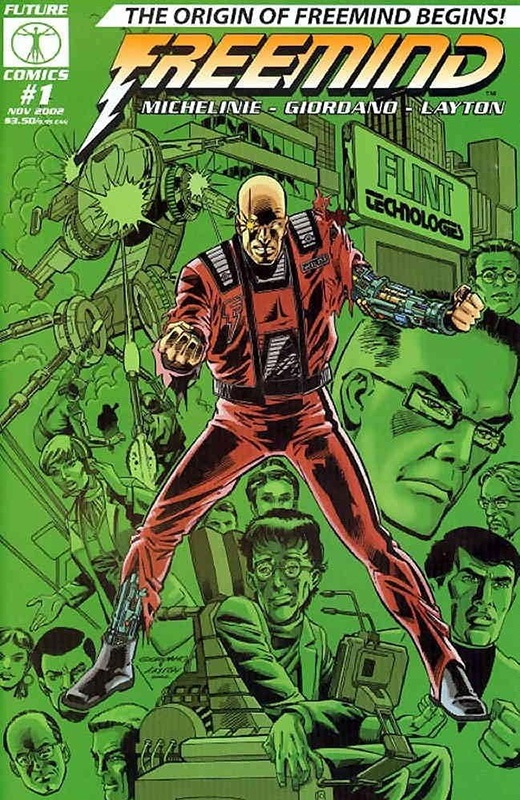
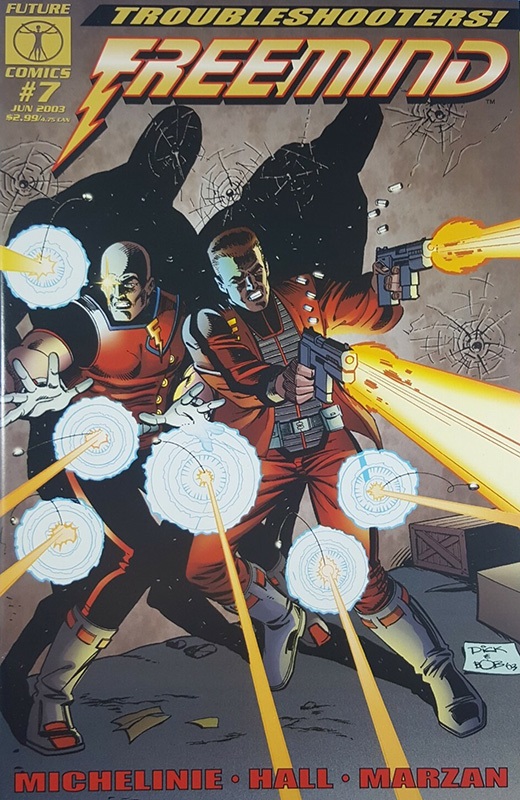
“Although the character that became Deathmask was the concept that triggered Future Comics, it was decided that Freemind would be our first – and flagship – title. Bob had suggested a character who was a genius but was confined to a wheelchair, similar to Stephen Hawking. Except that this character could transfer his consciousness into the body of an android which gave him superpowers. I liked the idea but wanted to add a twist that would give the character more dimension as well as make him different from other superheroes. The genius’s initial goal was simple: he merely wanted to escape his useless body, to be able to walk around and do things his handicap prevented him from doing. But the transfer process unexpectedly freed up that part of the mind that most humans can’t access – hence the project name, ‘Freemind’ – and gave the android incredible powers. Which turned our hero, McKinsey Flint, from one of the most helpless people on the planet to one of the most powerful, creating problems and responsibilities he hadn’t foreseen. When all he really wanted was to be normal,” Michelinie said.
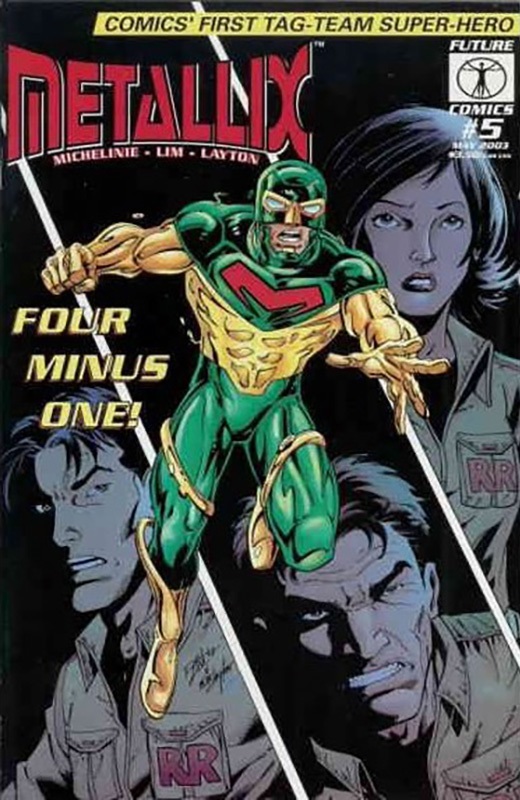
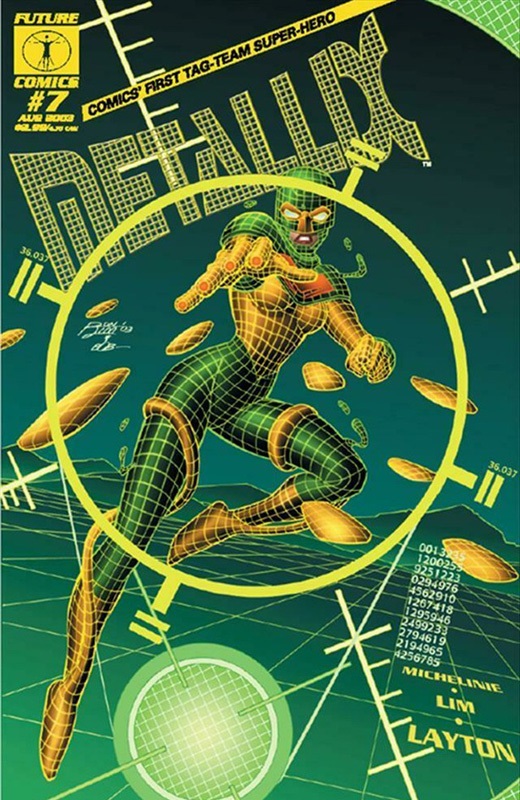
“Co-plotter Bob Layton had come up with the name ‘Metallix’ when we were collaborating on an Iron Man project (The End) at Marvel. Then, when we were developing characters for Future, he suggested an armored character whose armor was liquid metal that could alter on the spot. As a fan of the old Challengers of the Unknown at DC, I suggested the twist of making it a team book, since ‘Metallix’ kind of sounded plural anyway. The liquid armor could then be passed between the individual team members when their specialized skills – pilot, marksman, underwater expert, etc. – were called for,” he said.
Deathmask #3, Freemind #7, Metallix #6, all cover-date June 2003, were Future Comics’ last publications during their initial run. The company’s fourth title, Peacekeeper, only appeared in ads and in a teaser appearance in the Free Comic Book Day edition of Metallix #1, until the printed version finally appeared in 2018.

Popular Topics
Overstreet Access Quick Links
Lost Universes: Future Comics
Former Valiant co-founder, editor, and inker Bob Layton, veteran writer David Michelinie, who had collaborated with Layton on an acclaimed run on Iron Man among other projects, and artist and former DC Comics Vice-President Dick Giordano founded Future Comics and brought in a roster of creators including Bob McLeod, Ron Lim, Mike Leeke, Bob Hall, and Brett Breeding, among them.
Layton and Michelinie had created Deathmask in the 1980s, but after a few false starts, nothing had happened with it. They revived their character concept for Future Comics.
“The Shadow could ‘cloud men’s minds,’ but that was as far as his preternatural abilities went. Our guy used truly fantastic unearthly powers. And while The Punisher had no problem blowing people away with various firearms, he didn’t turn bad guys’ knives into steel snakes to run them through or create mini-tornadoes that sandblasted their skin off. And though Batman had evolved into a scary creature of the night type, he was still bound by his own code of ethics. Deathmask had no such restrictions,” Michelinie said.
“Actually, we had planned to have the Deathmask be the thing that linked all of the original characters in the FCU. The liquid metal that formed the Metallix armour and the technology that enabled McKinsey Flint to inhabit the Edison Wilde android in Freemind were all to be linked to the source of the Deathmask power,” he said.
“Although the character that became Deathmask was the concept that triggered Future Comics, it was decided that Freemind would be our first – and flagship – title. Bob had suggested a character who was a genius but was confined to a wheelchair, similar to Stephen Hawking. Except that this character could transfer his consciousness into the body of an android which gave him superpowers. I liked the idea but wanted to add a twist that would give the character more dimension as well as make him different from other superheroes. The genius’s initial goal was simple: he merely wanted to escape his useless body, to be able to walk around and do things his handicap prevented him from doing. But the transfer process unexpectedly freed up that part of the mind that most humans can’t access – hence the project name, ‘Freemind’ – and gave the android incredible powers. Which turned our hero, McKinsey Flint, from one of the most helpless people on the planet to one of the most powerful, creating problems and responsibilities he hadn’t foreseen. When all he really wanted was to be normal,” Michelinie said.
“Co-plotter Bob Layton had come up with the name ‘Metallix’ when we were collaborating on an Iron Man project (The End) at Marvel. Then, when we were developing characters for Future, he suggested an armored character whose armor was liquid metal that could alter on the spot. As a fan of the old Challengers of the Unknown at DC, I suggested the twist of making it a team book, since ‘Metallix’ kind of sounded plural anyway. The liquid armor could then be passed between the individual team members when their specialized skills – pilot, marksman, underwater expert, etc. – were called for,” he said.
Deathmask #3, Freemind #7, Metallix #6, all cover-date June 2003, were Future Comics’ last publications during their initial run. The company’s fourth title, Peacekeeper, only appeared in ads and in a teaser appearance in the Free Comic Book Day edition of Metallix #1, until the printed version finally appeared in 2018.
Popular Topics
Overstreet Access Quick Links