



Inside the Guide: The Original Star Wars Comics
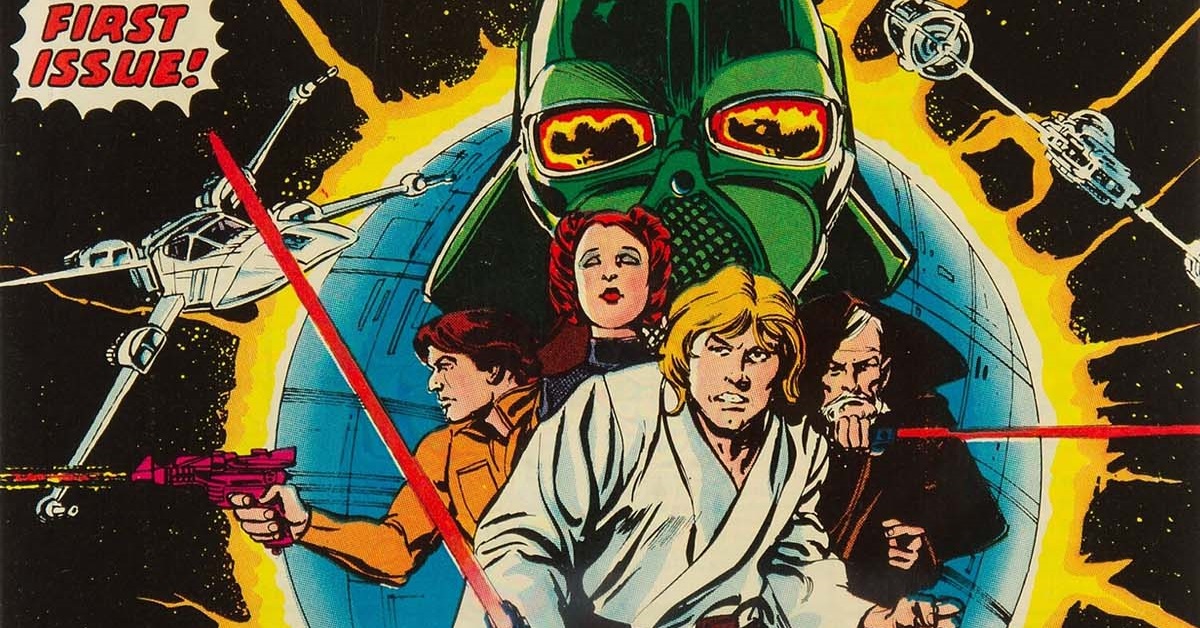
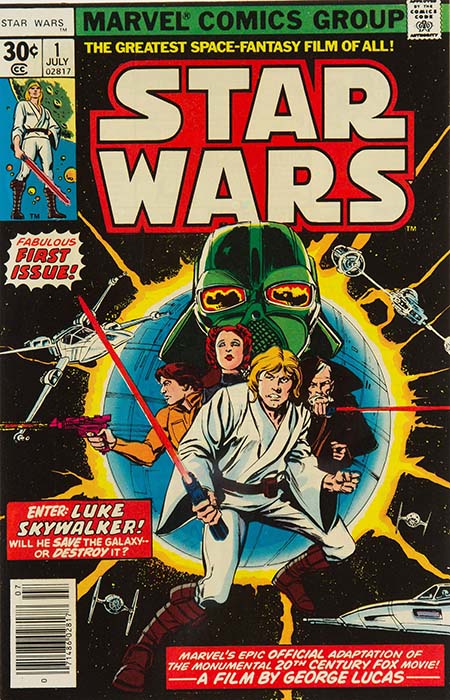
From 1977 to 1986, Marvel published the first run of Star Wars comics, which contained 107 issues and 3 annuals of film adaptations and original stories. The first installment of the six-issue movie adaptation went on sale in April 1977 (cover-dated July ’77), a little over a month before Star Wars saw theatrical release. The initial adaptation, written by Roy Thomas with art by Howard Chaykin, concluded with Star Wars #6, the December ’77 cover-dated issue.
Before the next chapter in the movie trilogy was even a sure thing, Marvel began running original material, consisting of one-off stories and short arcs. The first original adventure, a Han Solo-Chewbacca story that introduced Jaxxon, the rabbit-like smuggler and pilot, arrived in issue 7 (January 1978).
Writer Archie Goodwin and artist Carmine Infantino took over the series at issue 11 in May 1978. They introduced the House of Tagge, a new antagonist for the series in the guise of a scheming noble family. They own the powerful megacorporation Tagge Company, employ a private military, and support the Galactic Republic. Desiring power, family head Baron Orman Tagge even tried to usurp Vader’s position at Emperor Palpatine’s side.
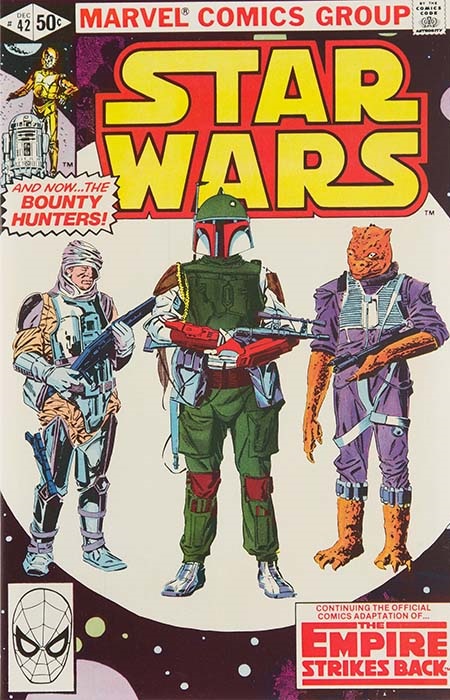
A six-issue adaptation of The Empire Strikes Back by Goodwin, with art by Al Williamson and Carlos Garzon, appeared in issues 39-44 from September 1980 to February 1981.
At issue 51 (September 1981), writer David Michelinie and artist Walt Simonson became the lead creative team. During this period, Lando serves as Millennium Falcon copilot, the Rebel Alliance moves to the forest planet Arbra, and Luke has a story with Shira Brie, a Force-sensitive pilot and Imperial spy.
Return of the Jedi was adapted from October 1983 to January 1984 in a separate four-issue series, handled by the team of Goodwin, Williamson, and Garzon. After the film, comics became the primary entertainment medium for continued Star Wars content.
Mary Jo Duffy took the position of main writer at issue 70 and helmed the series until its conclusion. She built on the established stories, adding more depth to the characters, including features on Princess Leia. In her debut on the title, Duffy introduced Corellian smuggler Rik Duel, Greedo’s cousin Chihdo, and Zeltron adventurer-thief Dani. She also reintroduced Shira Brie, who had been seemingly killed by Luke, but came back as the cyborg ninja Lumiya. Cynthia Martin became the primary artist at issue 93 and remained until the series ended. Together they introduced the Nagai, a species from outside the galaxy that wanted to exploit it for resources to liberate their home world from conquest.
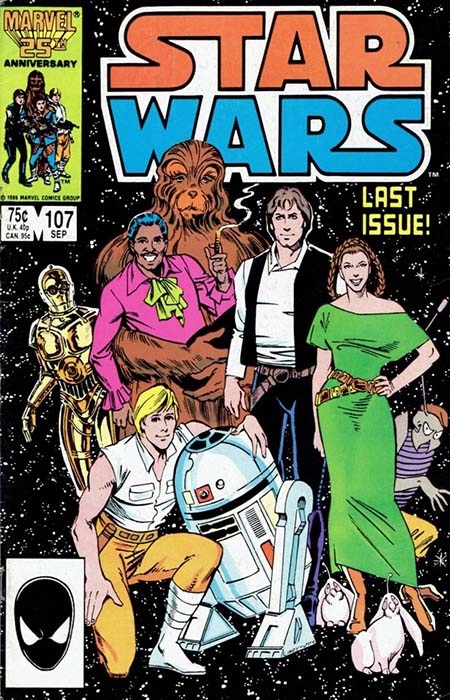
The series came to an end with Star Wars #107 (September 1986).

Popular Topics
Overstreet Access Quick Links
Inside the Guide: The Original Star Wars Comics
From 1977 to 1986, Marvel published the first run of Star Wars comics, which contained 107 issues and 3 annuals of film adaptations and original stories. The first installment of the six-issue movie adaptation went on sale in April 1977 (cover-dated July ’77), a little over a month before Star Wars saw theatrical release. The initial adaptation, written by Roy Thomas with art by Howard Chaykin, concluded with Star Wars #6, the December ’77 cover-dated issue.
Before the next chapter in the movie trilogy was even a sure thing, Marvel began running original material, consisting of one-off stories and short arcs. The first original adventure, a Han Solo-Chewbacca story that introduced Jaxxon, the rabbit-like smuggler and pilot, arrived in issue 7 (January 1978).
Writer Archie Goodwin and artist Carmine Infantino took over the series at issue 11 in May 1978. They introduced the House of Tagge, a new antagonist for the series in the guise of a scheming noble family. They own the powerful megacorporation Tagge Company, employ a private military, and support the Galactic Republic. Desiring power, family head Baron Orman Tagge even tried to usurp Vader’s position at Emperor Palpatine’s side.
A six-issue adaptation of The Empire Strikes Back by Goodwin, with art by Al Williamson and Carlos Garzon, appeared in issues 39-44 from September 1980 to February 1981.
At issue 51 (September 1981), writer David Michelinie and artist Walt Simonson became the lead creative team. During this period, Lando serves as Millennium Falcon copilot, the Rebel Alliance moves to the forest planet Arbra, and Luke has a story with Shira Brie, a Force-sensitive pilot and Imperial spy.
Return of the Jedi was adapted from October 1983 to January 1984 in a separate four-issue series, handled by the team of Goodwin, Williamson, and Garzon. After the film, comics became the primary entertainment medium for continued Star Wars content.
Mary Jo Duffy took the position of main writer at issue 70 and helmed the series until its conclusion. She built on the established stories, adding more depth to the characters, including features on Princess Leia. In her debut on the title, Duffy introduced Corellian smuggler Rik Duel, Greedo’s cousin Chihdo, and Zeltron adventurer-thief Dani. She also reintroduced Shira Brie, who had been seemingly killed by Luke, but came back as the cyborg ninja Lumiya. Cynthia Martin became the primary artist at issue 93 and remained until the series ended. Together they introduced the Nagai, a species from outside the galaxy that wanted to exploit it for resources to liberate their home world from conquest.
The series came to an end with Star Wars #107 (September 1986).
Popular Topics
Overstreet Access Quick Links