



Inside the Guide: Creation of the Milton Bradley Company

One of the most recognizable names in board gaming history has long been that of Milton Bradley, a man responsible for founding his eponymous company as well as for developing many of the best-known games of all time. Bradley was born in Maine in 1836, and spent his childhood in various other areas of New England while growing up with his family. As a young man he opted to learn lithography, eventually setting up the first color lithograph shop in Springfield, Massachusetts.
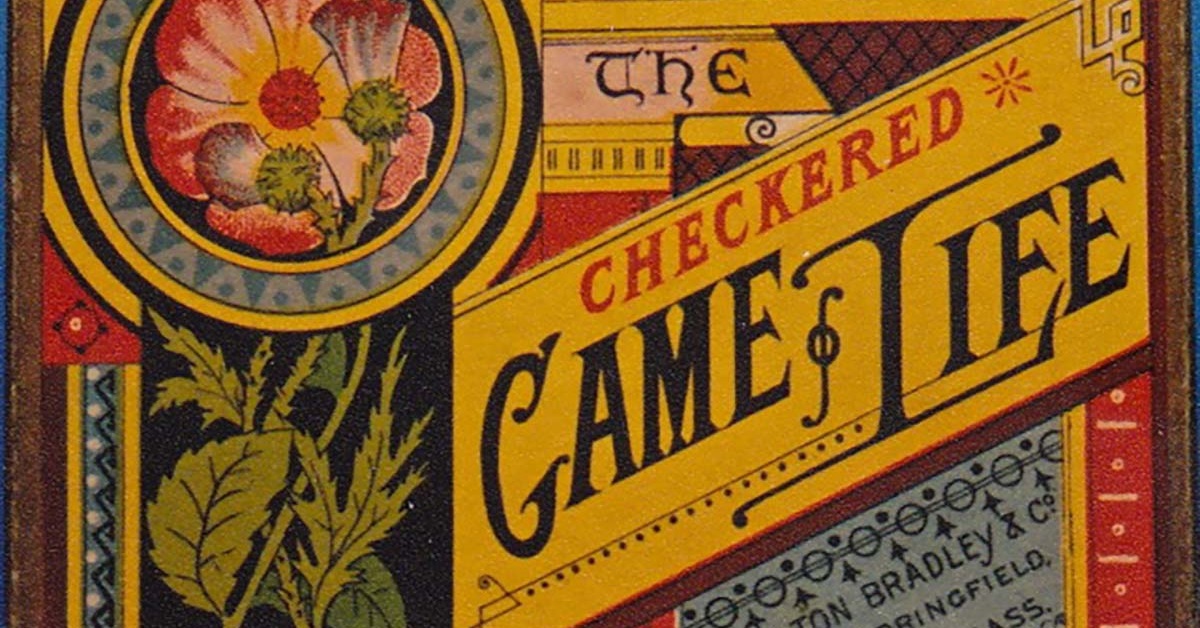
However, it was a failure with that business that spurred the young Bradley to pursue gaming as a way of life instead – he had printed a lithograph of then-nominee Abraham Lincoln, who at the time was clean-shaven. But when Lincoln grew his distinctive beard, those prints ended up totally worthless, and Bradley burned the remaining stock. Bradley then took inspiration from a European board game shown to him by his friend George Tapley, and developed The Checkered Game of Life.
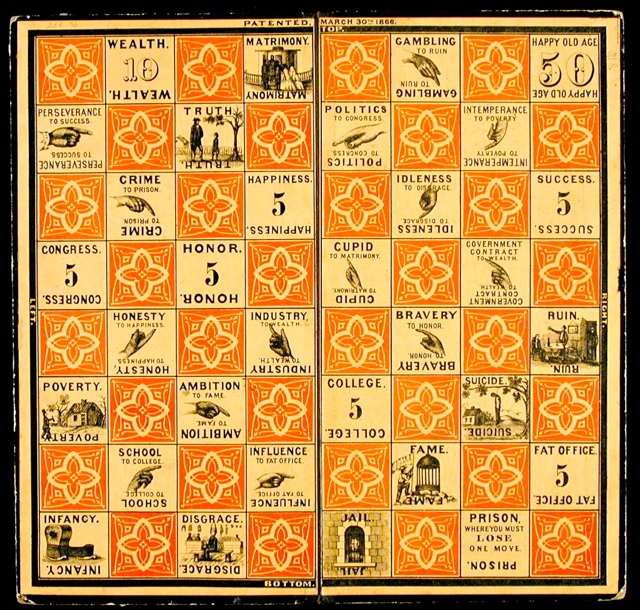
His game proved to be wildly popular right out of the gate, selling more than 45,000 copies within its first year. The Checkered Game of Life stood out from other similar board games of the time by defining success via secular or business-oriented values; other games, such as Mansion of Happiness (another extremely popular board game of the same era) focused on religious, puritanical or moral values. By appealing to America’s ambition for material wealth, Bradley was able to increase his own.
Though the company paused game production during the outbreak of the Civil War in 1861, it quickly resumed after Bradley observed how bored many of the Union soldiers were at their stations. This led to the Milton Bradley company’s production of many of the first “travel” games for the soldiers to take with them and play on their downtime, such as small versions of checkers, chess, and even The Checkered Game of Life itself.

Popular Topics
Overstreet Access Quick Links
Inside the Guide: Creation of the Milton Bradley Company
One of the most recognizable names in board gaming history has long been that of Milton Bradley, a man responsible for founding his eponymous company as well as for developing many of the best-known games of all time. Bradley was born in Maine in 1836, and spent his childhood in various other areas of New England while growing up with his family. As a young man he opted to learn lithography, eventually setting up the first color lithograph shop in Springfield, Massachusetts.
However, it was a failure with that business that spurred the young Bradley to pursue gaming as a way of life instead – he had printed a lithograph of then-nominee Abraham Lincoln, who at the time was clean-shaven. But when Lincoln grew his distinctive beard, those prints ended up totally worthless, and Bradley burned the remaining stock. Bradley then took inspiration from a European board game shown to him by his friend George Tapley, and developed The Checkered Game of Life.
His game proved to be wildly popular right out of the gate, selling more than 45,000 copies within its first year. The Checkered Game of Life stood out from other similar board games of the time by defining success via secular or business-oriented values; other games, such as Mansion of Happiness (another extremely popular board game of the same era) focused on religious, puritanical or moral values. By appealing to America’s ambition for material wealth, Bradley was able to increase his own.
Though the company paused game production during the outbreak of the Civil War in 1861, it quickly resumed after Bradley observed how bored many of the Union soldiers were at their stations. This led to the Milton Bradley company’s production of many of the first “travel” games for the soldiers to take with them and play on their downtime, such as small versions of checkers, chess, and even The Checkered Game of Life itself.
Popular Topics
Overstreet Access Quick Links