



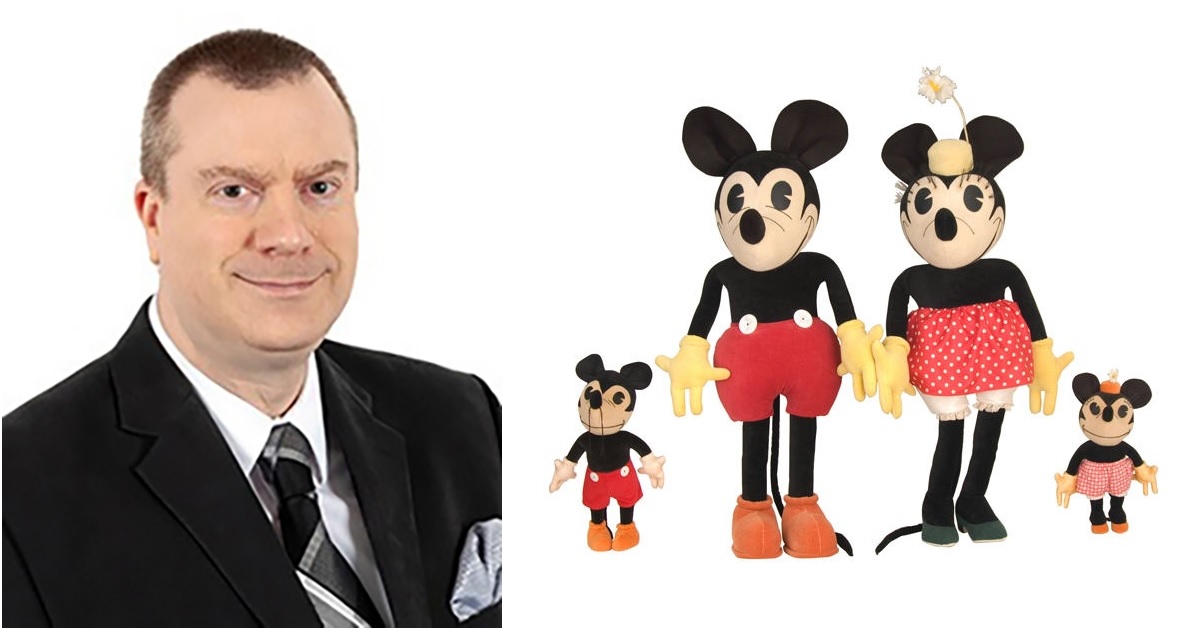
Hake’s President Alex Winter Discusses Retirement & His Career in Collectibles
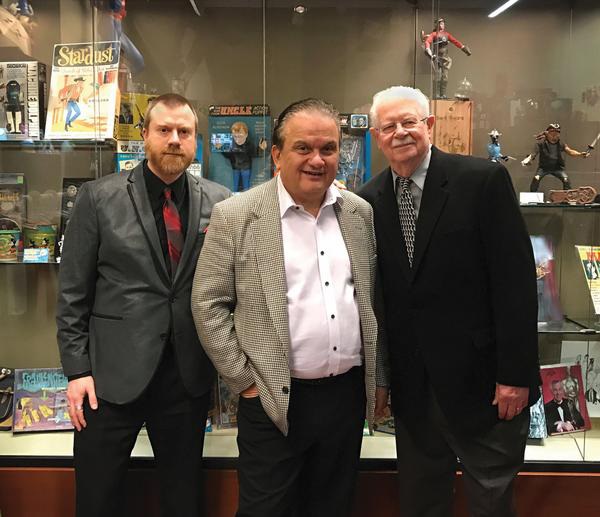
Following a 40-year career at Hake’s Auctions, company President Alex Winter is retiring. Winter has worked for the auction house since he was a teenager, filling multiple roles on his way to leading the Hake’s team to multi-million dollar auctions. Leading up to his final days at Hake’s, Winter sat down with Scoop to discuss his career, his thoughts on the collectibles industry, highlights from his time at Hake’s, and his retirement plans.
Scoop: What do you remember about your first days at Hake’s Auctions?
Alex Winter (AW): My first days at Hake’s Auctions were unofficial. Deak Stagemyer needed help in the shipping department. So, in 1984 I did one day of work just to see how that would go. It wasn’t even in the summer, it was a day I had off from school. I worked at Ted Hake’s house, just helping to process packages. And then when Ted moved from his house to the Market Street building in York, Pennsylvania, I helped them move. That was when I was 15. And from doing that little bit, that’s when Ted said, “When you’re 16, come and see me.” And so when I turned 16, I walked from high school to Hake’s and started my career.

Scoop: What are the different positions that you have held at Hake’s?
AW: When Hake’s was owned by Ted, positions weren’t a big thing, but I got hired as shipping assistant, and then I became cataloger, and then I became cataloger and photographer. Then when Steve Geppi bought the company in 2004, that’s when it became more corporate, and my title became Merchandise Manager, and then Production Manager, and then General Manager, and then finally President.
Scoop: That’s quite a few positions.
AW: Yeah, and there’s not one facet of anything at Hake’s I haven’t done, outside of some bookkeeping, but everything else I’ve been involved in.
Scoop: You really learned the whole business inside out.
AW: When Ted owned the company, he bought items and we auctioned them. When Steve took over, then it became a consignment basis. So, when Ted owned it, I would go with him on buying trips and get collections and do all the different trade shows. It was all organized by category in the Market Street building. We would actually pull an auction in 100% catalog order because there was no waiting around for consignments to show up. When Steve took over and it became consignments, that’s when we changed everything because we never knew what was coming when, so we had to totally change the way we did things. We collected all of the items until we had enough, and then we put them in order. So, you know, we did the same thing in each regime, just in two totally different concepts.
Scoop: In a business in which you’re only as good as your current and next auctions, how did you maintain the upward trajectory at Hake’s for so long?
AW: Just paying attention to what the trends were, offering the right items at the right time in every auction. Every year, but even within a year, in each auction we would see what did well. Then we’d ask ourselves, what do we want to offer more of? What do we want to offer less of? What do we have the bidders for? What do we not have the bidders for? What’s coming that’s new that we have to learn about? What’s getting phased out that we want to offer less of?
So, it’s because of what we offer, and we have always offered, and that is pretty much everything under the sun in pop culture and Americana. We’ve got to know what’s going on. If we just offer comic books, it would be a little different. But because we offered all of these different categories, there were auctions where we had more of some, less of some. That was always just an auction by auction basis where we would see what it was we wanted to offer. In that regard, when some things were hot and some things were not, the auction wasn’t as impacted as if it was just one thing we were offering. Say comic books are down, political was up, then next time it’s the other way around. So, we always had enough in each auction that we kept things moving in the right direction. With it changing from auction to auction, that’s how we got to go from the hundreds of thousands to the million to the multiple millions because we would just call an audible.
Scoop: You mentioned auctioning a lot of different types of items. What has been the benefit of that kind of model? Because at a lot of auction houses, you’ll see it’s just a comics auction or it’s just a baseball auction, etc.
AW: Well, that’s all built on Ted’s foundation. It was always about diversity because as he was buying collections, it came with all kinds of stuff. He was the first, we were the first auction house to offer comic books. We were the first auction house to offer comic book art. Since Ted started in 1967, we had that luxury. It wasn’t really until the ‘80s and even more so the ‘90s, that collectibles were looked at more favorably. And then you had other auction houses jump in and either pick a category or pick multiple categories, but typically multiple categories as in an all-comic auction and all sports auction. We’ve always mixed it because to us, the benefit was more eyes. So, we have customers that just collect comic books and then we have customers that collect comic books, political, and sports. By getting more items in front of more people, that’s been sort of our calling card in our success. It really is a benefit to collectors who like a bunch of different things and more so to consignors who are looking to have the most people see what we offer. In the way that we do it, we invite everybody to the party, and they decide what they want to bid on.
Scoop: How has the collectibles industry changed during your tenure at Hake’s?
AW: Well, if you see my Facebook post, I say when I started, it was called the hobby and now it’s called an industry. For decades, it was all about the collectors who were reclaiming their youth or got into a certain category and just because of some intrinsic value, became a collector. And as things started to be slabbed and third-party graded and rise in price, then you saw a lot more people get into it for the investing end of things and maybe don’t have that personal connection.
So, I would say the biggest difference is just in the clientele, which was at one point 100% collector and now it’s 50-50 collector/investor. And that has certainly driven the price up. But I’ve always been one to say, as a collector, that you collect what you love and love what you collect. If it goes up in value, that’s a bonus. But that is not the current collecting basis as a current clientele is not that anymore. It really has now become an industry of commodities to a lot of people versus a collectible they once had as a kid and now they want to have it again. To me, it’s lost a little bit of its luster in that I’m coming at it from a very personal aspect, but I understand this is now six and seven figure items, so you’re going to have the investor involved in this quote unquote industry.
Scoop: What would you put on the highlight reel of the most interesting or exciting items that Hake’s has sold?
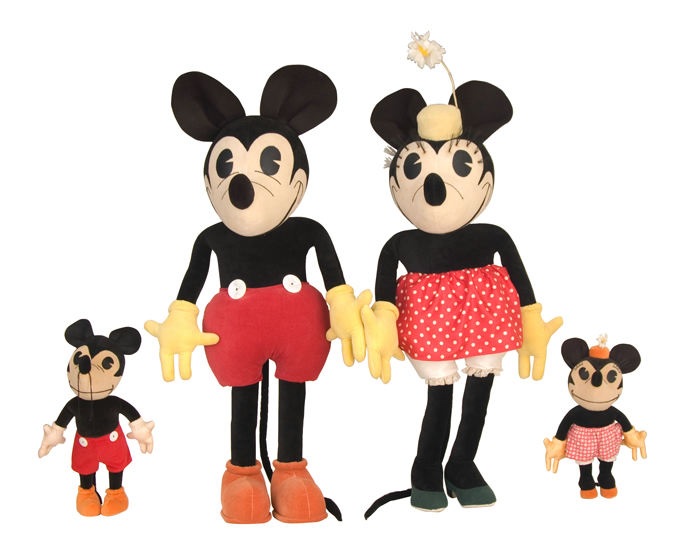
AW: It’s very difficult because literally millions of items have passed through my hands since we started here, and I like it all, as you know because you’ve been in my office and seen my collections. I’ve bought a little bit of almost everything we’ve ever handled, but I would definitely name check those Mickey and Minnie Charlotte Clark dolls that we sold many years ago, just because at that point, Disneyana was still very hot and it was unheard of not only these two dolls, but in the condition. That whole story was that they were listed on eBay and the price kept getting dropped because there was no interest because people didn’t believe that they were what they were. They finally contacted us and said, “We can’t get any interest in this, can you do anything?” As we do with anything, we are skeptical and don’t get too excited until we actually see them in person and we vet it. I remember them arriving and Ted and myself and Deak, just being stunned that the story panned out to be true. That here were the ultimate Mickey and Minnie dolls in the ultimate condition. They brought a price that still stands today. (Editor’s note: the dolls sold for $151,534 in September 2007.)
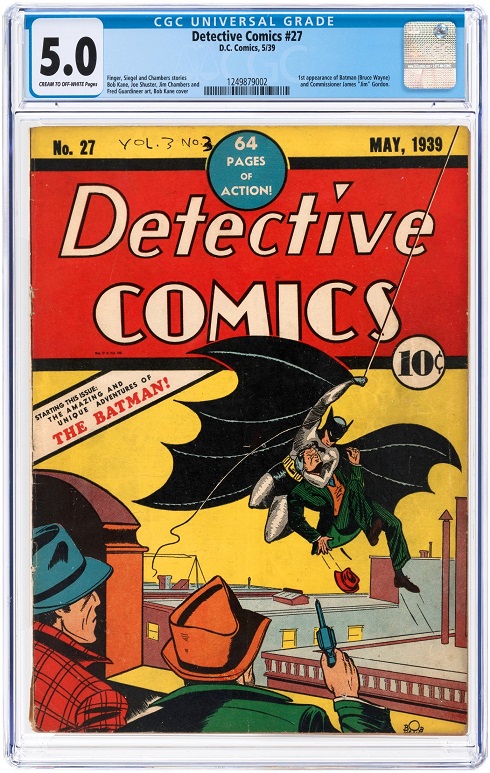
On top of that, the Nirvana guitar was cool, as a music fan. To offer a Detective Comics #27 [first appearance of Batman] for the first time after hoping to have one come our way for years, as a comic book fan, that was a key piece. And then there’s been lots of things that have not brought a lot of money that I just thought were cool because I was a fan. It’s sort of like asking a musician what their favorite song is, right? It’s kind of hard when so much of it means something to you. But specifically, I remember those Disney Dolls were just a moment that was pretty magical because at that point Ted had written a Disney book or multiple Disney books and we had all – between Deak, myself, and Ted – had decades and decades of handling Disney and to find something like that to just appear at that time was just different.
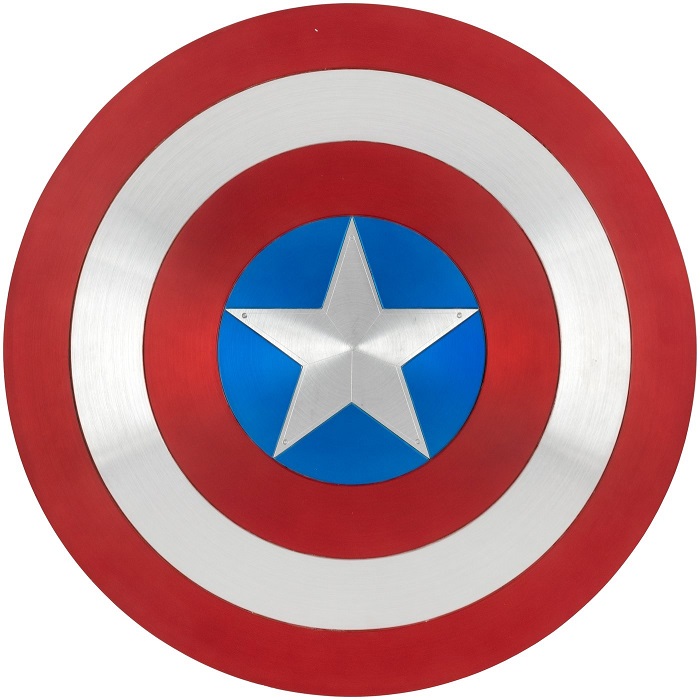
The Captain America Shield. I mean, that was one of the coolest things we ever offered. One of the best promotions we ever did. Our booth at Baltimore Comic-Con was the biggest booth we ever had in any show. We had a cosplayer come as Captain America. It was on display. Everyone was taking pictures. It was a piece that a lot of people wondered why Hake’s got it versus others. And we showed everybody what Hake’s can do because we got a record price for that piece that stands today. So that’s another great piece. There’s another story of not knowing that we’d ever have a shot at something like that, and the next thing you know, here it is, and we make it the cover of the catalog, and then it sets a record. And again, the point isn’t setting a record, but the point was just putting out something like that, that we have never ever offered before, and here we have it. (Editor’s note: the Captain America hero prop screen-used by Chris Evans sold for $259,539 in November 2021.)
Scoop: What have been some of your most memorable moments of your time at Hake’s?
AW: My favorite time goes back to when Ted owned the business and we would do Atlantique City and those kinds of shows. Ted was treated like the king of collectibles that he rightly was and is. We would get special treatment. There would be booths that would not be open until Ted was done shopping or there would be stuff under the tables only Ted got to see. I just remember going with him and he’d have his budget to spend for the next auction. We’d go in and see all this amazing stuff and he would make his choices. As years went by, he asked me to help make the choices and we’d load up a van of stuff and bring it back and auction it. So that was always very cool that we sort of controlled our own destiny at that point.
Then, when it, it switches and we do consignment basis, then it’s, those moments where things show up, like I just mentioned, the dolls and the Detective Comics #27, those are always memorable because it’s one of those things where you come in that day and you don’t know what you’re going to get offered. In many days, it’s nothing or nothing special, and then the next thing you know, it’s a Detective Comics #27. It’s the same thing as a collector mentality to us. It was always a thrill of the hunt, and it still is to this day, but the hunt is we offer these items for auction versus the hunt of a collector that wants to add it to their collection. And both of those are in my blood.
Otherwise, it’s just the interaction over the years of like-minded people. They get excited when we offer an item they haven’t seen or haven’t had or have always wanted. And that’s the one thing that I will miss is the interaction and the camaraderie of sharing stories about the items that we all love and collect and hope to add to our collections and so forth. So that’s always made things fun and cut through the bureaucracy and the red tape and all the other headaches that come with this is at the end of the day, we’re all sort of kids and adding toys to our toy box.

Scoop: How has working in the auction industry affected your outlook on collecting?
AW: That’s a good question. I don’t know if it’s affected my outlook on collecting at all because again, if I like it, I went for it, and that’s that. And even if it was something I only had a couple of or something I had a deep collection of, it didn’t matter to me if it was right, I would go after it. But my outlook on collecting is… I go back to the point of the investment angle. Now so much of it is about the record prices and how much I pay for something. That loses a lot for me. I’m tied to these items from a very early age and the collecting standpoint that we do this because we love this stuff. So that’s the part of the hobby size industry I still love. The part that I’m disenchanted with, to some degree, is the focus on how much something is worth. That loses a lot of the intrinsic value in the real meaning of collecting to me. I understand it and it does help pay the bills and I’m not saying we don’t want record prices, I would just like the focus to be more on why this person got it because they loved it versus why this person got it because they’re going to put it in a vault and someday sell it.
Scoop: What will you miss about Hake’s and working in the auction business?
AW: This sort of excitement that gets built around the auction. You know, when we end one, we start on the ground floor building the next one. That’s where it gets interesting and holds my attention and keeps me excited. What’s going to come the next day? What’s going to happen with this auction by the time we get to the finish line and have to get the catalog printed and then put it online? The thrill of the hunt. That’s what I’ll miss versus the day-to-day kind of stuff… customer complaints and problems here and expenses going up and all of that stuff is… nobody ever misses that. But to me, it’s just the fun of putting together an auction that we can then present to the collecting community and hope that they respond the way that we have putting it together. We think we put something very special together. Every auction, we always have things we weren’t expecting, things we know we have customers looking for, things that we know are going to get people’s attention.
Scoop: What are you most proud of that you’ve accomplished at Hake’s?
AW: I think it’s just having a venue for those who are passionate about these collectibles to know that every auction there’s going be something that they can bid on and add to their collection. And the constant promotion of the history of items. Unlike other auction houses that are just an auction house, we were also a publishing house. Hake’s has been involved in over 20 price guides and reference books. Doing all the research for that and putting that historical content and information out there for everybody to learn from has been very rewarding. It’s all of that. It’s all of the inner workings and the very positive promotion of collectors.
When I started, it was a hobby and it wasn’t well known. What’s lost on many right now is collectibles are ubiquitous. There’s shows, there’s blogs, there’s message boards, there’s books, there’s websites, there’s all of this. Now being a geek, a collector, is fashionable and in vogue. And it wasn’t that way. It used to be a smaller knit group and people didn’t understand this.
When I transitioned from high school to real life, I wanted to start at Hake’s full time and my parents were against this because they said at that time, it was not a real job. So, I went into accounting to make them happy, and after a couple of semesters, I said “I couldn’t do it. I’m done. I’m quitting school. I’m moving out of the house and I’m going full-time at Hake’s.” That was a big move. Much like it was a big move for Ted in 1967 to say, I’m going go in a… different direction from what everyone thought and I’m going make collectibles my vocation, right? I did that and flash forward all these years later, now everyone understands what the collectible business is and I’ve made amends with my parents many years later because they saw it was a good choice and a right choice and it made me happy and I was good at it and it was a real profession. It wasn’t just guys on a weekend at flea market. An auction house was a real deal.
Scoop: What do you plan to do during your retirement?
AW: So first and foremost, spending time with my 15,000-piece album music collection. Above and beyond collecting, which has been my life, music has been my number one interest and music has remained my number one collection. Many of my other collections are going to be liquidated in the coming years, just to free up space for me to expand my music collection. I plan on doing lots of listening. I have recently joined The Contrarians, which is a YouTube channel where we talk about music. That has been something I’ve talked about doing for years and haven’t just because I haven’t had the time or energy and now I have the time or energy. I want to do more of that. I want to start my own YouTube channel eventually discussing music and reviews and panel discussions and all of that stuff. Lots and lots of time with my number one passion, music.
Secondly, and this will be joint for Heather [Winter] and I, both have a deep love for animals, especially cats, and we will be doing volunteer work at animal shelters and getting a very rewarding career going. We will be giving much needed love and attention to these animals that are, unfortunately, sometimes neglected. We’re going to help them find good homes. That to me is going to be very rewarding.
The auction life is 24/7, especially someone in my position, so there has been little time for other things. I also had painted before, and many years ago was in an art collective. We did art shows and I love doing that. And then, the time just wasn’t there. So I want to get back into painting. Lots of things that bring me enjoyment and not any stress. And in all caps, no more deadlines. I have been on a deadline for all 40 years. There has never been a time where we were not. As soon as one auction ended, we were on to the next, or even before it ended, we were working on the next. There’s never been a letup. It is one auction after another.

Popular Topics
Overstreet Access Quick Links
Hake’s President Alex Winter Discusses Retirement & His Career in Collectibles
Following a 40-year career at Hake’s Auctions, company President Alex Winter is retiring. Winter has worked for the auction house since he was a teenager, filling multiple roles on his way to leading the Hake’s team to multi-million dollar auctions. Leading up to his final days at Hake’s, Winter sat down with Scoop to discuss his career, his thoughts on the collectibles industry, highlights from his time at Hake’s, and his retirement plans.
Scoop: What do you remember about your first days at Hake’s Auctions?
Alex Winter (AW): My first days at Hake’s Auctions were unofficial. Deak Stagemyer needed help in the shipping department. So, in 1984 I did one day of work just to see how that would go. It wasn’t even in the summer, it was a day I had off from school. I worked at Ted Hake’s house, just helping to process packages. And then when Ted moved from his house to the Market Street building in York, Pennsylvania, I helped them move. That was when I was 15. And from doing that little bit, that’s when Ted said, “When you’re 16, come and see me.” And so when I turned 16, I walked from high school to Hake’s and started my career.
Scoop: What are the different positions that you have held at Hake’s?
AW: When Hake’s was owned by Ted, positions weren’t a big thing, but I got hired as shipping assistant, and then I became cataloger, and then I became cataloger and photographer. Then when Steve Geppi bought the company in 2004, that’s when it became more corporate, and my title became Merchandise Manager, and then Production Manager, and then General Manager, and then finally President.
Scoop: That’s quite a few positions.
AW: Yeah, and there’s not one facet of anything at Hake’s I haven’t done, outside of some bookkeeping, but everything else I’ve been involved in.
Scoop: You really learned the whole business inside out.
AW: When Ted owned the company, he bought items and we auctioned them. When Steve took over, then it became a consignment basis. So, when Ted owned it, I would go with him on buying trips and get collections and do all the different trade shows. It was all organized by category in the Market Street building. We would actually pull an auction in 100% catalog order because there was no waiting around for consignments to show up. When Steve took over and it became consignments, that’s when we changed everything because we never knew what was coming when, so we had to totally change the way we did things. We collected all of the items until we had enough, and then we put them in order. So, you know, we did the same thing in each regime, just in two totally different concepts.
Scoop: In a business in which you’re only as good as your current and next auctions, how did you maintain the upward trajectory at Hake’s for so long?
AW: Just paying attention to what the trends were, offering the right items at the right time in every auction. Every year, but even within a year, in each auction we would see what did well. Then we’d ask ourselves, what do we want to offer more of? What do we want to offer less of? What do we have the bidders for? What do we not have the bidders for? What’s coming that’s new that we have to learn about? What’s getting phased out that we want to offer less of?
So, it’s because of what we offer, and we have always offered, and that is pretty much everything under the sun in pop culture and Americana. We’ve got to know what’s going on. If we just offer comic books, it would be a little different. But because we offered all of these different categories, there were auctions where we had more of some, less of some. That was always just an auction by auction basis where we would see what it was we wanted to offer. In that regard, when some things were hot and some things were not, the auction wasn’t as impacted as if it was just one thing we were offering. Say comic books are down, political was up, then next time it’s the other way around. So, we always had enough in each auction that we kept things moving in the right direction. With it changing from auction to auction, that’s how we got to go from the hundreds of thousands to the million to the multiple millions because we would just call an audible.
Scoop: You mentioned auctioning a lot of different types of items. What has been the benefit of that kind of model? Because at a lot of auction houses, you’ll see it’s just a comics auction or it’s just a baseball auction, etc.
AW: Well, that’s all built on Ted’s foundation. It was always about diversity because as he was buying collections, it came with all kinds of stuff. He was the first, we were the first auction house to offer comic books. We were the first auction house to offer comic book art. Since Ted started in 1967, we had that luxury. It wasn’t really until the ‘80s and even more so the ‘90s, that collectibles were looked at more favorably. And then you had other auction houses jump in and either pick a category or pick multiple categories, but typically multiple categories as in an all-comic auction and all sports auction. We’ve always mixed it because to us, the benefit was more eyes. So, we have customers that just collect comic books and then we have customers that collect comic books, political, and sports. By getting more items in front of more people, that’s been sort of our calling card in our success. It really is a benefit to collectors who like a bunch of different things and more so to consignors who are looking to have the most people see what we offer. In the way that we do it, we invite everybody to the party, and they decide what they want to bid on.
Scoop: How has the collectibles industry changed during your tenure at Hake’s?
AW: Well, if you see my Facebook post, I say when I started, it was called the hobby and now it’s called an industry. For decades, it was all about the collectors who were reclaiming their youth or got into a certain category and just because of some intrinsic value, became a collector. And as things started to be slabbed and third-party graded and rise in price, then you saw a lot more people get into it for the investing end of things and maybe don’t have that personal connection.
So, I would say the biggest difference is just in the clientele, which was at one point 100% collector and now it’s 50-50 collector/investor. And that has certainly driven the price up. But I’ve always been one to say, as a collector, that you collect what you love and love what you collect. If it goes up in value, that’s a bonus. But that is not the current collecting basis as a current clientele is not that anymore. It really has now become an industry of commodities to a lot of people versus a collectible they once had as a kid and now they want to have it again. To me, it’s lost a little bit of its luster in that I’m coming at it from a very personal aspect, but I understand this is now six and seven figure items, so you’re going to have the investor involved in this quote unquote industry.
Scoop: What would you put on the highlight reel of the most interesting or exciting items that Hake’s has sold?
AW: It’s very difficult because literally millions of items have passed through my hands since we started here, and I like it all, as you know because you’ve been in my office and seen my collections. I’ve bought a little bit of almost everything we’ve ever handled, but I would definitely name check those Mickey and Minnie Charlotte Clark dolls that we sold many years ago, just because at that point, Disneyana was still very hot and it was unheard of not only these two dolls, but in the condition. That whole story was that they were listed on eBay and the price kept getting dropped because there was no interest because people didn’t believe that they were what they were. They finally contacted us and said, “We can’t get any interest in this, can you do anything?” As we do with anything, we are skeptical and don’t get too excited until we actually see them in person and we vet it. I remember them arriving and Ted and myself and Deak, just being stunned that the story panned out to be true. That here were the ultimate Mickey and Minnie dolls in the ultimate condition. They brought a price that still stands today. (Editor’s note: the dolls sold for $151,534 in September 2007.)
On top of that, the Nirvana guitar was cool, as a music fan. To offer a Detective Comics #27 [first appearance of Batman] for the first time after hoping to have one come our way for years, as a comic book fan, that was a key piece. And then there’s been lots of things that have not brought a lot of money that I just thought were cool because I was a fan. It’s sort of like asking a musician what their favorite song is, right? It’s kind of hard when so much of it means something to you. But specifically, I remember those Disney Dolls were just a moment that was pretty magical because at that point Ted had written a Disney book or multiple Disney books and we had all – between Deak, myself, and Ted – had decades and decades of handling Disney and to find something like that to just appear at that time was just different.
The Captain America Shield. I mean, that was one of the coolest things we ever offered. One of the best promotions we ever did. Our booth at Baltimore Comic-Con was the biggest booth we ever had in any show. We had a cosplayer come as Captain America. It was on display. Everyone was taking pictures. It was a piece that a lot of people wondered why Hake’s got it versus others. And we showed everybody what Hake’s can do because we got a record price for that piece that stands today. So that’s another great piece. There’s another story of not knowing that we’d ever have a shot at something like that, and the next thing you know, here it is, and we make it the cover of the catalog, and then it sets a record. And again, the point isn’t setting a record, but the point was just putting out something like that, that we have never ever offered before, and here we have it. (Editor’s note: the Captain America hero prop screen-used by Chris Evans sold for $259,539 in November 2021.)
Scoop: What have been some of your most memorable moments of your time at Hake’s?
AW: My favorite time goes back to when Ted owned the business and we would do Atlantique City and those kinds of shows. Ted was treated like the king of collectibles that he rightly was and is. We would get special treatment. There would be booths that would not be open until Ted was done shopping or there would be stuff under the tables only Ted got to see. I just remember going with him and he’d have his budget to spend for the next auction. We’d go in and see all this amazing stuff and he would make his choices. As years went by, he asked me to help make the choices and we’d load up a van of stuff and bring it back and auction it. So that was always very cool that we sort of controlled our own destiny at that point.
Then, when it, it switches and we do consignment basis, then it’s, those moments where things show up, like I just mentioned, the dolls and the Detective Comics #27, those are always memorable because it’s one of those things where you come in that day and you don’t know what you’re going to get offered. In many days, it’s nothing or nothing special, and then the next thing you know, it’s a Detective Comics #27. It’s the same thing as a collector mentality to us. It was always a thrill of the hunt, and it still is to this day, but the hunt is we offer these items for auction versus the hunt of a collector that wants to add it to their collection. And both of those are in my blood.
Otherwise, it’s just the interaction over the years of like-minded people. They get excited when we offer an item they haven’t seen or haven’t had or have always wanted. And that’s the one thing that I will miss is the interaction and the camaraderie of sharing stories about the items that we all love and collect and hope to add to our collections and so forth. So that’s always made things fun and cut through the bureaucracy and the red tape and all the other headaches that come with this is at the end of the day, we’re all sort of kids and adding toys to our toy box.
Scoop: How has working in the auction industry affected your outlook on collecting?
AW: That’s a good question. I don’t know if it’s affected my outlook on collecting at all because again, if I like it, I went for it, and that’s that. And even if it was something I only had a couple of or something I had a deep collection of, it didn’t matter to me if it was right, I would go after it. But my outlook on collecting is… I go back to the point of the investment angle. Now so much of it is about the record prices and how much I pay for something. That loses a lot for me. I’m tied to these items from a very early age and the collecting standpoint that we do this because we love this stuff. So that’s the part of the hobby size industry I still love. The part that I’m disenchanted with, to some degree, is the focus on how much something is worth. That loses a lot of the intrinsic value in the real meaning of collecting to me. I understand it and it does help pay the bills and I’m not saying we don’t want record prices, I would just like the focus to be more on why this person got it because they loved it versus why this person got it because they’re going to put it in a vault and someday sell it.
Scoop: What will you miss about Hake’s and working in the auction business?
AW: This sort of excitement that gets built around the auction. You know, when we end one, we start on the ground floor building the next one. That’s where it gets interesting and holds my attention and keeps me excited. What’s going to come the next day? What’s going to happen with this auction by the time we get to the finish line and have to get the catalog printed and then put it online? The thrill of the hunt. That’s what I’ll miss versus the day-to-day kind of stuff… customer complaints and problems here and expenses going up and all of that stuff is… nobody ever misses that. But to me, it’s just the fun of putting together an auction that we can then present to the collecting community and hope that they respond the way that we have putting it together. We think we put something very special together. Every auction, we always have things we weren’t expecting, things we know we have customers looking for, things that we know are going to get people’s attention.
Scoop: What are you most proud of that you’ve accomplished at Hake’s?
AW: I think it’s just having a venue for those who are passionate about these collectibles to know that every auction there’s going be something that they can bid on and add to their collection. And the constant promotion of the history of items. Unlike other auction houses that are just an auction house, we were also a publishing house. Hake’s has been involved in over 20 price guides and reference books. Doing all the research for that and putting that historical content and information out there for everybody to learn from has been very rewarding. It’s all of that. It’s all of the inner workings and the very positive promotion of collectors.
When I started, it was a hobby and it wasn’t well known. What’s lost on many right now is collectibles are ubiquitous. There’s shows, there’s blogs, there’s message boards, there’s books, there’s websites, there’s all of this. Now being a geek, a collector, is fashionable and in vogue. And it wasn’t that way. It used to be a smaller knit group and people didn’t understand this.
When I transitioned from high school to real life, I wanted to start at Hake’s full time and my parents were against this because they said at that time, it was not a real job. So, I went into accounting to make them happy, and after a couple of semesters, I said “I couldn’t do it. I’m done. I’m quitting school. I’m moving out of the house and I’m going full-time at Hake’s.” That was a big move. Much like it was a big move for Ted in 1967 to say, I’m going go in a… different direction from what everyone thought and I’m going make collectibles my vocation, right? I did that and flash forward all these years later, now everyone understands what the collectible business is and I’ve made amends with my parents many years later because they saw it was a good choice and a right choice and it made me happy and I was good at it and it was a real profession. It wasn’t just guys on a weekend at flea market. An auction house was a real deal.
Scoop: What do you plan to do during your retirement?
AW: So first and foremost, spending time with my 15,000-piece album music collection. Above and beyond collecting, which has been my life, music has been my number one interest and music has remained my number one collection. Many of my other collections are going to be liquidated in the coming years, just to free up space for me to expand my music collection. I plan on doing lots of listening. I have recently joined The Contrarians, which is a YouTube channel where we talk about music. That has been something I’ve talked about doing for years and haven’t just because I haven’t had the time or energy and now I have the time or energy. I want to do more of that. I want to start my own YouTube channel eventually discussing music and reviews and panel discussions and all of that stuff. Lots and lots of time with my number one passion, music.
Secondly, and this will be joint for Heather [Winter] and I, both have a deep love for animals, especially cats, and we will be doing volunteer work at animal shelters and getting a very rewarding career going. We will be giving much needed love and attention to these animals that are, unfortunately, sometimes neglected. We’re going to help them find good homes. That to me is going to be very rewarding.
The auction life is 24/7, especially someone in my position, so there has been little time for other things. I also had painted before, and many years ago was in an art collective. We did art shows and I love doing that. And then, the time just wasn’t there. So I want to get back into painting. Lots of things that bring me enjoyment and not any stress. And in all caps, no more deadlines. I have been on a deadline for all 40 years. There has never been a time where we were not. As soon as one auction ended, we were on to the next, or even before it ended, we were working on the next. There’s never been a letup. It is one auction after another.
Popular Topics
Overstreet Access Quick Links