



From Harley Quinn to Phoenix: An Interview with Stephanie Phillips – Part I
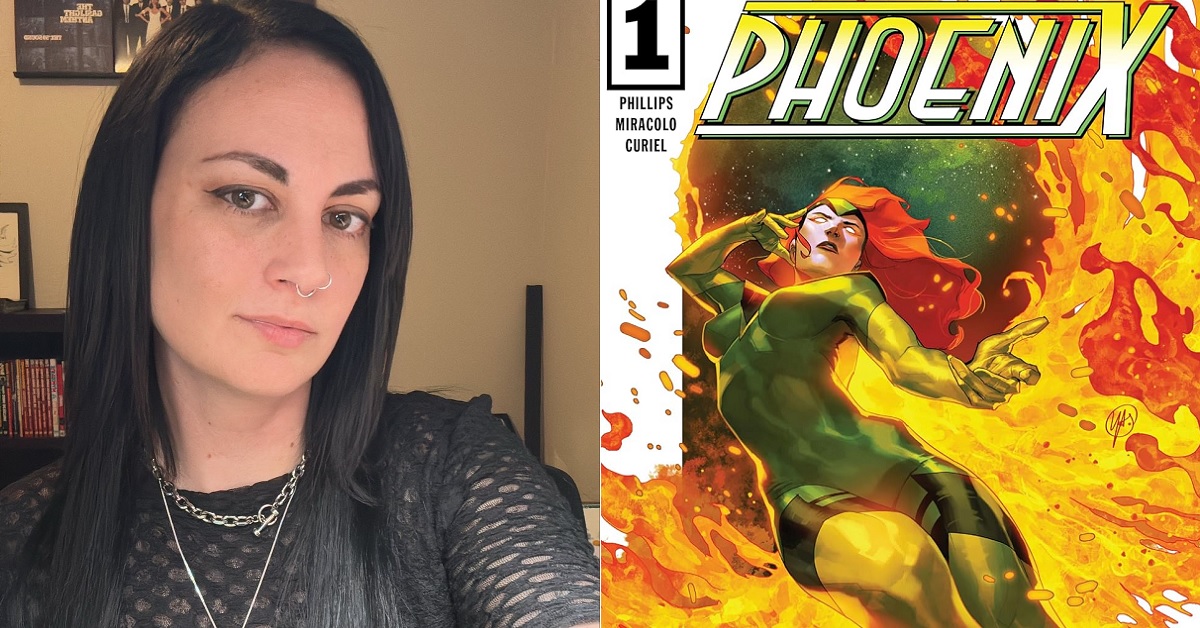
Comic writer Stephanie Phillips began her career in the late 2010s, quickly establishing her ability to write layered characters in a variety of genres. She wrote an ongoing Harley Quinn series at DC, is currently writing Phoenix at Marvel, and created Grim at BOOM! Studios. She has written for characters like Black Widow and Hawkeye, Wonder Woman and Batman, and has worked with many other publishers including Image, Oni Press, Dark Horse Comics, and more.
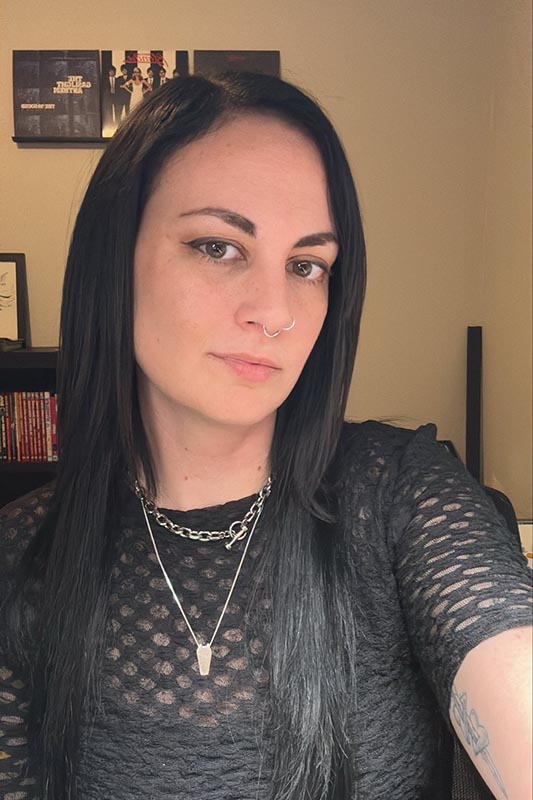
Phillips recently sat down with Scoop to talk about some of her well known projects, being a comics fan and getting into the industry, and gives us a peek at her writing process.
Scoop: How long have you been a fan of comics?
Stephanie Phillips (SP): I discovered it through Batman: The Animated Series, because I grew up on that and I was just obsessed with it. I remember there was this comic shop next to a Michael’s craft store. My mom was a painter, and she would go to Michael’s and get things, and I was like, “Why is Batman in the window at that store? I must know.” So, I just started buying things with Batman on it, not really understanding the story, but the cover art had Batman on it, and I love Batman. Then eventually, as I got older, I started to realize there are stories in these books. There’s more Batman outside of the animated show, and that’s what I had been buying. I think I’ve just always gravitated towards the characters. And then, around high school is when I started really branching out and reading more independent things. In high school, I really got into Marvel, so it’s been like a lifelong love and exploration of it.
Scoop: How did you get into the comic industry as a creator?
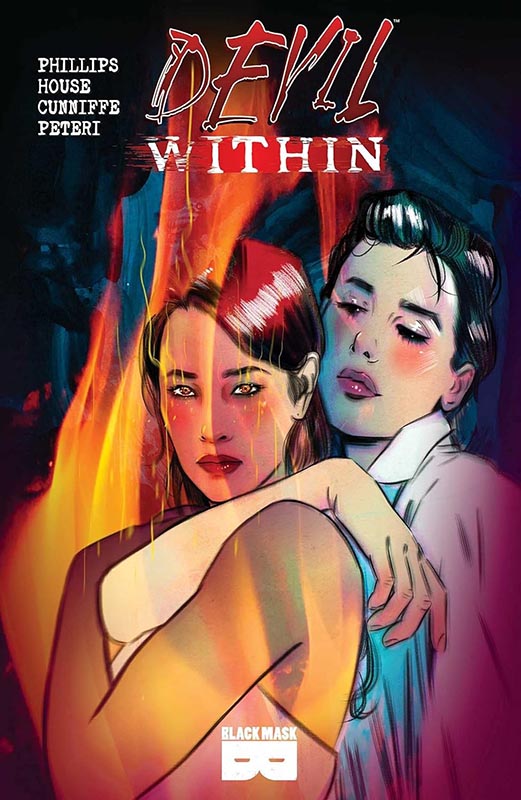
SP: I wrote a short horror story, and I hired artist Maan House to draw a few pages so that I could pitch it. I pitched it to Black Mask [Studios], which was a small indie publisher. I think they might still be around, I’m not actually sure, I haven’t seen a Black Mask title in a while. But they were a really cool strong indie company that was giving a lot of new creators a chance and I submitted it to their online submission and they asked me to publish it. It was like a very streamlined process and not a super interesting story. But once I had a book out into the world, it became a lot easier to then reach out to other publishers and get meetings and start networking from there.
Scoop: What’s your writing process like?
SP: I don’t think it’s ever really the same any two times. Sometimes it’s maybe more chaotic. I currently do a lot more outlining because I’m writing a lot more long-term stories at the moment. So things like Spider-Gwen and Phoenix have a lot more outlining than I would even normally do because I’m thinking 15 issues ahead. So I want to keep everything tight, and make sure even if I get 15 issues into the future, I’m not forgetting about something that happened in issue 2. I’m taking a lot more notes.
I try to do a very balanced workday because it is just working from home. I like to add in a wake up time, and breakfast, and I like to read with coffee – usually, it’s comics that are related to the character I’m working on, and things like that. I try to keep a regular workday so that around dinner I’ve stopped working. Because that’s been a problem for me, in the past to just be like, well, it’s 2 AM and I’m still writing. [laughs] I don’t think that’s healthy. We’re trying to set this thing called a boundary, which is new.
Scoop: What’s the best way to communicate with artists? For instance, do you provide a lot of notes/descriptions or let them infer what to draw based on the text?
SP: I really let them infer. I give them enough to understand what is going on in my brain and how the story is unfolding. They’re not my hands, you know. I’m not treating them like, “I’m just going to take your hand and do what I want.” They’re bringing something to the script that is their own expertise, and it is absolutely not my job to tell them their job. But in most cases, I’m very close with the artist I’m working with.
I’m working with a really good friend right now, which is actually one of the most exciting things, because we were just texting all day about random ideas. He’ll send these designs back, and be like “Oh, what about this” and just thinking through things. I think at the end of the day, that kind of collaboration, and honestly the partnership that goes into it, makes the story better because we are sharing the same wavelengths through that amount of communication.
Scoop: That sounds like a good way to approach it. I’ve talked to some folks who don’t have a lot of communication during that creative process.
SP: Yeah, that’s also sometimes company-specific. There have been instances where I’ve written a script for DC or Marvel, having no idea who’s going to draw it and I think that makes it a little bit emotionless because part of what makes a comic book so unique is that partnership. If you’re removing the element of the partnership and just treating it like an assembly line, you’re missing out on something. And I get why there’s a factor to that, I understand why a company needs to keep the schedules. I’ve been at both DC and Marvel. It happens a lot.
But when you get that opportunity to start advocating for the way you work, it works really well. I’ve been lucky that on, like, three big books I’m doing right now, that’s the relationship I have with all of the artists. I really love that the artists feel that way too. They have no problem reaching out to me and it’s all incredibly respectful. They can come to me with an idea or propose something for the story. I’m never going to be like, “Nope, I’m way too precious about this.” [laughs] I love that. They’re in that creative trench with you.
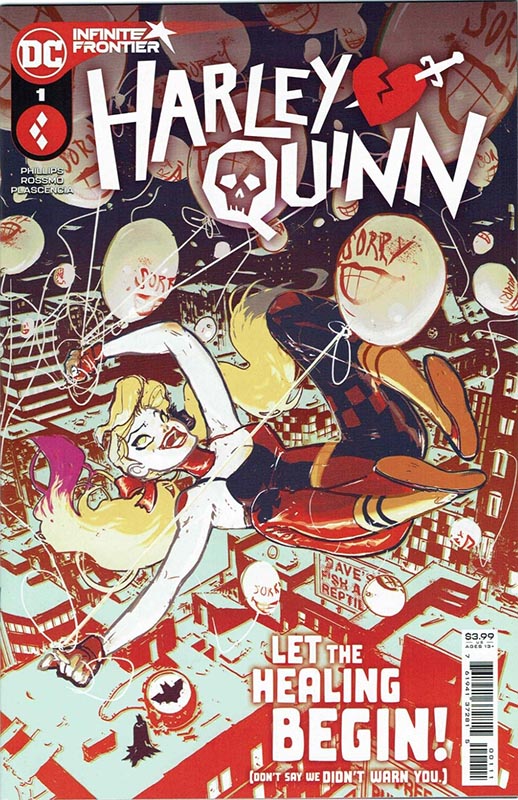
Scoop: You were the writer on the fourth ongoing Harley Quinn series, and I can only imagine how fun that was to write. When you got that book, what aspects of her character did you want to explore?
SP: I immediately was drawn to the PhD thing. I had just finished my own PhD when I got the Harley Quinn book, so I feel particularly qualified to speak to why having a PhD makes you hit somebody with a baseball bat. [laughs] That felt special. I think it was right at the time when she was having a couple of anniversaries. I was the exact same age as Harley, had the PhD, oh, and being Jewish and bisexual. They’re elements of the character that are very relatable. And then there are the very, like, hyperbolic elements of the character. Obviously, the violence and the way she uses humor.
But I really wanted to sharpen the humor and she’s incredibly smart, often Harley is the smartest person in the room. But the way that people perceive her is the greatest weapon. When they’re like, “Okay, it’s Harley Quinn. She’s going to make some jokes and whatever.” That underestimation is what makes her a threat. I really wanted to dig into that and explore what it means to reinvent yourself in your early 30s. Because I think she was like 29/30 while I was taking over the book, in terms of the actual age that the character has been around. So, what does that mean with somebody that’s obviously accomplished and has degrees and has made awful mistakes. Yes, her mistakes are maybe way worse than any mistake I’ve made, but that being said, making her a very relatable character was interesting to me.
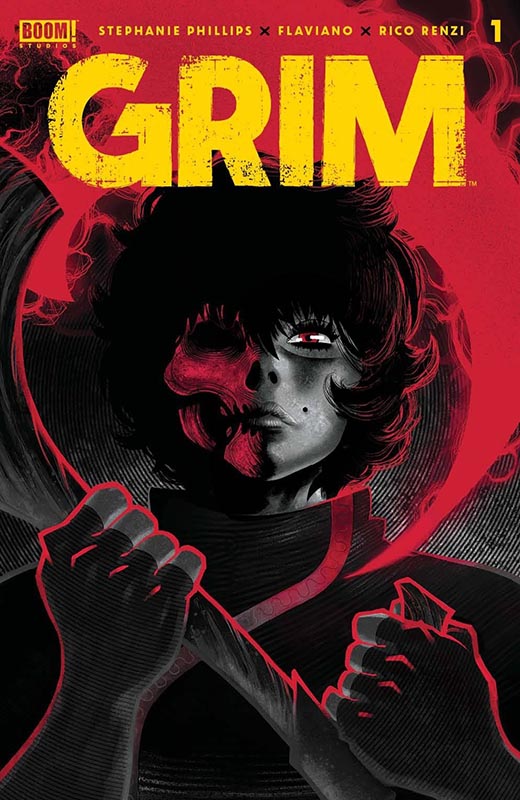
Scoop: Grim begins with lead character Jessica Harrow dying and being chosen to become a reaper. It’s such an interesting comic with a unique approach to the afterlife and plenty of twists. What inspired you to create that book?
SP: I wanted to tell a story from the perspective of a dead girl, and it had a couple of different iterations. It’s something I had talked to BOOM! [Studios] about for a while; it was kind of like a developing project. It was one where BOOM! was like, “We know you have ongoing concepts, but if you just want to come develop it with us…” which I had never done before. I thought it was a really cool opportunity to build something from the ground up with an editor and a team. I came in really interested in this idea, I’m interested in a very different perspective on death and making it super vibrant and colorful, which works incredibly well for Flaviano Armentaro’s art style.
We had some of these core concepts in place. I honestly don’t know how we got from her, just being dead to the world of the grim reapers. I think I wanted to give her a fleshed out version of the afterlife that we’re seeing her in, and through doing that, I think we just ended up building this interesting story around a personification of death. Then from personifying death, we started doing it to others. Well, if there’s [the character] Death, we haven’t really seen life before. So let’s make [the character] Life, and Life is an a******. So, that was probably one of my favorite characters to add in there too. So yeah, it was kind of just a very organically grown book through collaborating with the rest of the team.
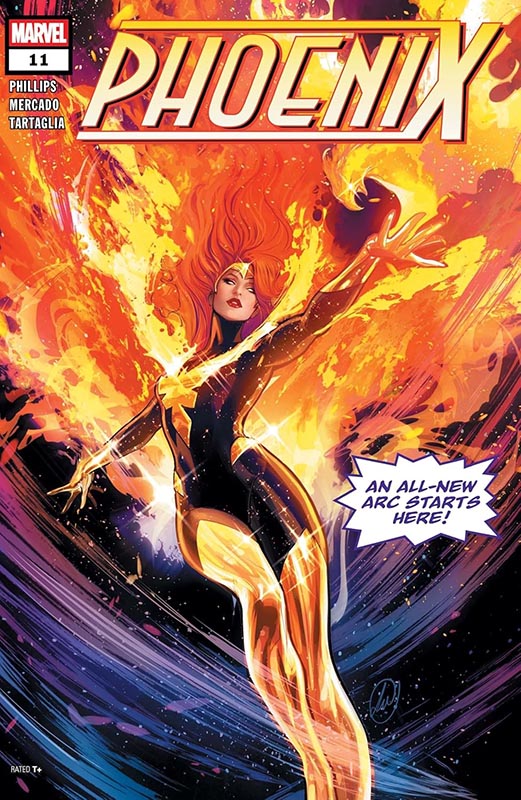
Scoop: Jean Grey/Phoenix is another complex woman that you’ve written. What was your approach to writing the duality of Jean the mutant and the massively powerful Phoenix?
SP: I think personally I’m more interested in the human. So, I’m interested in the human that has that massively powerful component. Like what does it mean to be a woman who has that? You’re married and you have this life on Earth, and friends, but you’re not even just a mutant. You have the Phoenix power. That’s huge, and comprehending it is really interesting.
I wanted to kind of balance throughout the arcs that some of these problems have to be solved by Jean Grey, and some of them have to be solved by Phoenix. As Jean starts to understand how she can best combine that and be both Phoenix and Jean as one, that’s when we start to see the Cosmic Queen figure emerging and things like that. So that was fun. Having her deal with her father-in-law was definitely… what’s more human than the in-laws? Having an awkward in-law experience? Really reiterating the human side of Jean, and her solving problems as Jean, then she realizes she has to use the Phoenix abilities to talk to the Asgardians that are trapped here. Really starting to combine the two components of her.
Scoop: How do you prepare to write for an established title or character for the first time?
SP: A lot of reading. Which is good because I like reading. So usually it’s like, alright, I’ve been offered this character, let me immediately go to the bookshelf and see what I have on them and start pulling everything I’ve got on their appearances. Or see if I need to go buy things.
I always have to be careful at my local comic shop, because they’re on to me. If I’m writing a character that nobody knows I’m writing, I can’t walk in there and just buy a bunch of books of that character. They’re too smart for me. [laughs] They’ll be like, huh, I wonder what Stephanie’s writing. They’re so cool about it, though. I might get a message from one of them after something’s announced, saying “We knew you were writing this.”
I do a lot of reading. I try to fill in any gaps in it too, let’s be honest, some of these characters have very lengthy histories, which is very cool. I also like filling in the gaps as much as I can, things I may have missed in my own reading, and also rereading things that I love. In terms of Jean Grey, there are these standout moments. Obviously the Dark Phoenix Saga stands out to me, not just as one of the best Jean Grey stories, but one of the best comics. Getting to go back and reread that, and remember why it stood out to me, these are the things I really loved about it, and liked about Jean. I think that kind of process is really helpful. What are the reasons why I liked these stories, what are those elements that I want to make sure I can still maintain in my own telling of the character?
Come back next week for Part II of the interview when Phillips talks about the challenges of writing in comics, advice for potential comic creators, what she’s working on next, and more.

Popular Topics
Overstreet Access Quick Links
From Harley Quinn to Phoenix: An Interview with Stephanie Phillips – Part I
Comic writer Stephanie Phillips began her career in the late 2010s, quickly establishing her ability to write layered characters in a variety of genres. She wrote an ongoing Harley Quinn series at DC, is currently writing Phoenix at Marvel, and created Grim at BOOM! Studios. She has written for characters like Black Widow and Hawkeye, Wonder Woman and Batman, and has worked with many other publishers including Image, Oni Press, Dark Horse Comics, and more.
Phillips recently sat down with Scoop to talk about some of her well known projects, being a comics fan and getting into the industry, and gives us a peek at her writing process.
Scoop: How long have you been a fan of comics?
Stephanie Phillips (SP): I discovered it through Batman: The Animated Series, because I grew up on that and I was just obsessed with it. I remember there was this comic shop next to a Michael’s craft store. My mom was a painter, and she would go to Michael’s and get things, and I was like, “Why is Batman in the window at that store? I must know.” So, I just started buying things with Batman on it, not really understanding the story, but the cover art had Batman on it, and I love Batman. Then eventually, as I got older, I started to realize there are stories in these books. There’s more Batman outside of the animated show, and that’s what I had been buying. I think I’ve just always gravitated towards the characters. And then, around high school is when I started really branching out and reading more independent things. In high school, I really got into Marvel, so it’s been like a lifelong love and exploration of it.
Scoop: How did you get into the comic industry as a creator?
SP: I wrote a short horror story, and I hired artist Maan House to draw a few pages so that I could pitch it. I pitched it to Black Mask [Studios], which was a small indie publisher. I think they might still be around, I’m not actually sure, I haven’t seen a Black Mask title in a while. But they were a really cool strong indie company that was giving a lot of new creators a chance and I submitted it to their online submission and they asked me to publish it. It was like a very streamlined process and not a super interesting story. But once I had a book out into the world, it became a lot easier to then reach out to other publishers and get meetings and start networking from there.
Scoop: What’s your writing process like?
SP: I don’t think it’s ever really the same any two times. Sometimes it’s maybe more chaotic. I currently do a lot more outlining because I’m writing a lot more long-term stories at the moment. So things like Spider-Gwen and Phoenix have a lot more outlining than I would even normally do because I’m thinking 15 issues ahead. So I want to keep everything tight, and make sure even if I get 15 issues into the future, I’m not forgetting about something that happened in issue 2. I’m taking a lot more notes.
I try to do a very balanced workday because it is just working from home. I like to add in a wake up time, and breakfast, and I like to read with coffee – usually, it’s comics that are related to the character I’m working on, and things like that. I try to keep a regular workday so that around dinner I’ve stopped working. Because that’s been a problem for me, in the past to just be like, well, it’s 2 AM and I’m still writing. [laughs] I don’t think that’s healthy. We’re trying to set this thing called a boundary, which is new.
Scoop: What’s the best way to communicate with artists? For instance, do you provide a lot of notes/descriptions or let them infer what to draw based on the text?
SP: I really let them infer. I give them enough to understand what is going on in my brain and how the story is unfolding. They’re not my hands, you know. I’m not treating them like, “I’m just going to take your hand and do what I want.” They’re bringing something to the script that is their own expertise, and it is absolutely not my job to tell them their job. But in most cases, I’m very close with the artist I’m working with.
I’m working with a really good friend right now, which is actually one of the most exciting things, because we were just texting all day about random ideas. He’ll send these designs back, and be like “Oh, what about this” and just thinking through things. I think at the end of the day, that kind of collaboration, and honestly the partnership that goes into it, makes the story better because we are sharing the same wavelengths through that amount of communication.
Scoop: That sounds like a good way to approach it. I’ve talked to some folks who don’t have a lot of communication during that creative process.
SP: Yeah, that’s also sometimes company-specific. There have been instances where I’ve written a script for DC or Marvel, having no idea who’s going to draw it and I think that makes it a little bit emotionless because part of what makes a comic book so unique is that partnership. If you’re removing the element of the partnership and just treating it like an assembly line, you’re missing out on something. And I get why there’s a factor to that, I understand why a company needs to keep the schedules. I’ve been at both DC and Marvel. It happens a lot.
But when you get that opportunity to start advocating for the way you work, it works really well. I’ve been lucky that on, like, three big books I’m doing right now, that’s the relationship I have with all of the artists. I really love that the artists feel that way too. They have no problem reaching out to me and it’s all incredibly respectful. They can come to me with an idea or propose something for the story. I’m never going to be like, “Nope, I’m way too precious about this.” [laughs] I love that. They’re in that creative trench with you.
Scoop: You were the writer on the fourth ongoing Harley Quinn series, and I can only imagine how fun that was to write. When you got that book, what aspects of her character did you want to explore?
SP: I immediately was drawn to the PhD thing. I had just finished my own PhD when I got the Harley Quinn book, so I feel particularly qualified to speak to why having a PhD makes you hit somebody with a baseball bat. [laughs] That felt special. I think it was right at the time when she was having a couple of anniversaries. I was the exact same age as Harley, had the PhD, oh, and being Jewish and bisexual. They’re elements of the character that are very relatable. And then there are the very, like, hyperbolic elements of the character. Obviously, the violence and the way she uses humor.
But I really wanted to sharpen the humor and she’s incredibly smart, often Harley is the smartest person in the room. But the way that people perceive her is the greatest weapon. When they’re like, “Okay, it’s Harley Quinn. She’s going to make some jokes and whatever.” That underestimation is what makes her a threat. I really wanted to dig into that and explore what it means to reinvent yourself in your early 30s. Because I think she was like 29/30 while I was taking over the book, in terms of the actual age that the character has been around. So, what does that mean with somebody that’s obviously accomplished and has degrees and has made awful mistakes. Yes, her mistakes are maybe way worse than any mistake I’ve made, but that being said, making her a very relatable character was interesting to me.
Scoop: Grim begins with lead character Jessica Harrow dying and being chosen to become a reaper. It’s such an interesting comic with a unique approach to the afterlife and plenty of twists. What inspired you to create that book?
SP: I wanted to tell a story from the perspective of a dead girl, and it had a couple of different iterations. It’s something I had talked to BOOM! [Studios] about for a while; it was kind of like a developing project. It was one where BOOM! was like, “We know you have ongoing concepts, but if you just want to come develop it with us…” which I had never done before. I thought it was a really cool opportunity to build something from the ground up with an editor and a team. I came in really interested in this idea, I’m interested in a very different perspective on death and making it super vibrant and colorful, which works incredibly well for Flaviano Armentaro’s art style.
We had some of these core concepts in place. I honestly don’t know how we got from her, just being dead to the world of the grim reapers. I think I wanted to give her a fleshed out version of the afterlife that we’re seeing her in, and through doing that, I think we just ended up building this interesting story around a personification of death. Then from personifying death, we started doing it to others. Well, if there’s [the character] Death, we haven’t really seen life before. So let’s make [the character] Life, and Life is an a******. So, that was probably one of my favorite characters to add in there too. So yeah, it was kind of just a very organically grown book through collaborating with the rest of the team.
Scoop: Jean Grey/Phoenix is another complex woman that you’ve written. What was your approach to writing the duality of Jean the mutant and the massively powerful Phoenix?
SP: I think personally I’m more interested in the human. So, I’m interested in the human that has that massively powerful component. Like what does it mean to be a woman who has that? You’re married and you have this life on Earth, and friends, but you’re not even just a mutant. You have the Phoenix power. That’s huge, and comprehending it is really interesting.
I wanted to kind of balance throughout the arcs that some of these problems have to be solved by Jean Grey, and some of them have to be solved by Phoenix. As Jean starts to understand how she can best combine that and be both Phoenix and Jean as one, that’s when we start to see the Cosmic Queen figure emerging and things like that. So that was fun. Having her deal with her father-in-law was definitely… what’s more human than the in-laws? Having an awkward in-law experience? Really reiterating the human side of Jean, and her solving problems as Jean, then she realizes she has to use the Phoenix abilities to talk to the Asgardians that are trapped here. Really starting to combine the two components of her.
Scoop: How do you prepare to write for an established title or character for the first time?
SP: A lot of reading. Which is good because I like reading. So usually it’s like, alright, I’ve been offered this character, let me immediately go to the bookshelf and see what I have on them and start pulling everything I’ve got on their appearances. Or see if I need to go buy things.
I always have to be careful at my local comic shop, because they’re on to me. If I’m writing a character that nobody knows I’m writing, I can’t walk in there and just buy a bunch of books of that character. They’re too smart for me. [laughs] They’ll be like, huh, I wonder what Stephanie’s writing. They’re so cool about it, though. I might get a message from one of them after something’s announced, saying “We knew you were writing this.”
I do a lot of reading. I try to fill in any gaps in it too, let’s be honest, some of these characters have very lengthy histories, which is very cool. I also like filling in the gaps as much as I can, things I may have missed in my own reading, and also rereading things that I love. In terms of Jean Grey, there are these standout moments. Obviously the Dark Phoenix Saga stands out to me, not just as one of the best Jean Grey stories, but one of the best comics. Getting to go back and reread that, and remember why it stood out to me, these are the things I really loved about it, and liked about Jean. I think that kind of process is really helpful. What are the reasons why I liked these stories, what are those elements that I want to make sure I can still maintain in my own telling of the character?
Come back next week for Part II of the interview when Phillips talks about the challenges of writing in comics, advice for potential comic creators, what she’s working on next, and more.
Popular Topics
Overstreet Access Quick Links