



DC and Marvel Present: Superman and Spider-Man (Treasury Edition)
DC Comics; $17.99
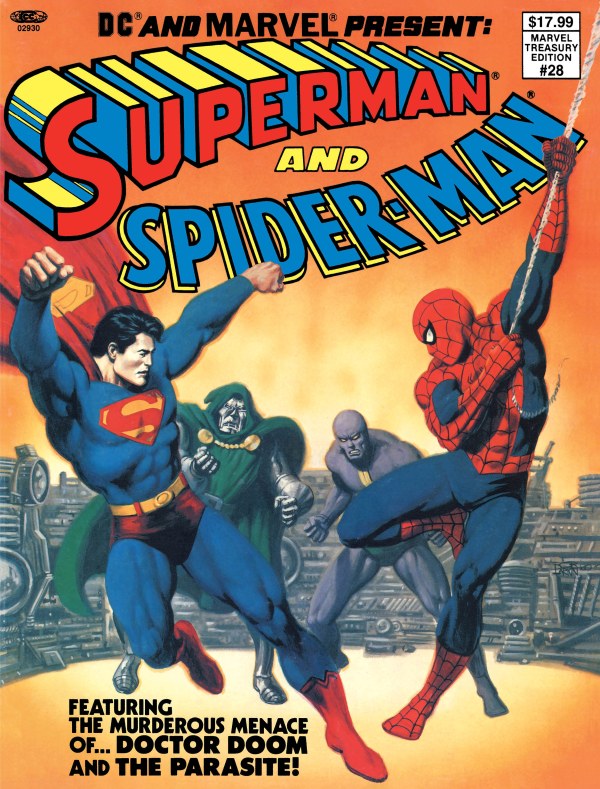
Despite the convoluted title in the indicia – DC and Marvel Present: Superman and Spider-Man (Treasury Edition) – and the truly humorous fact that DC has published a facsimile edition of Marvel Treasury Edition #28, the current détente between the Big Two is a boon for fans of crossovers.
In the aftermath of the recent Marvel Versus DC and DC Versus Marvel: The Amalgam Age omnibus editions, the Batman/Deadpool and Deadpool/Batman crossovers, and the recent facsimile edition of the original Marvel-DC collaboration, Superman vs. The Amazing Spider-Man, there’s a good deal of interest in the stories that preceded the modern iterations of DC and Marvel getting together.
I’ve always loved the original Superman vs. The Amazing Spider-Man and rarely miss a chance to share my enthusiasm with others. That’s what makes it so odd that I never read Marvel Treasury Edition #28 until a few years ago.
For whatever reason, I just had never picked it up. Maybe I thought it could never be as good as the original, I don’t know. Here’s what I know now: While it could never be first, and it could never be the same as the first one, it’s a darn fine story and it’s a fairly different animal.
Where the original was fairly breezy, this one is more densely written. Jim Shooter had a way of writing Doctor Doom as verbose and in love with the sound of his own voice. That’s in full effect here since Doom is the main Marvel villain of the story.
Take a look at the differences between scenes. Doom’s monologues make J. Jonah Jameson’s rants look succinct. The battle between Superman and the Incredible Hulk and the more casual conversation between Jimmy Olson and Peter Parker feature no such word counts.
That fairly subtle shift in tones and storytelling gives the reader the feel of a real, true, original graphic novel, a phrase fans at the time didn’t know so well (but soon would). Shooter and artist John Buscema took full advantage of the storytelling real estate to tell a story that has stood up very nicely over the years.
– J.C. Vaughn

Popular Topics
Overstreet Access Quick Links
DC and Marvel Present: Superman and Spider-Man (Treasury Edition)
DC Comics; $17.99
Despite the convoluted title in the indicia – DC and Marvel Present: Superman and Spider-Man (Treasury Edition) – and the truly humorous fact that DC has published a facsimile edition of Marvel Treasury Edition #28, the current détente between the Big Two is a boon for fans of crossovers.
In the aftermath of the recent Marvel Versus DC and DC Versus Marvel: The Amalgam Age omnibus editions, the Batman/Deadpool and Deadpool/Batman crossovers, and the recent facsimile edition of the original Marvel-DC collaboration, Superman vs. The Amazing Spider-Man, there’s a good deal of interest in the stories that preceded the modern iterations of DC and Marvel getting together.
I’ve always loved the original Superman vs. The Amazing Spider-Man and rarely miss a chance to share my enthusiasm with others. That’s what makes it so odd that I never read Marvel Treasury Edition #28 until a few years ago.
For whatever reason, I just had never picked it up. Maybe I thought it could never be as good as the original, I don’t know. Here’s what I know now: While it could never be first, and it could never be the same as the first one, it’s a darn fine story and it’s a fairly different animal.
Where the original was fairly breezy, this one is more densely written. Jim Shooter had a way of writing Doctor Doom as verbose and in love with the sound of his own voice. That’s in full effect here since Doom is the main Marvel villain of the story.
Take a look at the differences between scenes. Doom’s monologues make J. Jonah Jameson’s rants look succinct. The battle between Superman and the Incredible Hulk and the more casual conversation between Jimmy Olson and Peter Parker feature no such word counts.
That fairly subtle shift in tones and storytelling gives the reader the feel of a real, true, original graphic novel, a phrase fans at the time didn’t know so well (but soon would). Shooter and artist John Buscema took full advantage of the storytelling real estate to tell a story that has stood up very nicely over the years.
– J.C. Vaughn
Popular Topics
Overstreet Access Quick Links