



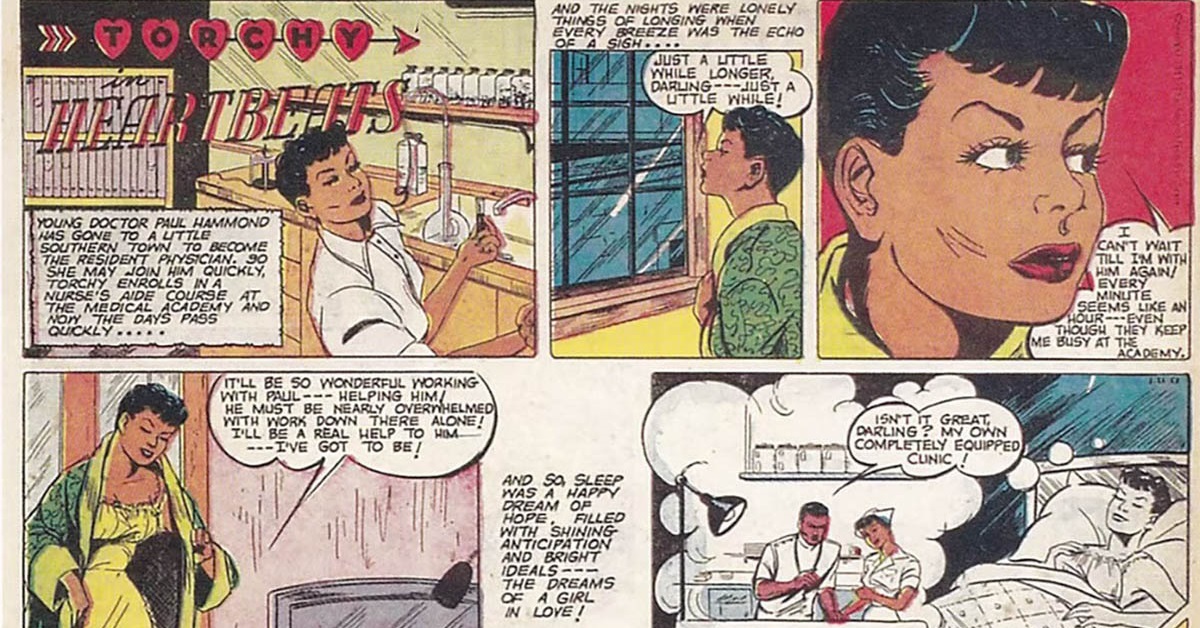
Creator Profile: Jackie Ormes
Jackie Ormes was a cartoonist who created the Torchy Brown and Patty-Jo ‘n’ Ginger comic strips. She was known as the first African-American woman to see national success in the industry.
Ormes was born Zelda Mavin Jackson on August 1, 1911, in Pittsburgh, Pennsylvania. She regularly wrote and drew while she was in high school, serving as the arts editor for her high school yearbook. Some of her earliest known cartoons appear in the yearbook as caricatures of the school’s teachers and students. Upon graduation in 1930, she sought work with the Pittsburgh Courier and got a gig covering local boxing matches. From there, she worked for the newspaper as a proofreader, editor, and freelance writer who covered human interest stories and law enforcement related stories.
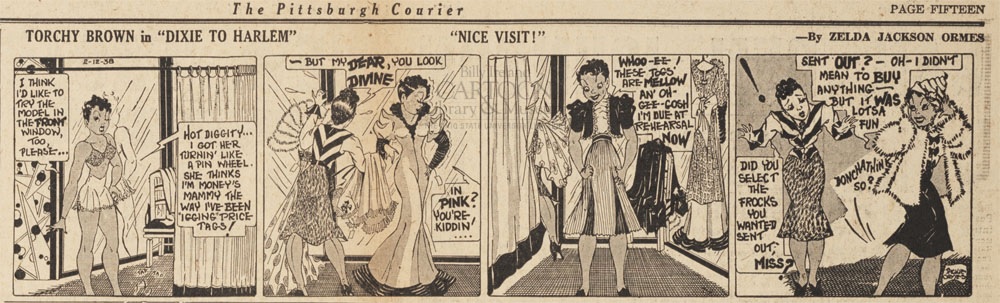
On May 1, 1937, her first comic strip, Torchy Brown in Dixie to Harlem, debuted in the Pittsburgh Courier. The strip starred Torchy Brown, a teenager from Mississippi who moved to New York City to pursue her dream of singing and dancing at the Cotton Club. The strip was carried in the Courier in 14 cities around the country, making her the first African-American woman to have a comic strip run nationally.
She moved to Chicago in 1942 where she wrote articles and the social column for The Chicago Defender, one of the country’s most popular Black newspapers. Candy, her single panel strip about a housemaid with a sense of humor, ran in the Defender in 1945.
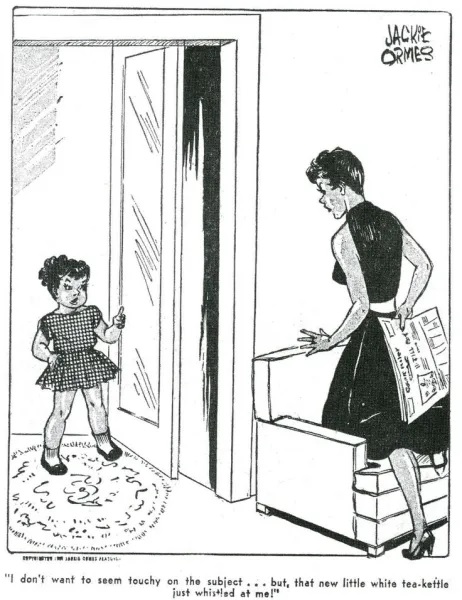
Ormes returned to the Courier in the summer of ’45 where she introduced the single panel cartoon, Patty-Jo ‘n’ Ginger. The strip starred Patty-Jo, an outspoken little girl who followed politics and social issue, while her older sister Ginger always appeared fashionable and didn’t speak at all. It ran for 11 years from September 1945 to September 1956.
Ormes parlayed the success of Patty-Jo ‘n’ Ginger into Patty-Jo dolls that were produced by the Terri Lee doll company with the initial wave released in time for the holidays in 1947. They were the first Black dolls with wardrobe variety featuring stylish pieces, and the doll itself was more realistic looking than stereotypical Black dolls.
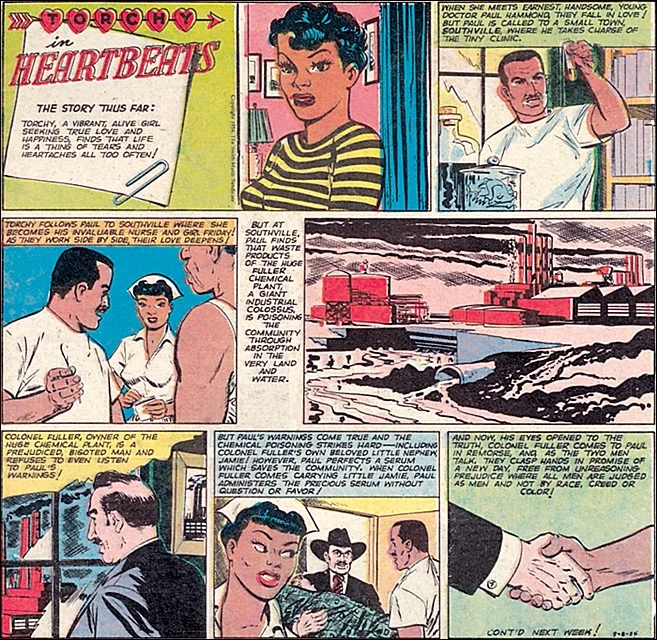
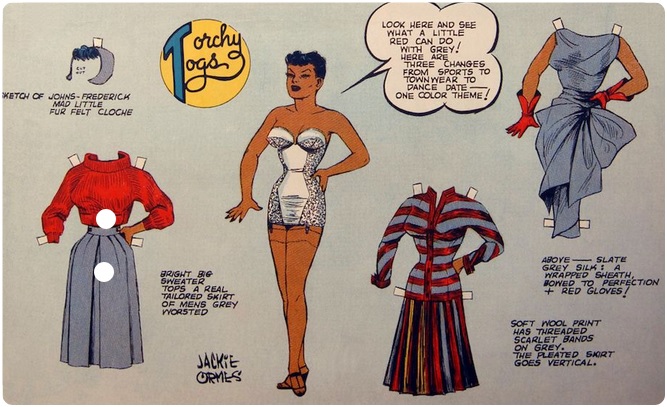
In 1950 when the Courier expanded their comics section with an eight-page color spread, Ormes rebooted Torchy in the new strip, Torchy in Heartbeats. This version of Torchy was a beautiful, confident, and intelligent woman who stood out as a more positive representation of a Black woman, compared to caricatures at the time. The strip was accompanied by the Torchy Togs paper doll secondary strip that shows off Ormes’ skills in designing stylish outfits for the protagonist.
Ormes retired from professional cartooning in ’56, turning to painting still lifes and portraits, and creating murals. She produced fundraiser fashion shows and entertainment events in the South Side of Chicago and she was on DuSable Museum of African American History’s founding board of directors. Ormes died on December 26, 1985, from a cerebral hemorrhage. Years later in 2014, she was inducted into the National Association of Black Journalists Hall of Fame and was inducted into the Will Eisner Hall of Fame in 2018.

Popular Topics
Overstreet Access Quick Links
Creator Profile: Jackie Ormes
Jackie Ormes was a cartoonist who created the Torchy Brown and Patty-Jo ‘n’ Ginger comic strips. She was known as the first African-American woman to see national success in the industry.
Ormes was born Zelda Mavin Jackson on August 1, 1911, in Pittsburgh, Pennsylvania. She regularly wrote and drew while she was in high school, serving as the arts editor for her high school yearbook. Some of her earliest known cartoons appear in the yearbook as caricatures of the school’s teachers and students. Upon graduation in 1930, she sought work with the Pittsburgh Courier and got a gig covering local boxing matches. From there, she worked for the newspaper as a proofreader, editor, and freelance writer who covered human interest stories and law enforcement related stories.
On May 1, 1937, her first comic strip, Torchy Brown in Dixie to Harlem, debuted in the Pittsburgh Courier. The strip starred Torchy Brown, a teenager from Mississippi who moved to New York City to pursue her dream of singing and dancing at the Cotton Club. The strip was carried in the Courier in 14 cities around the country, making her the first African-American woman to have a comic strip run nationally.
She moved to Chicago in 1942 where she wrote articles and the social column for The Chicago Defender, one of the country’s most popular Black newspapers. Candy, her single panel strip about a housemaid with a sense of humor, ran in the Defender in 1945.
Ormes returned to the Courier in the summer of ’45 where she introduced the single panel cartoon, Patty-Jo ‘n’ Ginger. The strip starred Patty-Jo, an outspoken little girl who followed politics and social issue, while her older sister Ginger always appeared fashionable and didn’t speak at all. It ran for 11 years from September 1945 to September 1956.
Ormes parlayed the success of Patty-Jo ‘n’ Ginger into Patty-Jo dolls that were produced by the Terri Lee doll company with the initial wave released in time for the holidays in 1947. They were the first Black dolls with wardrobe variety featuring stylish pieces, and the doll itself was more realistic looking than stereotypical Black dolls.
In 1950 when the Courier expanded their comics section with an eight-page color spread, Ormes rebooted Torchy in the new strip, Torchy in Heartbeats. This version of Torchy was a beautiful, confident, and intelligent woman who stood out as a more positive representation of a Black woman, compared to caricatures at the time. The strip was accompanied by the Torchy Togs paper doll secondary strip that shows off Ormes’ skills in designing stylish outfits for the protagonist.
Ormes retired from professional cartooning in ’56, turning to painting still lifes and portraits, and creating murals. She produced fundraiser fashion shows and entertainment events in the South Side of Chicago and she was on DuSable Museum of African American History’s founding board of directors. Ormes died on December 26, 1985, from a cerebral hemorrhage. Years later in 2014, she was inducted into the National Association of Black Journalists Hall of Fame and was inducted into the Will Eisner Hall of Fame in 2018.
Popular Topics
Overstreet Access Quick Links