

Comic Shop & Convention Owner Scott Schlazer Discusses Career in Comics & Fandom
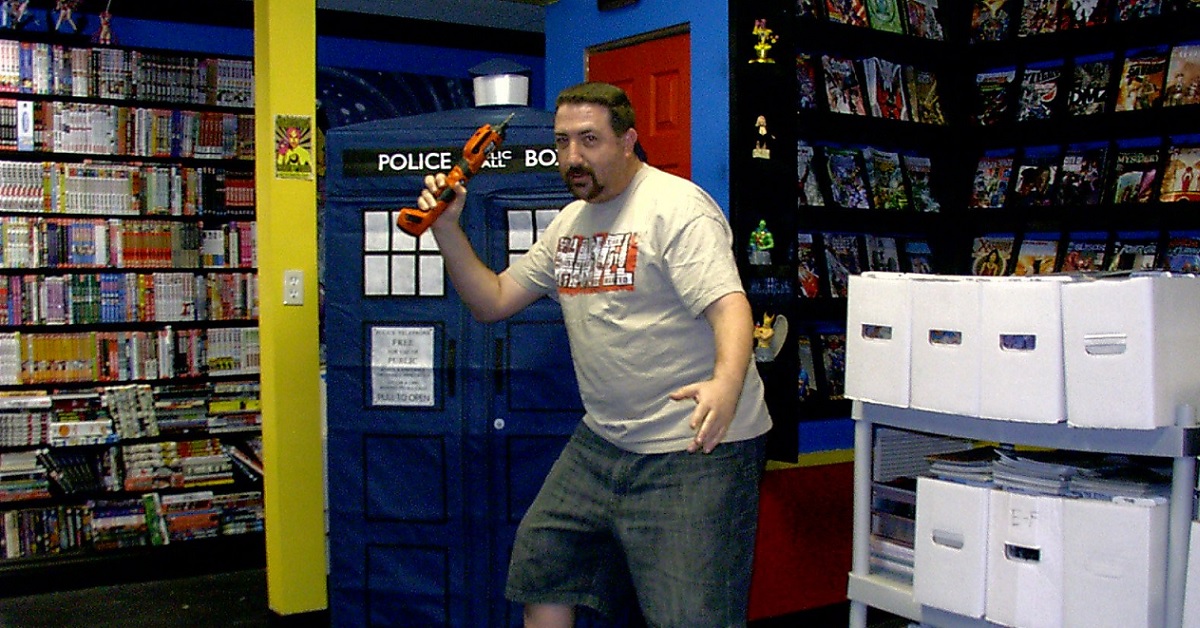
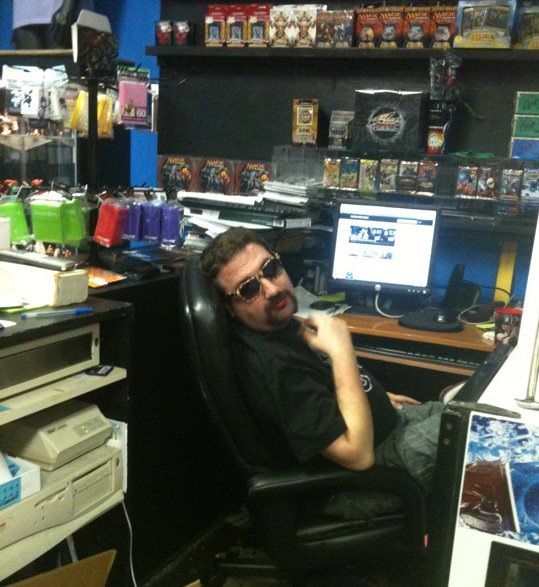
Scott Schlazer is a lifelong fan of comics and pro wrestling, a gamer, and consumer of pop culture from the underground to the mainstream. He has been entrenched in the ‘zine scene since 1984, has worked in the comic book and gaming business since 1999, and opened West Orange Comics & Video Games in 2017. Schlazer owns the Clermont Comic Con, Lake County Comic Convention, and Pokoee Card & Gaming Expo, and introduced the Florida Geek Scene website in 2010.
He will soon add another line to his résumé by contributing comic book reviews to OverstreetAccess.com. Before Schlazer starts posting his reviews, we want to introduce him to readers, and share the passion and ambition he has for working in the comics industry.
Scoop: How long have you been reading comics?
Scott Schlazer (SS): I’ve been collecting comic books since 1976. A close friend of mine and I were completely immersed in comics and all the great toys that defined that era. I grew up in a very sports-oriented family – my brother, sister, and I were all involved in athletics at one point or another because my parents traveled frequently for sports, especially baseball, which was my father’s primary passion.
Even with all the sports around me, my attention was always focused on comic books. The highlight of traveling was knowing there was a good chance the hotel gift shop would have a comic book spinner rack. If not, we would usually track down a local 7-11 that carried comics. Dedicated comic book shops were still fairly rare at the time, which made every new find feel exciting.
Looking back, those years were some of the best memories of my childhood.
Scoop: Your résumé includes running a comic shop, a comics and related pop culture website, and comic conventions. What inspired you to transition from fan to working in the industry?
SS: Looking back, it almost felt inevitable that I would eventually find my way into the comic book world. As a kid, I really only had a handful of dreams. I wanted to grow up to be a superhero, a comic book artist or writer – preferably both – a professional wrestler, or eventually, sometime during the 1980s, the owner of a comic book shop.
In the end, comic books were always where I felt most at home. Growing up in Miami, I spent countless hours in comic shops, especially A & M Comics, which is still operating today in the same location after more than 50 years. Walking into that store still feels like stepping back in time. Over the years, I became such a regular that while picking up my weekly comics, I would often help customers around the store simply because I knew the material so well. Without realizing it at the time, I was learning the comic shop business firsthand.
The idea for Florida Geek Scene had been in my head for years, but I had no idea how to build or manage a website. One of my customers happened to own a web design company and suggested building a website for my store while teaching me how to maintain it myself. That eventually led to the creation of Florida Geek Scene, which originally started as a simple Florida convention calendar. Over time, I began adding comic book reviews and articles covering the many areas of pop culture that interested me. The site steadily grew, more contributors wanted to get involved, and today Florida Geek Scene has 41 writers from across the state.
As for how I officially entered the comic book business, it happened in 1999 after years of burnout from the demanding hours of the culinary industry. One day, at 28 years old, I asked myself, “What am I still doing here?” I decided it was finally time to pursue what I truly loved and opened my comic book store. For several years I continued balancing both careers until 2005, when I reached the point where I could fully support myself through the shop alone.
Conventions were simply the next natural step. I had spent years attending shows, knew many of the vendors personally, and felt strongly that creating conventions myself was the right progression. In 2014, I produced my very first event, beginning a whole new chapter of my journey in comics and pop culture.
Scoop: What types of comics do you like to read?
SS: My reading habits have always leaned heavily toward back issues, particularly classic superhero comics. I grew up reading a tremendous amount of work from creators like Jack Kirby, Steve Ditko, John Buscema, and Stan Lee. I have always bounced back and forth between Marvel and DC, but my appreciation has consistently been rooted in the classic eras and the creators who helped define the industry.
These days, however, I do not read nearly as much mainstream Marvel or DC material because I genuinely believe independent comics represent the future of the medium. Many of today’s biggest names in comics built their reputations in the independent scene before eventually moving into major publishing houses. In many ways, the indie world has become the creative engine that drives the industry forward.
Artistically, I have always been a huge admirer of creators like Mike Allred, Daniel Warren Johnson, and my friend Mike Spicer. One of my favorite current titles is Spirit of the Shadows by Nick Cagnetti and Daniel Ziegler, which I think is one of the strongest books being published right now.
As for favorite characters, I have always gravitated toward the unusual, overlooked, or slightly strange corners of comics. Characters like Hulk, Omega the Unknown, Speedball, Wolverine, Ghost Rider, Gargoyle, Son of Satan, Etrigan the Demon, Sinestro, and Solomon Grundy have always stood out to me.
When it comes to teams, I have long been a fan of Defenders – specifically the original comic book incarnation, not the television adaptation – as well as X-Statix, the U-Foes, and the wonderfully absurd Great Lakes Avengers. I have also always had a soft spot for Captain Marvel, even though the character was taken from readers far too early.
More than anything, I have always appreciated the strange and unconventional side of comics. Characters like The Weird embody that perfectly for me. And of course, no list of favorites would ever feel complete without Hellboy.
Scoop: How did you get into reviewing comics?
SS: From 1984 through 1997, I was heavily involved in the underground fanzine scene and published my own punk rock per-zine. It was essentially a reflection of everything I was obsessed with between the ages of 14 and 27 – music, comic books, movies, toys, roleplaying games, underground culture, and just about every strange or unusual thing that caught my attention.
The zine was completely handmade. I wrote it by hand, illustrated it myself, photocopied it, stapled it together, and distributed it through the mail for a dollar an issue. It was raw, personal, and very much a product of the DIY culture that defined underground punk and zine communities during that era. Since I was a broke kid most of the time, I often found creative ways to make photocopies, including sneaking into places like Kinko’s after hours just to keep the publication alive.
By the 1990s, things became a little easier when a friend of my parents was closing her business and planned to throw away a Xerox machine. I convinced her to give it to me instead, and suddenly I had my own way of printing issues consistently. From there, the zine really began to grow. I sold copies through comic shops, record stores, mail order, and through the underground tape-trading and VHS-trading communities that existed long before the internet made sharing media easy.
Record labels regularly mailed me albums, demo tapes, and promotional material to review. The zine became a mix of music criticism, comic book discussion, movie reviews, interviews, humor, and commentary on underground pop culture. Over the years, I also conducted interviews with musicians and performers who came through town, including Dee Snider of Twisted Sister, GWAR, Green Jellÿ, and The Great Kat.
Roleplaying games were also a major part of my life during that period, so the zine frequently included content related to tabletop gaming. I was also deeply involved in VHS collecting long before retro media collecting became popular. That passion eventually led to writing reviews for publications such as Asian Cult Cinema and Asian Trash Cinema.
Scoop: What characteristics do you look for when you are reviewing books?
SS: When deciding what to read or bring into the shop, I pay close attention to the creative team behind a book as well as the publisher releasing it. Strong writers, artists, and colorists are often what draw me toward a project more than the characters themselves.
At the same time, I make a conscious effort to take chances on titles from creators I may not be familiar with. Discovering new talent has always been one of the most exciting parts of comics for me. Because of that, I actively support and promote independent books whenever possible. I believe some of the most creative and original work in the industry is currently coming from the indie scene, and I enjoy helping introduce readers to creators and stories they may not have discovered otherwise.
Scoop: What notable trends do you see in comics right now?
SS: One of the biggest trends I am seeing right now is the continued rise of manga and Korean manhwa. Customer interest in both categories has grown tremendously, and more readers are actively seeking them out than ever before. At the same time, genres like slice-of-life stories have become far more mainstream, reaching audiences that traditionally may not have been regular comic readers.
Another major shift is the growing influence of webcomics and digital-first storytelling. Many popular webtoons are now making the jump into print publishing, which shows how much the industry has evolved and how readers are discovering material outside of traditional comic shop channels.
Publishers are also experimenting more creatively with their formats and storytelling approaches. There has been a noticeable increase in alternate universe stories, prestige-format books, unconventional art styles, darker and more layered storytelling, and self-contained miniseries that allow creators to tell focused stories without requiring years of continuity knowledge from readers.
On the publishing side, compact editions and facsimile editions have become increasingly popular as well. Readers enjoy affordable entry points into classic material, while longtime collectors appreciate the nostalgic appeal of facsimile releases that recreate the original reading experience.
Perhaps most importantly, creator-owned comics and crowdfunding platforms like Kickstarter have dramatically changed the landscape of the industry. Independent creators now have more opportunities than ever to publish their own work directly to audiences without relying entirely on traditional publishers. In many ways that creative independence is helping shape the future direction of comics.
Scoop: Which titles are your current favorites and why?
SS: Lately, I have been reading titles like D’Orc, Death Fight Forever, Narco, Spirit of the Shadows, Mumm-Ra, Thundarr the Barbarian, Barbarian Behind Bars, Racer X, and somewhere in the middle of all of that, Absolute Martian Manhunter. What draws me to these books is the combination of strong storytelling, distinctive artwork, and the sense of nostalgia many of them capture.
A lot of these titles tap directly into the feeling of growing up during the era of classic Saturday morning cartoons. They remind me of sitting on the living room floor as a kid watching cartoons while surrounded by action figures, or coming home after school with friends, raiding the refrigerator, and spending the afternoon watching animated shows together. There is a certain energy and imagination in those memories that some modern comics still manage to capture perfectly.
I have always been especially drawn to stylized, high-energy properties, which is one reason Racer X appeals to me so much. I have had a longtime appreciation for Speed Racer, so anything connected to that world immediately grabs my attention. For me, comics are at their best when they combine creativity, personality, and the ability to reconnect readers with the excitement and imagination they felt as kids.

Popular Topics
Overstreet Access Quick Links
Comic Shop & Convention Owner Scott Schlazer Discusses Career in Comics & Fandom
Scott Schlazer is a lifelong fan of comics and pro wrestling, a gamer, and consumer of pop culture from the underground to the mainstream. He has been entrenched in the ‘zine scene since 1984, has worked in the comic book and gaming business since 1999, and opened West Orange Comics & Video Games in 2017. Schlazer owns the Clermont Comic Con, Lake County Comic Convention, and Pokoee Card & Gaming Expo, and introduced the Florida Geek Scene website in 2010.
He will soon add another line to his résumé by contributing comic book reviews to OverstreetAccess.com. Before Schlazer starts posting his reviews, we want to introduce him to readers, and share the passion and ambition he has for working in the comics industry.
Scoop: How long have you been reading comics?
Scott Schlazer (SS): I’ve been collecting comic books since 1976. A close friend of mine and I were completely immersed in comics and all the great toys that defined that era. I grew up in a very sports-oriented family – my brother, sister, and I were all involved in athletics at one point or another because my parents traveled frequently for sports, especially baseball, which was my father’s primary passion.
Even with all the sports around me, my attention was always focused on comic books. The highlight of traveling was knowing there was a good chance the hotel gift shop would have a comic book spinner rack. If not, we would usually track down a local 7-11 that carried comics. Dedicated comic book shops were still fairly rare at the time, which made every new find feel exciting.
Looking back, those years were some of the best memories of my childhood.
Scoop: Your résumé includes running a comic shop, a comics and related pop culture website, and comic conventions. What inspired you to transition from fan to working in the industry?
SS: Looking back, it almost felt inevitable that I would eventually find my way into the comic book world. As a kid, I really only had a handful of dreams. I wanted to grow up to be a superhero, a comic book artist or writer – preferably both – a professional wrestler, or eventually, sometime during the 1980s, the owner of a comic book shop.
In the end, comic books were always where I felt most at home. Growing up in Miami, I spent countless hours in comic shops, especially A & M Comics, which is still operating today in the same location after more than 50 years. Walking into that store still feels like stepping back in time. Over the years, I became such a regular that while picking up my weekly comics, I would often help customers around the store simply because I knew the material so well. Without realizing it at the time, I was learning the comic shop business firsthand.
The idea for Florida Geek Scene had been in my head for years, but I had no idea how to build or manage a website. One of my customers happened to own a web design company and suggested building a website for my store while teaching me how to maintain it myself. That eventually led to the creation of Florida Geek Scene, which originally started as a simple Florida convention calendar. Over time, I began adding comic book reviews and articles covering the many areas of pop culture that interested me. The site steadily grew, more contributors wanted to get involved, and today Florida Geek Scene has 41 writers from across the state.
As for how I officially entered the comic book business, it happened in 1999 after years of burnout from the demanding hours of the culinary industry. One day, at 28 years old, I asked myself, “What am I still doing here?” I decided it was finally time to pursue what I truly loved and opened my comic book store. For several years I continued balancing both careers until 2005, when I reached the point where I could fully support myself through the shop alone.
Conventions were simply the next natural step. I had spent years attending shows, knew many of the vendors personally, and felt strongly that creating conventions myself was the right progression. In 2014, I produced my very first event, beginning a whole new chapter of my journey in comics and pop culture.
Scoop: What types of comics do you like to read?
SS: My reading habits have always leaned heavily toward back issues, particularly classic superhero comics. I grew up reading a tremendous amount of work from creators like Jack Kirby, Steve Ditko, John Buscema, and Stan Lee. I have always bounced back and forth between Marvel and DC, but my appreciation has consistently been rooted in the classic eras and the creators who helped define the industry.
These days, however, I do not read nearly as much mainstream Marvel or DC material because I genuinely believe independent comics represent the future of the medium. Many of today’s biggest names in comics built their reputations in the independent scene before eventually moving into major publishing houses. In many ways, the indie world has become the creative engine that drives the industry forward.
Artistically, I have always been a huge admirer of creators like Mike Allred, Daniel Warren Johnson, and my friend Mike Spicer. One of my favorite current titles is Spirit of the Shadows by Nick Cagnetti and Daniel Ziegler, which I think is one of the strongest books being published right now.
As for favorite characters, I have always gravitated toward the unusual, overlooked, or slightly strange corners of comics. Characters like Hulk, Omega the Unknown, Speedball, Wolverine, Ghost Rider, Gargoyle, Son of Satan, Etrigan the Demon, Sinestro, and Solomon Grundy have always stood out to me.
When it comes to teams, I have long been a fan of Defenders – specifically the original comic book incarnation, not the television adaptation – as well as X-Statix, the U-Foes, and the wonderfully absurd Great Lakes Avengers. I have also always had a soft spot for Captain Marvel, even though the character was taken from readers far too early.
More than anything, I have always appreciated the strange and unconventional side of comics. Characters like The Weird embody that perfectly for me. And of course, no list of favorites would ever feel complete without Hellboy.
Scoop: How did you get into reviewing comics?
SS: From 1984 through 1997, I was heavily involved in the underground fanzine scene and published my own punk rock per-zine. It was essentially a reflection of everything I was obsessed with between the ages of 14 and 27 – music, comic books, movies, toys, roleplaying games, underground culture, and just about every strange or unusual thing that caught my attention.
The zine was completely handmade. I wrote it by hand, illustrated it myself, photocopied it, stapled it together, and distributed it through the mail for a dollar an issue. It was raw, personal, and very much a product of the DIY culture that defined underground punk and zine communities during that era. Since I was a broke kid most of the time, I often found creative ways to make photocopies, including sneaking into places like Kinko’s after hours just to keep the publication alive.
By the 1990s, things became a little easier when a friend of my parents was closing her business and planned to throw away a Xerox machine. I convinced her to give it to me instead, and suddenly I had my own way of printing issues consistently. From there, the zine really began to grow. I sold copies through comic shops, record stores, mail order, and through the underground tape-trading and VHS-trading communities that existed long before the internet made sharing media easy.
Record labels regularly mailed me albums, demo tapes, and promotional material to review. The zine became a mix of music criticism, comic book discussion, movie reviews, interviews, humor, and commentary on underground pop culture. Over the years, I also conducted interviews with musicians and performers who came through town, including Dee Snider of Twisted Sister, GWAR, Green Jellÿ, and The Great Kat.
Roleplaying games were also a major part of my life during that period, so the zine frequently included content related to tabletop gaming. I was also deeply involved in VHS collecting long before retro media collecting became popular. That passion eventually led to writing reviews for publications such as Asian Cult Cinema and Asian Trash Cinema.
Scoop: What characteristics do you look for when you are reviewing books?
SS: When deciding what to read or bring into the shop, I pay close attention to the creative team behind a book as well as the publisher releasing it. Strong writers, artists, and colorists are often what draw me toward a project more than the characters themselves.
At the same time, I make a conscious effort to take chances on titles from creators I may not be familiar with. Discovering new talent has always been one of the most exciting parts of comics for me. Because of that, I actively support and promote independent books whenever possible. I believe some of the most creative and original work in the industry is currently coming from the indie scene, and I enjoy helping introduce readers to creators and stories they may not have discovered otherwise.
Scoop: What notable trends do you see in comics right now?
SS: One of the biggest trends I am seeing right now is the continued rise of manga and Korean manhwa. Customer interest in both categories has grown tremendously, and more readers are actively seeking them out than ever before. At the same time, genres like slice-of-life stories have become far more mainstream, reaching audiences that traditionally may not have been regular comic readers.
Another major shift is the growing influence of webcomics and digital-first storytelling. Many popular webtoons are now making the jump into print publishing, which shows how much the industry has evolved and how readers are discovering material outside of traditional comic shop channels.
Publishers are also experimenting more creatively with their formats and storytelling approaches. There has been a noticeable increase in alternate universe stories, prestige-format books, unconventional art styles, darker and more layered storytelling, and self-contained miniseries that allow creators to tell focused stories without requiring years of continuity knowledge from readers.
On the publishing side, compact editions and facsimile editions have become increasingly popular as well. Readers enjoy affordable entry points into classic material, while longtime collectors appreciate the nostalgic appeal of facsimile releases that recreate the original reading experience.
Perhaps most importantly, creator-owned comics and crowdfunding platforms like Kickstarter have dramatically changed the landscape of the industry. Independent creators now have more opportunities than ever to publish their own work directly to audiences without relying entirely on traditional publishers. In many ways that creative independence is helping shape the future direction of comics.
Scoop: Which titles are your current favorites and why?
SS: Lately, I have been reading titles like D’Orc, Death Fight Forever, Narco, Spirit of the Shadows, Mumm-Ra, Thundarr the Barbarian, Barbarian Behind Bars, Racer X, and somewhere in the middle of all of that, Absolute Martian Manhunter. What draws me to these books is the combination of strong storytelling, distinctive artwork, and the sense of nostalgia many of them capture.
A lot of these titles tap directly into the feeling of growing up during the era of classic Saturday morning cartoons. They remind me of sitting on the living room floor as a kid watching cartoons while surrounded by action figures, or coming home after school with friends, raiding the refrigerator, and spending the afternoon watching animated shows together. There is a certain energy and imagination in those memories that some modern comics still manage to capture perfectly.
I have always been especially drawn to stylized, high-energy properties, which is one reason Racer X appeals to me so much. I have had a longtime appreciation for Speed Racer, so anything connected to that world immediately grabs my attention. For me, comics are at their best when they combine creativity, personality, and the ability to reconnect readers with the excitement and imagination they felt as kids.
Popular Topics
Overstreet Access Quick Links