



Capital Comics’ Move to First Comics
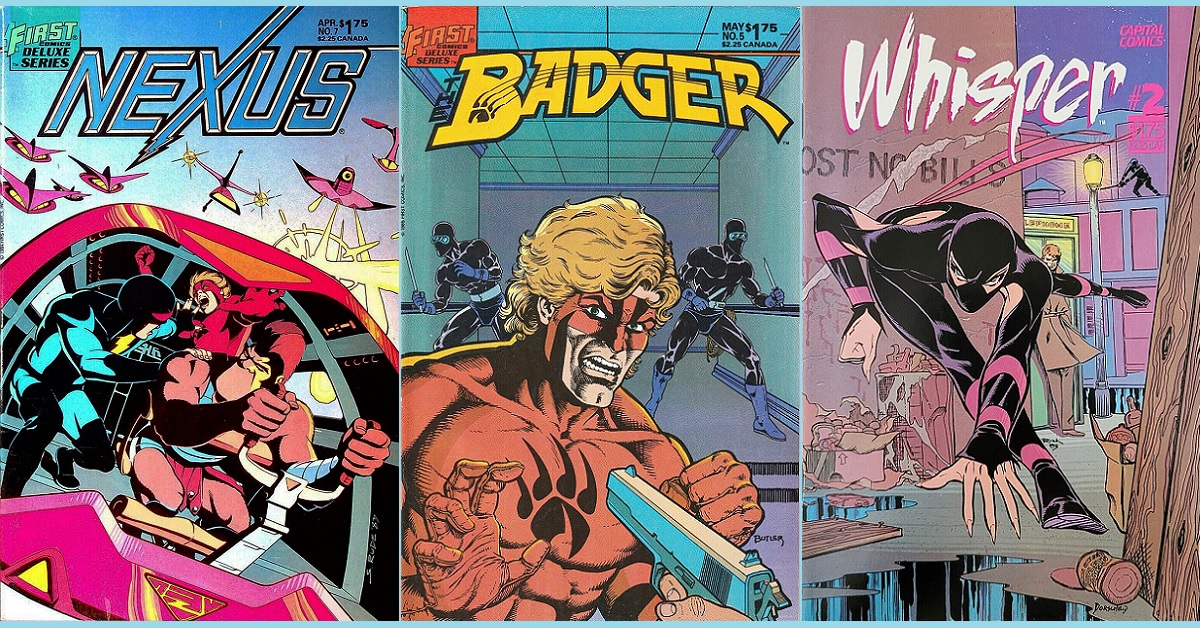
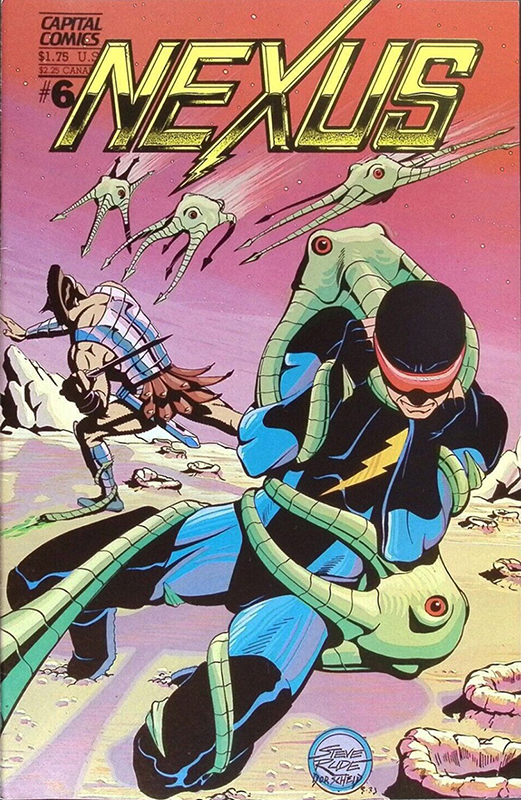
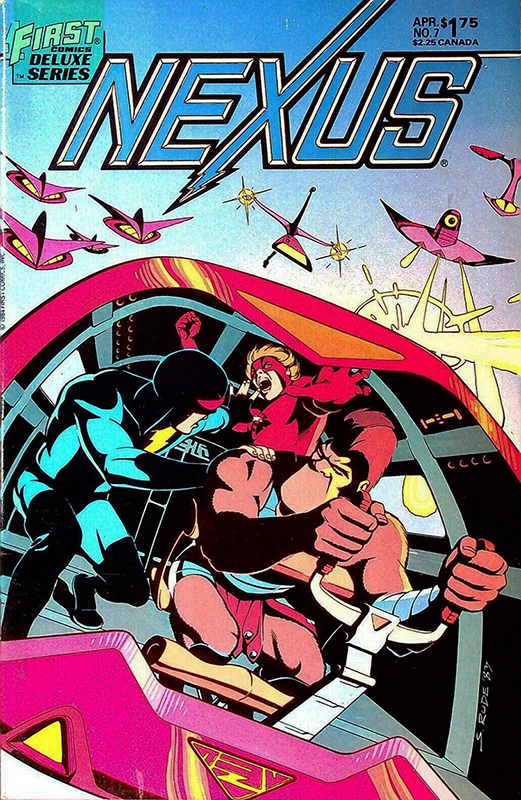
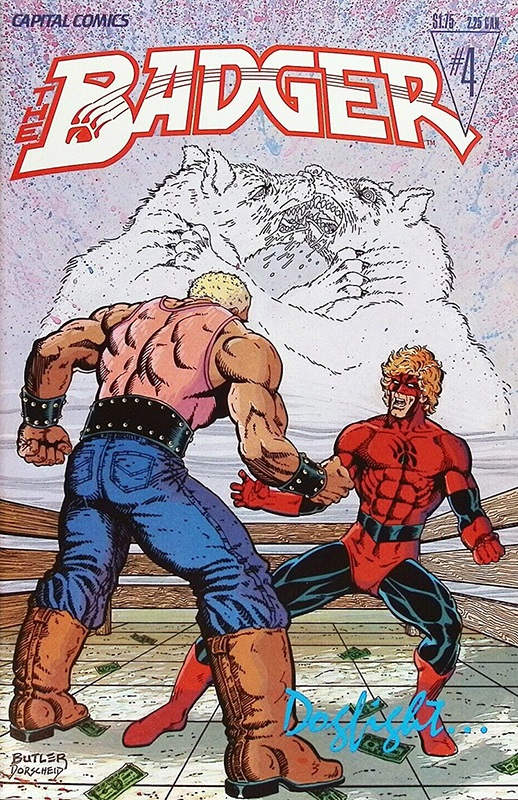
In 1981, Capital City Distribution, a Wisconsin-based comic book distributor, began publishing comics under the name Capital Comics. Their schedule was fraught with problems, but over three years, they had published three titles: Nexus (two series totaling nine issues), Badger (four issues), and Whisper (two issues).
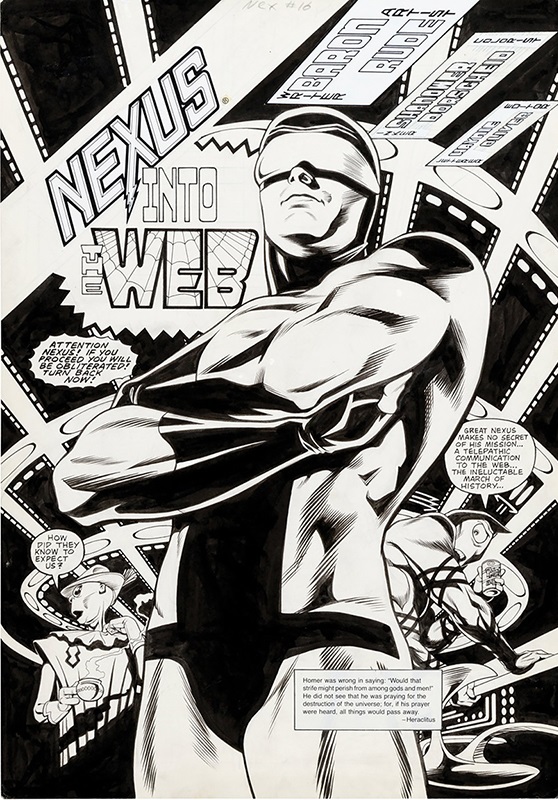
Nexus, the first of their titles, was created by writer Mike Baron and penciler Steve Rude in 1981, was a sci-fi superhero comic set 500 years in the future. Badger, created by Baron with art by Jeffrey Butler, centered on titular superhero/vigilante who suffered from “multiple personalities disorder.” Whisper was written by Steven Grant with art by Rich Larson and told the story of American Ninja Alexis Devlin.
“We were just in the right place at the right time. A friend cued us in that they wanted to publish their own books, so I got in touch and arranged to meet them,” Baron said. “We showed the finished Nexus pages to them at the Student Union, again. The Union is a Madison institution,” he said.
All of the series showed promise, but Capital decided to pull the plug on their publishing venture in 1984. Almost immediately, other publishers were interested in picking up the titles. One stood out.
“First Comics was located near one of Capital’s satellite distribution locations in Evanston, Illinois, and I heard about the line folding pretty early,” said Mike Gold, the editorial director and co-founder of First Comics.
“Mike Baron was a regular at our Chicago Minicons, a somewhat monthly reduction of the Chicago Comicon, and he came down to promote Nexus and, later, Badger. In fact, he wore a Badger costume, lending credence to The Badger being an autobiographical interpretation of a rather extreme sort. So, I was in love with both series, and Whisper, only two issues old, was the cherry on top of the cake. [Capital Comics’] Rich Bruning doesn’t get the credit he deserves for being the original editor of those books,” he said.
Gold said it was a “no brainer.”
“These were three of the best comics being published by anybody at that moment in time. Fans liked them, retailers liked them, and we liked them. When we built First Comics, I had a very rigid publishing plan about what types of material we would publish and the order in which we would publish them. It was part of our business plan, part of our financing prospectus, and coincidentally, we had just completed these commitments. The Capital books fit in like a glove (this was pre-OJ). I would have been an idiot not to have pursued them,” he said.
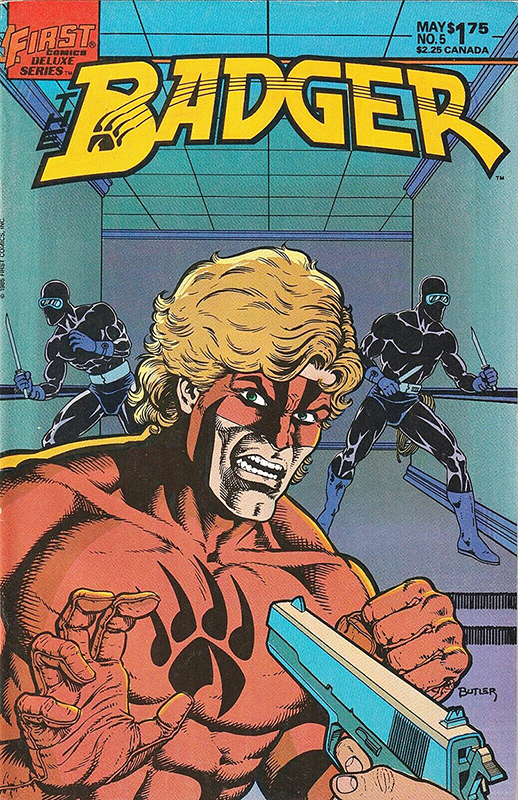
There were other publishers interested – Baron sites Eclipse among them – but First became the front runner.
When it came time for the final negotiations and purchase, Gold to Madison with First Comics publisher Rick Obidiah. The meeting was in the offices of Capital City Distribution, which were in a building that faced the Wisconsin Capitol building.
“We were negotiating at Rich’s office in Madison Wisconsin, a lovely town that had been home to our publisher Rick Obadiah. The office space overlooked the Wisconsin state capital building; this location is critical to the moment. Sitting around the conference table were Capital owners Milton Griepp and John Davis, Rich Bruning, Mike Baron, Rick Obadiah and myself. We worked things out for Nexus and Badger and Mike was there to represent the creators’ interests, but when it came to Whisper, Milton was reluctant to include that in the deal. I explained why that was important to both First Comics from a promotional point of view and to the Whisper property itself as it would have been orphaned. Milt didn’t agree and we went back and forth as one often does in such negotiations. As we did, Mike started getting frustrated,” Gold said.
As the conversation and attention in the room focused on the acquisition, Griepp realized that the folks from First Comics were expecting that the purchase would include Whisper.
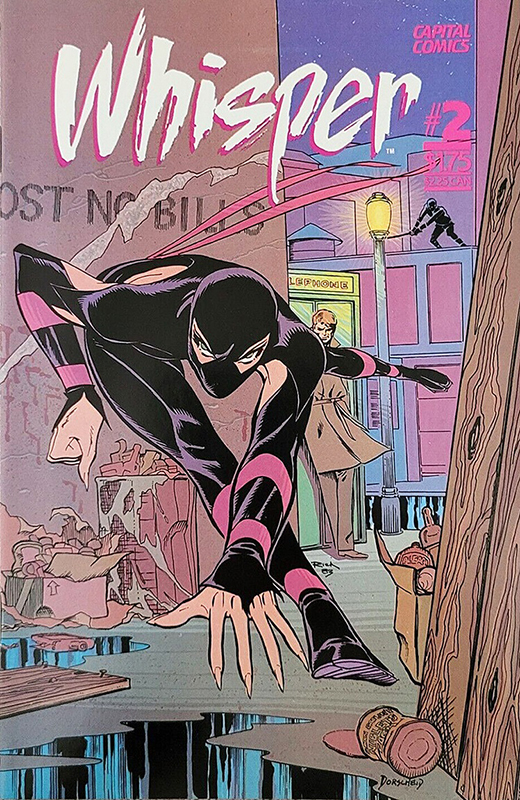
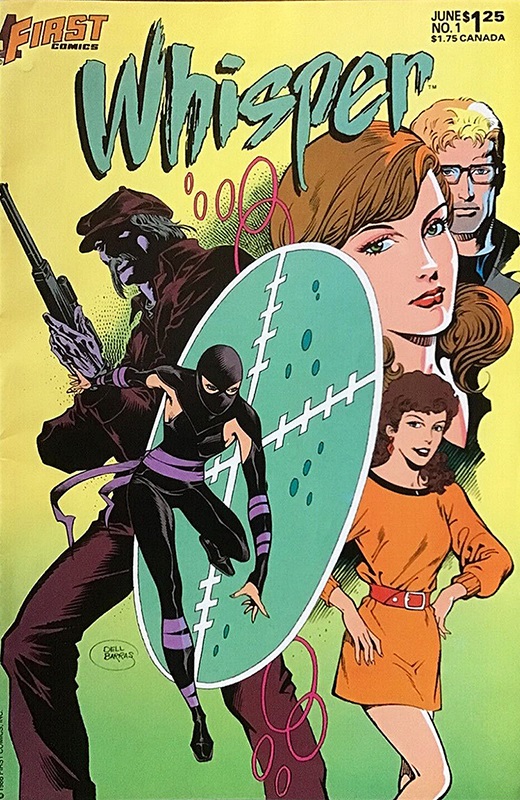
It seemed as in an impasse had been reached.
“Milt turned to Rich and asked him if my arguments made any sense to him. Rich, bless his heart, said ‘Well, yes, they do.’ Milt held his ground, as did I. I can be stubborn — these days I only do that when I’m on the clock, but back then I regarded it as an art form,” he said.
It was at this point that Baron, who has always been known as someone with strong opinions, began to get frustrated with the bottleneck.
“Mike ran out of patience. He walked over to the window — remember, we were across from the state capital building — and he lifted open that window. He lowered himself out of that window and declared he was going to just hang on by his hands until we reached a deal or until he fell,” he said.
“Milton’s back was to that window and, without looking, he just shook his head and said ‘Well, if you feel that way about it…’ and we closed. Mike pulled himself up and back into the office; yes, he was that strong. Rick looked at me in confusion as if to say ‘Ummm, what the hell are we doing here?’” Gold said.
“But we all had our deal. John and Milton went on to take us on a tour of their distribution catacombs, and I’m sure lunch was involved as I fondly recall having a long discussion about music with John. Rick and I drove back to Evanston, Mike went back to his house (a great place in the Madison suburbs that seemed to have been designed by The Road Runner) and we got back to making funny books,” he said. “And, evidently, a legend.”
Nexus, Badger, and Whisper – and various spin-offs – enjoyed healthy runs at First. Nexus went onto Dark Horse, and most recently successfully crowdfunded a deluxe, 872-page, 11″ x 8″ hardcover omnibus edition. It will be the first of four volumes to collect the entire series. Badger has had a few incarnations, including a recent one, and Whisper’s presently being revived. As an editor who once recruited them for a company, what does Gold think the selling points are of each of them today?
“First of all, no pun intended, each has a legacy. That’s very important in the comics racket, then as now. Second, each was a great concept and had been well-executed. I don’t think any of those three concepts are the least bit dated although Whisper might be more accessible today than it was originally. It’s really good stuff, and Steven remains one of our better writers. Nexus, of course, never went away. The Badger comes and goes and I’m sure he’ll be back, but I don’t think Mike is dressing up as the guy any longer. He probably still fits in the costume,” Gold said.
– Bob Harrison with additional reporting by J.C. Vaughn
Bob Harrison is a collector, commentator, and comics historian, whose work can be found regularly on PopCultureSquad.com. This is his first Overstreet contribution.
This article originally appeared in The Overstreet Comic Book Price Guide to Lost Universes #2.

Popular Topics
Overstreet Access Quick Links
Capital Comics’ Move to First Comics
In 1981, Capital City Distribution, a Wisconsin-based comic book distributor, began publishing comics under the name Capital Comics. Their schedule was fraught with problems, but over three years, they had published three titles: Nexus (two series totaling nine issues), Badger (four issues), and Whisper (two issues).
Nexus, the first of their titles, was created by writer Mike Baron and penciler Steve Rude in 1981, was a sci-fi superhero comic set 500 years in the future. Badger, created by Baron with art by Jeffrey Butler, centered on titular superhero/vigilante who suffered from “multiple personalities disorder.” Whisper was written by Steven Grant with art by Rich Larson and told the story of American Ninja Alexis Devlin.
“We were just in the right place at the right time. A friend cued us in that they wanted to publish their own books, so I got in touch and arranged to meet them,” Baron said. “We showed the finished Nexus pages to them at the Student Union, again. The Union is a Madison institution,” he said.
All of the series showed promise, but Capital decided to pull the plug on their publishing venture in 1984. Almost immediately, other publishers were interested in picking up the titles. One stood out.
“First Comics was located near one of Capital’s satellite distribution locations in Evanston, Illinois, and I heard about the line folding pretty early,” said Mike Gold, the editorial director and co-founder of First Comics.
“Mike Baron was a regular at our Chicago Minicons, a somewhat monthly reduction of the Chicago Comicon, and he came down to promote Nexus and, later, Badger. In fact, he wore a Badger costume, lending credence to The Badger being an autobiographical interpretation of a rather extreme sort. So, I was in love with both series, and Whisper, only two issues old, was the cherry on top of the cake. [Capital Comics’] Rich Bruning doesn’t get the credit he deserves for being the original editor of those books,” he said.
Gold said it was a “no brainer.”
“These were three of the best comics being published by anybody at that moment in time. Fans liked them, retailers liked them, and we liked them. When we built First Comics, I had a very rigid publishing plan about what types of material we would publish and the order in which we would publish them. It was part of our business plan, part of our financing prospectus, and coincidentally, we had just completed these commitments. The Capital books fit in like a glove (this was pre-OJ). I would have been an idiot not to have pursued them,” he said.
There were other publishers interested – Baron sites Eclipse among them – but First became the front runner.
When it came time for the final negotiations and purchase, Gold to Madison with First Comics publisher Rick Obidiah. The meeting was in the offices of Capital City Distribution, which were in a building that faced the Wisconsin Capitol building.
“We were negotiating at Rich’s office in Madison Wisconsin, a lovely town that had been home to our publisher Rick Obadiah. The office space overlooked the Wisconsin state capital building; this location is critical to the moment. Sitting around the conference table were Capital owners Milton Griepp and John Davis, Rich Bruning, Mike Baron, Rick Obadiah and myself. We worked things out for Nexus and Badger and Mike was there to represent the creators’ interests, but when it came to Whisper, Milton was reluctant to include that in the deal. I explained why that was important to both First Comics from a promotional point of view and to the Whisper property itself as it would have been orphaned. Milt didn’t agree and we went back and forth as one often does in such negotiations. As we did, Mike started getting frustrated,” Gold said.
As the conversation and attention in the room focused on the acquisition, Griepp realized that the folks from First Comics were expecting that the purchase would include Whisper.
It seemed as in an impasse had been reached.
“Milt turned to Rich and asked him if my arguments made any sense to him. Rich, bless his heart, said ‘Well, yes, they do.’ Milt held his ground, as did I. I can be stubborn — these days I only do that when I’m on the clock, but back then I regarded it as an art form,” he said.
It was at this point that Baron, who has always been known as someone with strong opinions, began to get frustrated with the bottleneck.
“Mike ran out of patience. He walked over to the window — remember, we were across from the state capital building — and he lifted open that window. He lowered himself out of that window and declared he was going to just hang on by his hands until we reached a deal or until he fell,” he said.
“Milton’s back was to that window and, without looking, he just shook his head and said ‘Well, if you feel that way about it…’ and we closed. Mike pulled himself up and back into the office; yes, he was that strong. Rick looked at me in confusion as if to say ‘Ummm, what the hell are we doing here?’” Gold said.
“But we all had our deal. John and Milton went on to take us on a tour of their distribution catacombs, and I’m sure lunch was involved as I fondly recall having a long discussion about music with John. Rick and I drove back to Evanston, Mike went back to his house (a great place in the Madison suburbs that seemed to have been designed by The Road Runner) and we got back to making funny books,” he said. “And, evidently, a legend.”
Nexus, Badger, and Whisper – and various spin-offs – enjoyed healthy runs at First. Nexus went onto Dark Horse, and most recently successfully crowdfunded a deluxe, 872-page, 11″ x 8″ hardcover omnibus edition. It will be the first of four volumes to collect the entire series. Badger has had a few incarnations, including a recent one, and Whisper’s presently being revived. As an editor who once recruited them for a company, what does Gold think the selling points are of each of them today?
“First of all, no pun intended, each has a legacy. That’s very important in the comics racket, then as now. Second, each was a great concept and had been well-executed. I don’t think any of those three concepts are the least bit dated although Whisper might be more accessible today than it was originally. It’s really good stuff, and Steven remains one of our better writers. Nexus, of course, never went away. The Badger comes and goes and I’m sure he’ll be back, but I don’t think Mike is dressing up as the guy any longer. He probably still fits in the costume,” Gold said.
– Bob Harrison with additional reporting by J.C. Vaughn
Bob Harrison is a collector, commentator, and comics historian, whose work can be found regularly on PopCultureSquad.com. This is his first Overstreet contribution.
This article originally appeared in The Overstreet Comic Book Price Guide to Lost Universes #2.
Popular Topics
Overstreet Access Quick Links