



British Girls’ Comics of the Silver & Bronze Ages
In the 1950s to the 1970s, comic publishers in the United Kingdom produced books marketed to female readers that became known as British girls’ comics. They starred girls who overcame obstacles and avoided wrongdoing with moral fortitude, while the mean girls and boys, and other antagonists got their just deserts.
They covered topics like romance, friendship, and school, which could be portrayed as comical or melodramatic. Some of the stories tackled more serious subjects like animal cruelty, orphans forced to live with uncaring relatives, bullying, and immoral employers. Traditional comic genres were also explored with girls taking on secret identities to stop criminals and help people or supernatural scenarios with curses that girls had to overcome.
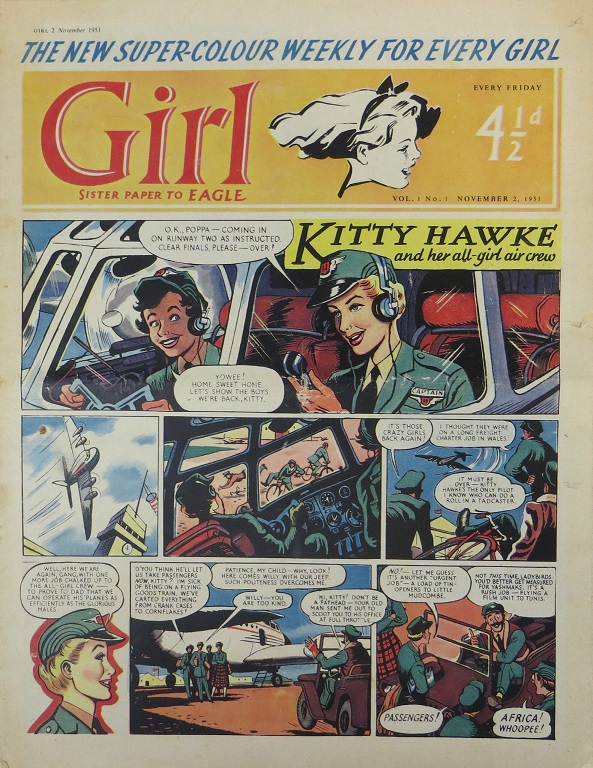
Some of the comics also presented stories about real women who did brave things that readers could admire. Stories were typically serialized into two or three-page installments that unfolded across eight or more issues. The books primarily featured sequential storytelling, plus puzzle pages, spotlights on readers, letters columns, competitions, promotions, and previews for upcoming issues.
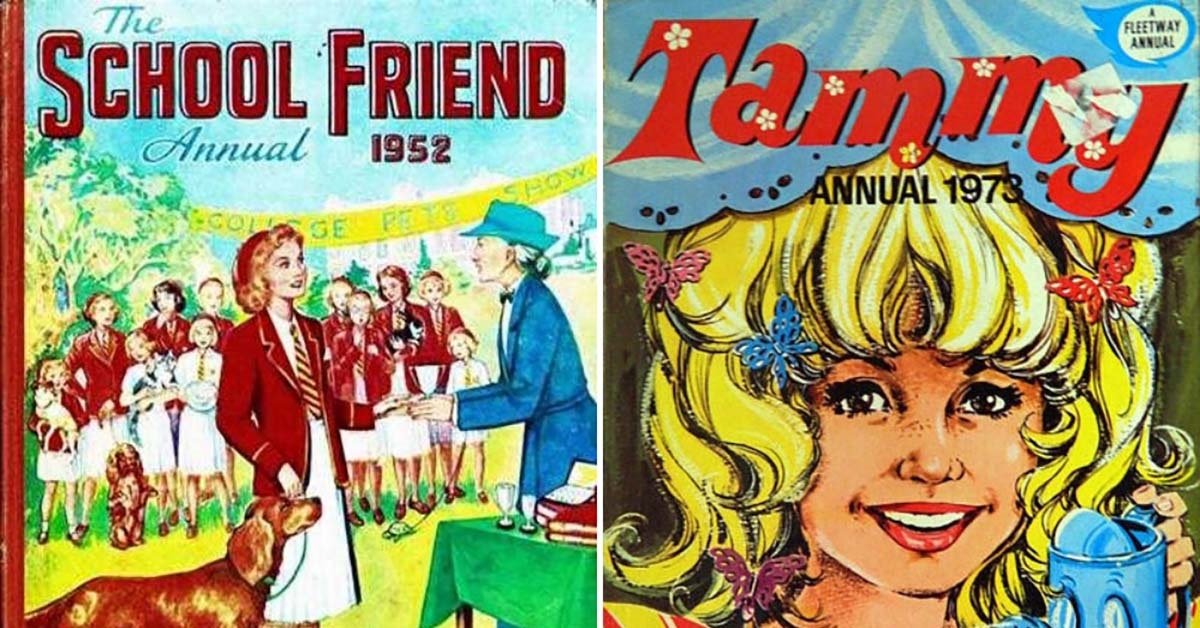
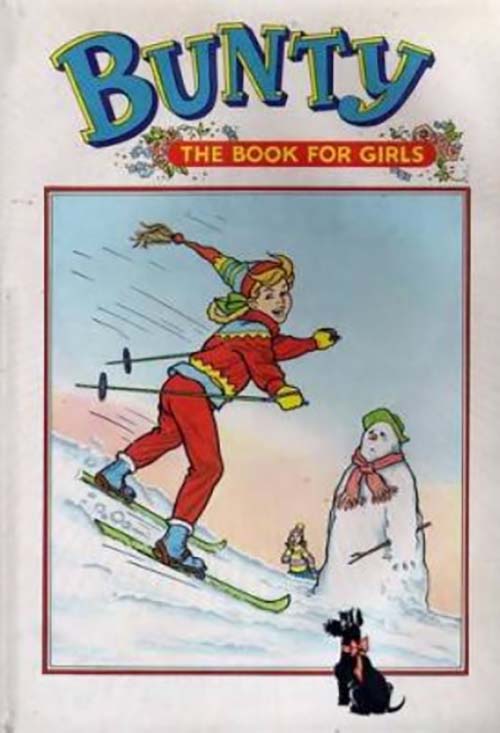
British girls’ comics began in the 1950s with School Friend from Amalgamated Press and Girl from Hulton Press. By the second half of the decade, the genre had taken off, introducing titles like Bunty, Judy, Princess, and Boyfriend. During the 1960s, there were typically around ten girls comics published in the UK at any given time. Popular titles like Bunty, Diana, and Judy were published by DC Thomson, and Girl, June, School Friend, Princess, and Girls’ Crystal were published by IPC.
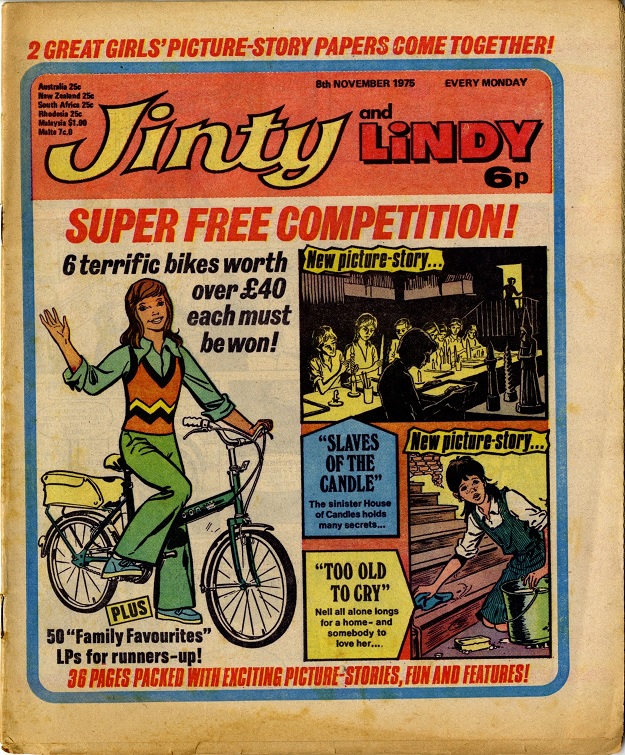
The stable of titles grew to include multiple comics with titles that were girls’ names, like Tammy, Lindy, Mandy, and Jackie. The styles of books also expanded with some aimed at tweens and younger readers, while others remained focused on teens and young women; some took place in middle class settings, and others featured working class stories.
That period was also known for the “hatch-match-dispatch” publishing method. Similar titles merged to form one book, and the process continued with new titles being absorbed as their circulation dropped. In other cases, publishers would take popular themes or genres from specific characters or stories and merge them into one book.
By the late 1970s, British girls’ comics were evolving into magazines with less sequential storytelling and more photo-based content and product-based articles. Their popularity started to decline in the early ‘80s with more and more titles cancelled or evolving into magazines. Most titles were done by 1990 with only a handful still in publication, and the final title, Bunty, stuck around until 2001.

Popular Topics
Overstreet Access Quick Links
British Girls’ Comics of the Silver & Bronze Ages
In the 1950s to the 1970s, comic publishers in the United Kingdom produced books marketed to female readers that became known as British girls’ comics. They starred girls who overcame obstacles and avoided wrongdoing with moral fortitude, while the mean girls and boys, and other antagonists got their just deserts.
They covered topics like romance, friendship, and school, which could be portrayed as comical or melodramatic. Some of the stories tackled more serious subjects like animal cruelty, orphans forced to live with uncaring relatives, bullying, and immoral employers. Traditional comic genres were also explored with girls taking on secret identities to stop criminals and help people or supernatural scenarios with curses that girls had to overcome.
Some of the comics also presented stories about real women who did brave things that readers could admire. Stories were typically serialized into two or three-page installments that unfolded across eight or more issues. The books primarily featured sequential storytelling, plus puzzle pages, spotlights on readers, letters columns, competitions, promotions, and previews for upcoming issues.
British girls’ comics began in the 1950s with School Friend from Amalgamated Press and Girl from Hulton Press. By the second half of the decade, the genre had taken off, introducing titles like Bunty, Judy, Princess, and Boyfriend. During the 1960s, there were typically around ten girls comics published in the UK at any given time. Popular titles like Bunty, Diana, and Judy were published by DC Thomson, and Girl, June, School Friend, Princess, and Girls’ Crystal were published by IPC.
The stable of titles grew to include multiple comics with titles that were girls’ names, like Tammy, Lindy, Mandy, and Jackie. The styles of books also expanded with some aimed at tweens and younger readers, while others remained focused on teens and young women; some took place in middle class settings, and others featured working class stories.
That period was also known for the “hatch-match-dispatch” publishing method. Similar titles merged to form one book, and the process continued with new titles being absorbed as their circulation dropped. In other cases, publishers would take popular themes or genres from specific characters or stories and merge them into one book.
By the late 1970s, British girls’ comics were evolving into magazines with less sequential storytelling and more photo-based content and product-based articles. Their popularity started to decline in the early ‘80s with more and more titles cancelled or evolving into magazines. Most titles were done by 1990 with only a handful still in publication, and the final title, Bunty, stuck around until 2001.
Popular Topics
Overstreet Access Quick Links