



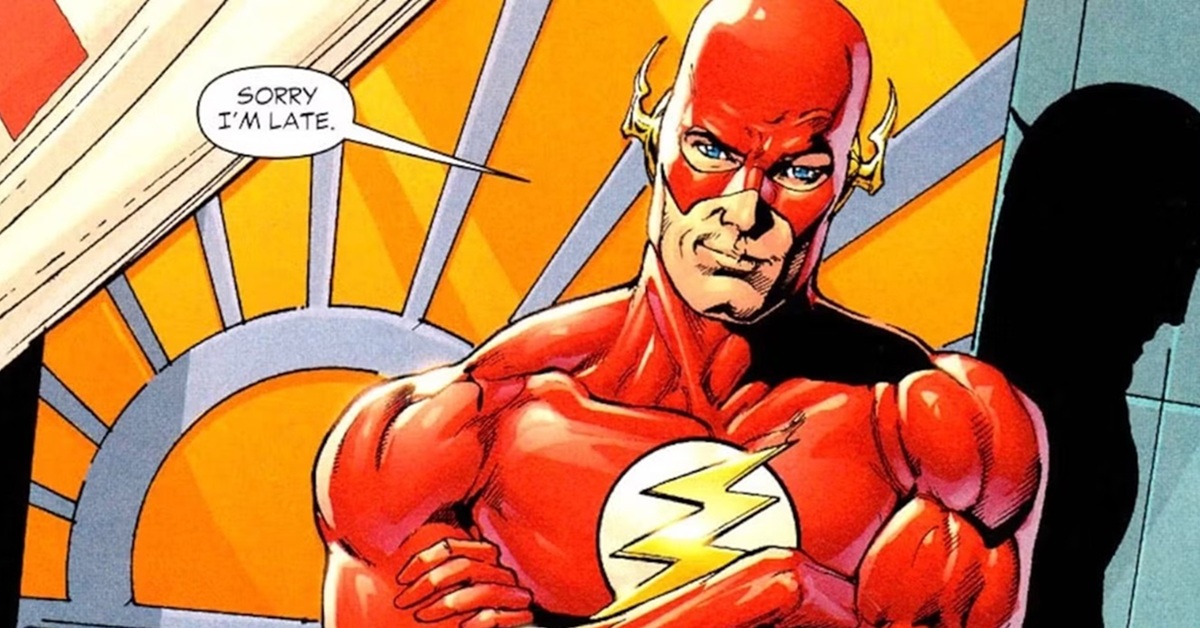
Barry Allen Races to 70th Anniversary
Barry Allen has left an indelible mark on comics. He is the second character to become the Flash, a talented forensic scientist, and one of DC’s greatest heroes. As the Fastest Man Alive, he has used his speed to travel through time and change the entire universe. He is the most famous version of the Flash, and his introduction is largely considered the book that kicked off the Silver Age of comics.
The Flash’s Impact & Early Appeal
Barry’s scientific knowledge and the way that physics played into his superpowers were instrumental in ushering in more sci-fi superhero comics and characters. He helped to create the Justice League and Barry has a colorful rogues gallery of villains who have quirky powers/weapons, that can also prove to be quite dangerous. One of the Flash’s biggest impacts on comics is the introduction of the Multiverse in which different versions of established characters existed. This led to the Crisis on Infinite Earths crossover and has been responsible for many of DC’s continuity reboots.
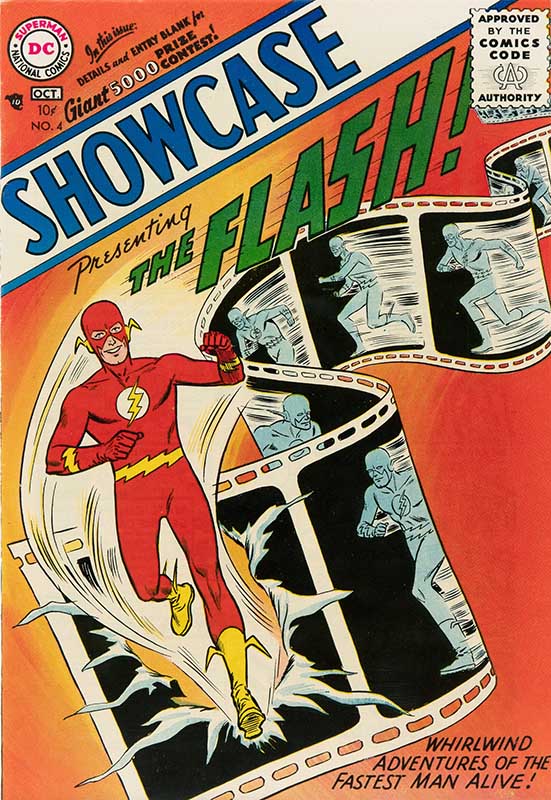
Robert Kanigher and Carmine Infantino created Barry 70 years ago in Showcase #4 (October 1956). It was during a period when superhero comics had lost some of their popularity and were being replaced by other genres like crime, horror, science fiction, romance, and war books. When the new Comics Code Authority started restricting the newly popular horror and crime genres, the editors and creators at DC started exploring ways to revive superheroes.
Barry Allen became a great example of a child-friendly superhero in the period ruled by the Comics Code Authority. He is an idealistic, do-gooder that tries to stop villains without seriously harming them and protects innocent people no matter how difficult it can be. Being a member of law enforcement and a scholarly man also made him appealing to parents who had grown weary about letting their children read comics.
Barry Allen’s Origin
The son of Henry and Nora Allen, Barry grew up to become a forensic chemist who, while good at his job, was constantly late. One night when he was working late, a lightning bolt struck the lab and shattered a case filled with chemicals. Barry was covered in the chemicals and was temporarily knocked out by the impact of the lightning bolt.
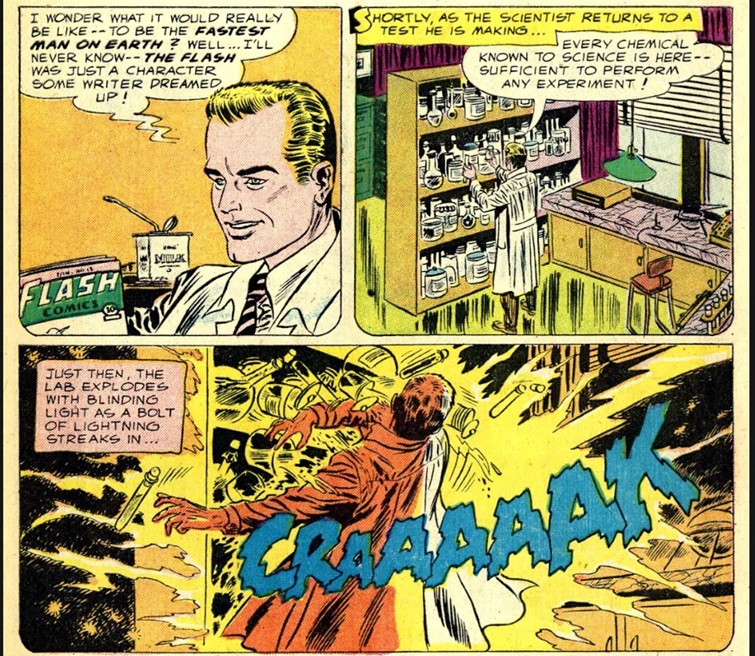
Once he awoke, Barry discovered that he now had super-speed, and equally enhanced senses, reflexes, and healing abilities. Using his newfound powers and sense of civic duty, Barry became Central City’s resident superhero, the Flash.
Ira West, a Central City University professor and father of Barry’s love interest Iris West, designed Barry’s costume. The suit follows the red theme of the original Flash, with a more streamlined helmet and featuring lightning bolts on his chest and the sides of the helmet. Ira West also created Flash’s special ring that compresses and stores Barry’s suit when he is operating in his civilian identity. Conversely, the ring uses a special gas that shrinks the suit and puts it back in the ring.
Introducing the Multiverse
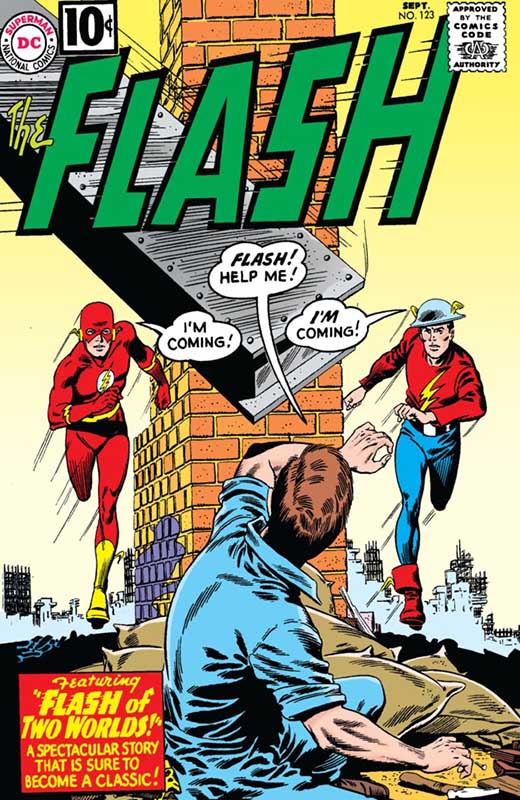
In The Flash #123 (September 1961), Barry Allen starred in the story that introduced Earth-Two and established the concept of the Multiverse. It starts with Barry performing superspeed tricks at a charity event, then vibrating his molecules into Keystone City, the home of the original Flash Jay Garrick. The book confirmed that Golden Age characters who were not in then-current Silver Age books still existed in DC continuity. “Flash of Two Worlds” was written by Gardner Fox with editorial guidance by Julius Schwartz, and was illustrated by Carmine Infantino.
In “The Trial of the Flash,” Barry Allen was tried for the murder of his archenemy, the Reverse-Flash. The story written by Cary Bates and illustrated by Carmine Infantino unfolded across 28 issues in The Flash #323-350. It follows the vicious fighting between the Flash and Reverse-Flash that began when the villain killed Barry’s wife, Iris. Afraid that Thawne would kill his new fiancée, Fiona Webb, Flash snapped his enemy’s neck during one of their battles. In the end, the Flash was acquitted based on a technicality and reunited with the now-living Iris in the future.
Barry Allen played a pivotal role in DC’s company-wide crossover, Crisis on Infinite Earths. Written by Marv Wolfman and penciled by George Pérez, the 12-issue series reorganized DC continuity as one unified universe. The story began when the Anti-Monitor started destroying realities in a wave of antimatter. His counterpart, the Monitor, sent heroes throughout time and space to creative towers that will merge the multiverse into one.
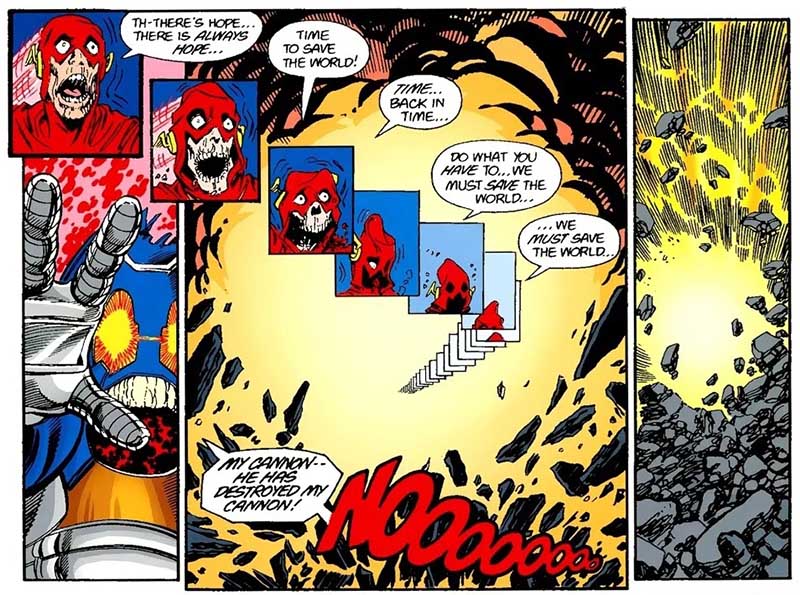
The Monitor created a limbo universe where the last five parallel Earths would be protected from the Anti-Monitor. In response, the Anti-Monitor tried to use an antimatter cannon to infiltrate and destroy the limbo universe as the five Earths were merging into one. The Flash stopped this attempt by using his speed to channel energy, and he died in the process.
The Flash’s Modern Age Impact
Barry was largely missing from comics over the next two decades during a period when Wally West was the primary Flash. He returned in 2009’s The Flash: Rebirth, a six-issue miniseries that reestablished him as the main Flash and explored the impact of his return.
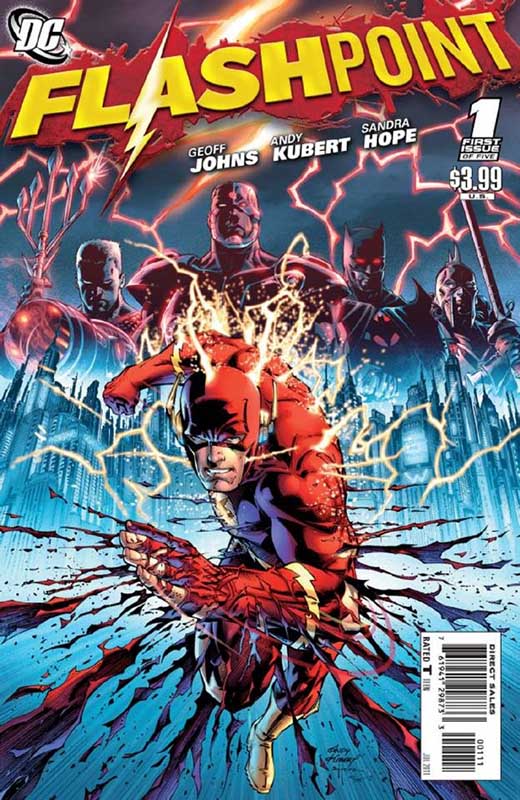
Two years after he returned, the Flash was responsible for Flashpoint, a companywide reboot and the creation of The New 52. The main Flashpoint series written by Geoff Johns and penciled by Andy Kubert started with Barry being the only person who recognized major differences in the timeline. He woke up to a world where Cyborg was the world’s greatest hero and Superman was imprisoned and studied by the government. Thomas Wayne was Batman, and Wonder Woman and Aquaman were engaged in a war.
As the fighting and chaos ensued, Thawne told Flash that he was responsible for the Flashpoint timeline. The Flash had traveled back in time to save his mother from being killed by Thawne/Reverse-Flash. The action created a paradox in which Thawne could kill the Flash without destroying himself in the process. When Thomas Wayne found out, he insisted that Barry needed to fix history and the deaths that it had caused. Barry merged with his earlier self at the moment when he tried to stop Thawne. While running through time, he saw three different timelines, merging the continuities of DC (New Earth), Vertigo (Earth-13), and WildStorm (Earth-50) into one shared universe.
Barry Allen would once again be a central figure when DC rebooted continuity in 2016’s DC Rebirth. DC revived elements from before Flashpoint, while also retaining aspects of the New 52 continuity. Geoff Johns, who was DC Entertainment CCO and president at the time, described the initiative as a plan for the future of DC that celebrated the past and the present. One of the big moves the creators made happened when Batman and the Flash found the Comedian’s smiley face button in the Batcave. This brought the Watchmen into the main DC continuity and led to the Doomsday Clock event.

Popular Topics
Overstreet Access Quick Links
Barry Allen Races to 70th Anniversary
Barry Allen has left an indelible mark on comics. He is the second character to become the Flash, a talented forensic scientist, and one of DC’s greatest heroes. As the Fastest Man Alive, he has used his speed to travel through time and change the entire universe. He is the most famous version of the Flash, and his introduction is largely considered the book that kicked off the Silver Age of comics.
The Flash’s Impact & Early Appeal
Barry’s scientific knowledge and the way that physics played into his superpowers were instrumental in ushering in more sci-fi superhero comics and characters. He helped to create the Justice League and Barry has a colorful rogues gallery of villains who have quirky powers/weapons, that can also prove to be quite dangerous. One of the Flash’s biggest impacts on comics is the introduction of the Multiverse in which different versions of established characters existed. This led to the Crisis on Infinite Earths crossover and has been responsible for many of DC’s continuity reboots.
Robert Kanigher and Carmine Infantino created Barry 70 years ago in Showcase #4 (October 1956). It was during a period when superhero comics had lost some of their popularity and were being replaced by other genres like crime, horror, science fiction, romance, and war books. When the new Comics Code Authority started restricting the newly popular horror and crime genres, the editors and creators at DC started exploring ways to revive superheroes.
Barry Allen became a great example of a child-friendly superhero in the period ruled by the Comics Code Authority. He is an idealistic, do-gooder that tries to stop villains without seriously harming them and protects innocent people no matter how difficult it can be. Being a member of law enforcement and a scholarly man also made him appealing to parents who had grown weary about letting their children read comics.
Barry Allen’s Origin
The son of Henry and Nora Allen, Barry grew up to become a forensic chemist who, while good at his job, was constantly late. One night when he was working late, a lightning bolt struck the lab and shattered a case filled with chemicals. Barry was covered in the chemicals and was temporarily knocked out by the impact of the lightning bolt.
Once he awoke, Barry discovered that he now had super-speed, and equally enhanced senses, reflexes, and healing abilities. Using his newfound powers and sense of civic duty, Barry became Central City’s resident superhero, the Flash.
Ira West, a Central City University professor and father of Barry’s love interest Iris West, designed Barry’s costume. The suit follows the red theme of the original Flash, with a more streamlined helmet and featuring lightning bolts on his chest and the sides of the helmet. Ira West also created Flash’s special ring that compresses and stores Barry’s suit when he is operating in his civilian identity. Conversely, the ring uses a special gas that shrinks the suit and puts it back in the ring.
Introducing the Multiverse
In The Flash #123 (September 1961), Barry Allen starred in the story that introduced Earth-Two and established the concept of the Multiverse. It starts with Barry performing superspeed tricks at a charity event, then vibrating his molecules into Keystone City, the home of the original Flash Jay Garrick. The book confirmed that Golden Age characters who were not in then-current Silver Age books still existed in DC continuity. “Flash of Two Worlds” was written by Gardner Fox with editorial guidance by Julius Schwartz, and was illustrated by Carmine Infantino.
In “The Trial of the Flash,” Barry Allen was tried for the murder of his archenemy, the Reverse-Flash. The story written by Cary Bates and illustrated by Carmine Infantino unfolded across 28 issues in The Flash #323-350. It follows the vicious fighting between the Flash and Reverse-Flash that began when the villain killed Barry’s wife, Iris. Afraid that Thawne would kill his new fiancée, Fiona Webb, Flash snapped his enemy’s neck during one of their battles. In the end, the Flash was acquitted based on a technicality and reunited with the now-living Iris in the future.
Barry Allen played a pivotal role in DC’s company-wide crossover, Crisis on Infinite Earths. Written by Marv Wolfman and penciled by George Pérez, the 12-issue series reorganized DC continuity as one unified universe. The story began when the Anti-Monitor started destroying realities in a wave of antimatter. His counterpart, the Monitor, sent heroes throughout time and space to creative towers that will merge the multiverse into one.
The Monitor created a limbo universe where the last five parallel Earths would be protected from the Anti-Monitor. In response, the Anti-Monitor tried to use an antimatter cannon to infiltrate and destroy the limbo universe as the five Earths were merging into one. The Flash stopped this attempt by using his speed to channel energy, and he died in the process.
The Flash’s Modern Age Impact
Barry was largely missing from comics over the next two decades during a period when Wally West was the primary Flash. He returned in 2009’s The Flash: Rebirth, a six-issue miniseries that reestablished him as the main Flash and explored the impact of his return.
Two years after he returned, the Flash was responsible for Flashpoint, a companywide reboot and the creation of The New 52. The main Flashpoint series written by Geoff Johns and penciled by Andy Kubert started with Barry being the only person who recognized major differences in the timeline. He woke up to a world where Cyborg was the world’s greatest hero and Superman was imprisoned and studied by the government. Thomas Wayne was Batman, and Wonder Woman and Aquaman were engaged in a war.
As the fighting and chaos ensued, Thawne told Flash that he was responsible for the Flashpoint timeline. The Flash had traveled back in time to save his mother from being killed by Thawne/Reverse-Flash. The action created a paradox in which Thawne could kill the Flash without destroying himself in the process. When Thomas Wayne found out, he insisted that Barry needed to fix history and the deaths that it had caused. Barry merged with his earlier self at the moment when he tried to stop Thawne. While running through time, he saw three different timelines, merging the continuities of DC (New Earth), Vertigo (Earth-13), and WildStorm (Earth-50) into one shared universe.
Barry Allen would once again be a central figure when DC rebooted continuity in 2016’s DC Rebirth. DC revived elements from before Flashpoint, while also retaining aspects of the New 52 continuity. Geoff Johns, who was DC Entertainment CCO and president at the time, described the initiative as a plan for the future of DC that celebrated the past and the present. One of the big moves the creators made happened when Batman and the Flash found the Comedian’s smiley face button in the Batcave. This brought the Watchmen into the main DC continuity and led to the Doomsday Clock event.
Popular Topics
Overstreet Access Quick Links