



A Better Way to Explore Comic Issue Details
Issue pages should help you understand the comic
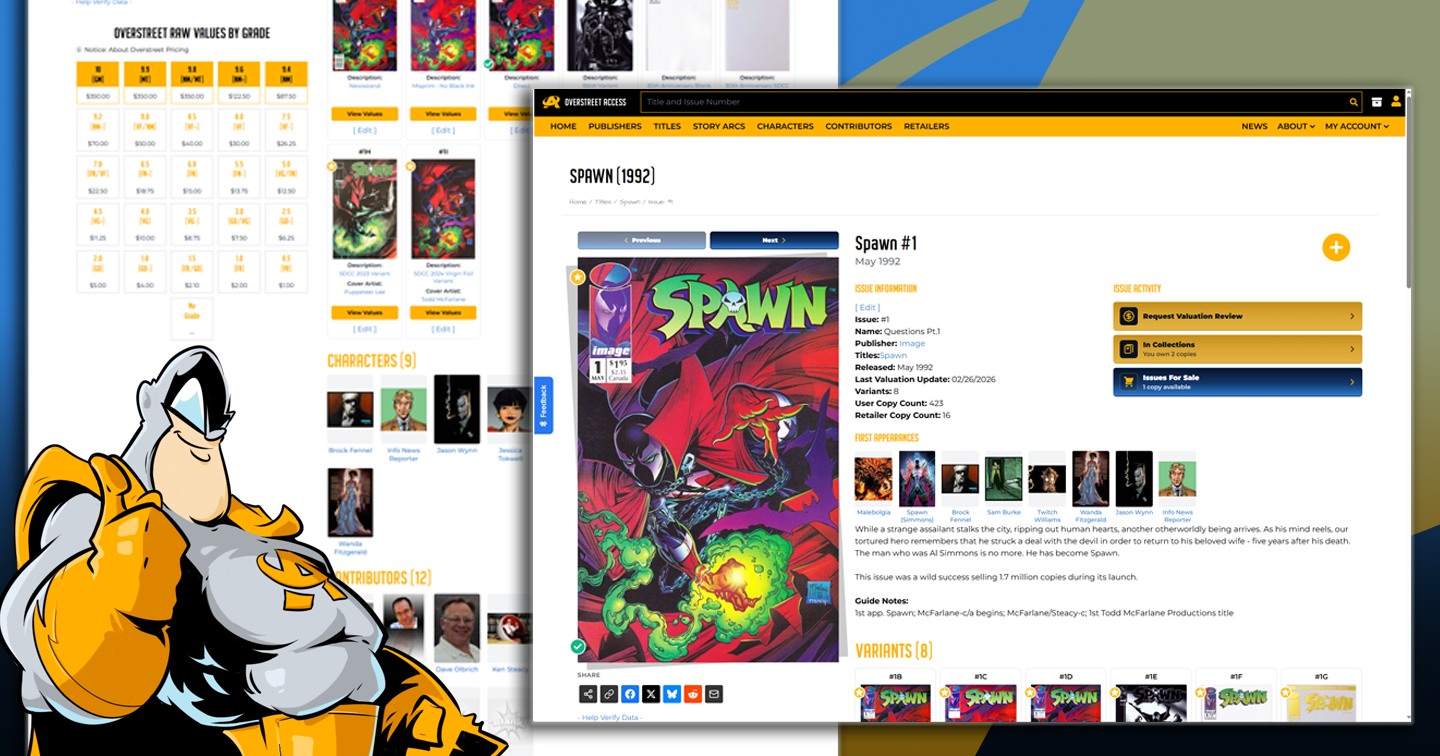
When you open an issue page, you usually want more than the issue number. You may want to know who appears in it, who worked on it, whether it has variants, where it fits in a series, whether it connects to a story arc, or why it matters to collectors.
The redesigned issue detail pages are meant to bring more of that context into view. Instead of hiding too much behind collapsed sections, the page now does more work as a connected reference page.
More context up front
The biggest change is simple: more useful issue information is easier to see. That means less clicking around just to understand the basics of an issue and its relationships.
- Important issue details are easier to scan.
- Relationship sections are more visible.
- Collectors can move into related catalog records more naturally.
- The page feels more like a research hub than an isolated record.
Characters, creators, and story context
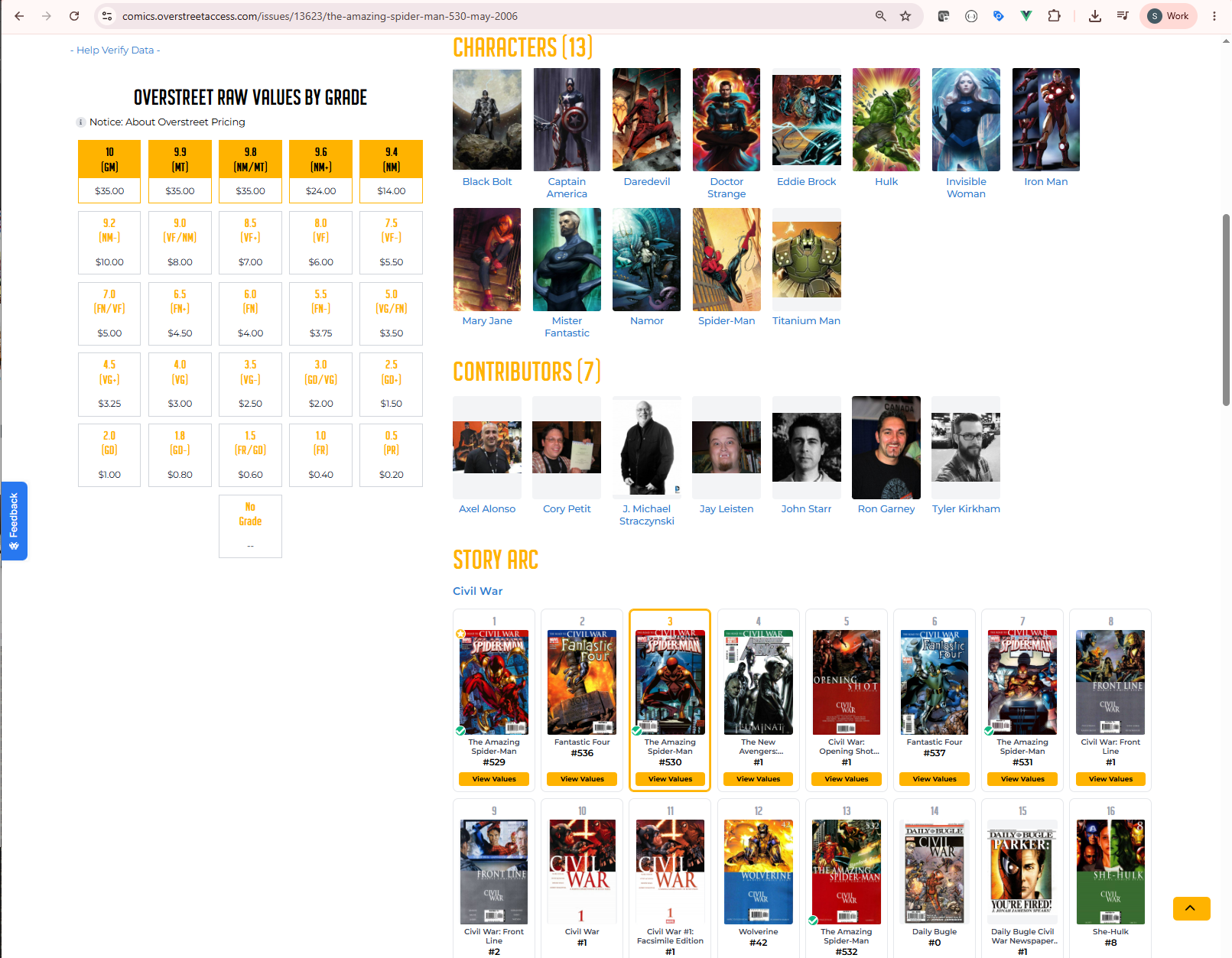
Issue pages can now make it easier to find the people, characters, and story connections tied to an issue. When that data is available, you can use it to branch into related areas of the catalog.
Characters
Character information helps you see who appears in the issue and gives you a path to explore other related appearances.
Contributors and creators
Contributor details help connect the issue to the writers, artists, cover artists, and other creators associated with it.
Story arcs
Story arc information helps place the issue inside a larger storyline when that relationship is available.
Variants and related issue information
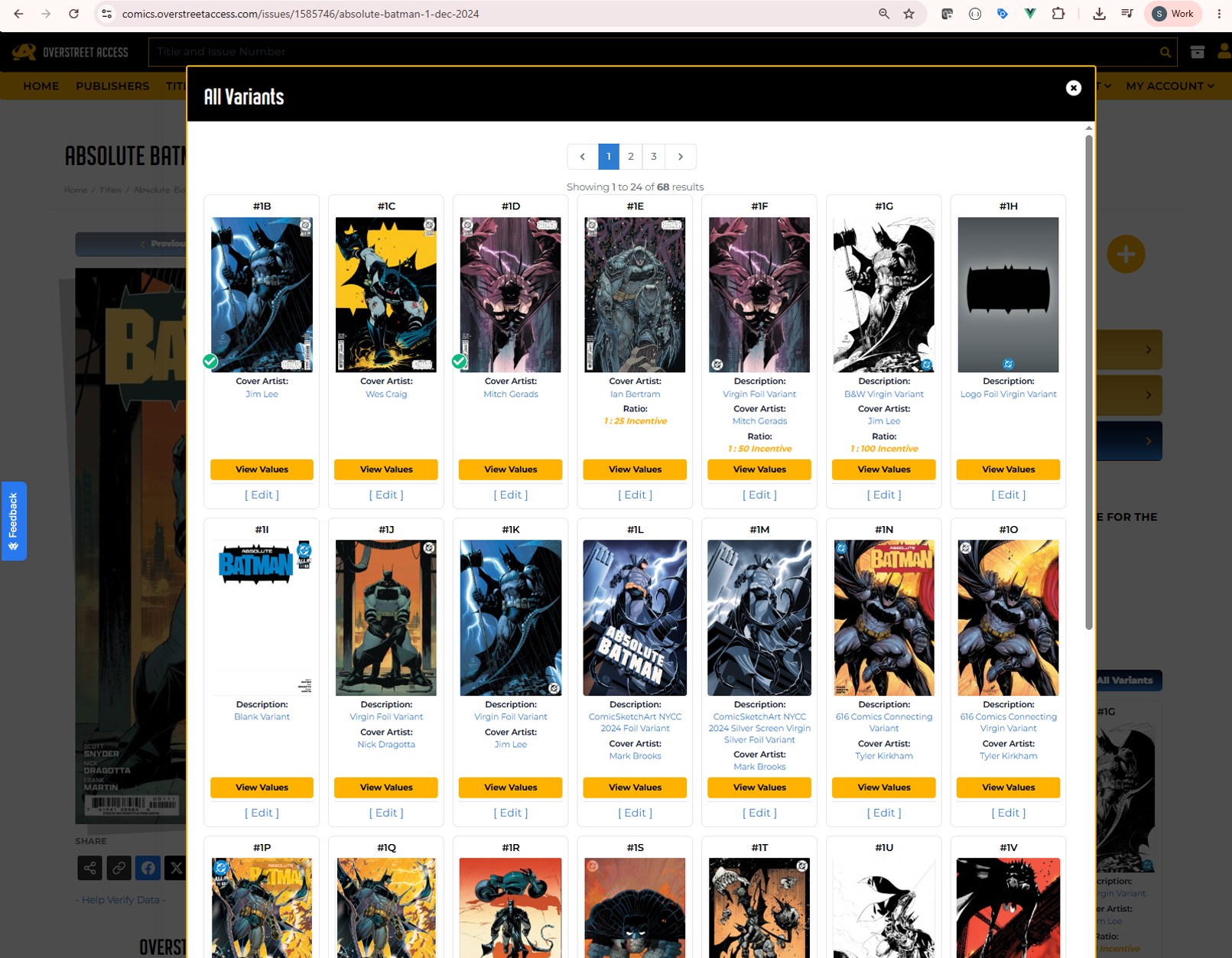
Variant context is one of the areas collectors care about most. When available, issue pages can help show whether an issue has related variants, alternate covers, original or parent issue connections, or other related records.
That makes it easier to understand which version you are looking at and how it connects to other versions of the same issue.
Issue Detail pages will show the first 12 variants for an issue, but there is a “View All Vairants” button above the variants section that will display a modal with all available variants displayed. This makes it easier for you to view all of the different coves, as well as their current Overstreet valuations, and add them to your collection.
Why this matters for collectors
A good comic reference page should help you answer questions quickly. Is this the right issue? Is it part of a larger storyline? Is there a variant? Who worked on it? What other records should I check next?
By surfacing more context directly on the page, Overstreet Access makes issue research faster and more natural. You can start with one comic and follow the relationships that matter to you.
Part of a more connected catalog
The issue page redesign also fits into a broader improvement across Overstreet Access: cleaner links, better related-content navigation, and more useful catalog connections. Over time, the goal is for issues, volumes, publishers, characters, contributors, and story arcs to feel more connected as you browse.
The practical benefit is simple: fewer dead ends, less digging, and a better path from one comic record to the next.

Popular Topics
Overstreet Access Quick Links
A Better Way to Explore Comic Issue Details
Issue pages should help you understand the comic
When you open an issue page, you usually want more than the issue number. You may want to know who appears in it, who worked on it, whether it has variants, where it fits in a series, whether it connects to a story arc, or why it matters to collectors.
The redesigned issue detail pages are meant to bring more of that context into view. Instead of hiding too much behind collapsed sections, the page now does more work as a connected reference page.
More context up front
The biggest change is simple: more useful issue information is easier to see. That means less clicking around just to understand the basics of an issue and its relationships.
- Important issue details are easier to scan.
- Relationship sections are more visible.
- Collectors can move into related catalog records more naturally.
- The page feels more like a research hub than an isolated record.
Characters, creators, and story context
Issue pages can now make it easier to find the people, characters, and story connections tied to an issue. When that data is available, you can use it to branch into related areas of the catalog.
Characters
Character information helps you see who appears in the issue and gives you a path to explore other related appearances.
Contributors and creators
Contributor details help connect the issue to the writers, artists, cover artists, and other creators associated with it.
Story arcs
Story arc information helps place the issue inside a larger storyline when that relationship is available.
Variants and related issue information
Variant context is one of the areas collectors care about most. When available, issue pages can help show whether an issue has related variants, alternate covers, original or parent issue connections, or other related records.
That makes it easier to understand which version you are looking at and how it connects to other versions of the same issue.
Issue Detail pages will show the first 12 variants for an issue, but there is a “View All Vairants” button above the variants section that will display a modal with all available variants displayed. This makes it easier for you to view all of the different coves, as well as their current Overstreet valuations, and add them to your collection.
Why this matters for collectors
A good comic reference page should help you answer questions quickly. Is this the right issue? Is it part of a larger storyline? Is there a variant? Who worked on it? What other records should I check next?
By surfacing more context directly on the page, Overstreet Access makes issue research faster and more natural. You can start with one comic and follow the relationships that matter to you.
Part of a more connected catalog
The issue page redesign also fits into a broader improvement across Overstreet Access: cleaner links, better related-content navigation, and more useful catalog connections. Over time, the goal is for issues, volumes, publishers, characters, contributors, and story arcs to feel more connected as you browse.
The practical benefit is simple: fewer dead ends, less digging, and a better path from one comic record to the next.
Popular Topics
Overstreet Access Quick Links