



Inside the Guide: Defining Multiple Poster Printings

Almost every type of collectible can become complicated once they are studied. In most cases, the items we enjoy collecting were not intended for that purpose, leaving an intricate, sometimes messy landscape. One such area within concert posters are the multiple printings.
For some concert posters there can be up to four printing runs, which is especially true for the mid-1960s to early 1970s posters. The original, or first printings, were created before the concerts to advertise and promote the show. If there was enough demand, after the concert authorized reprints – known as second, third, or fourth printings – were printed and sold to fans and collectors.
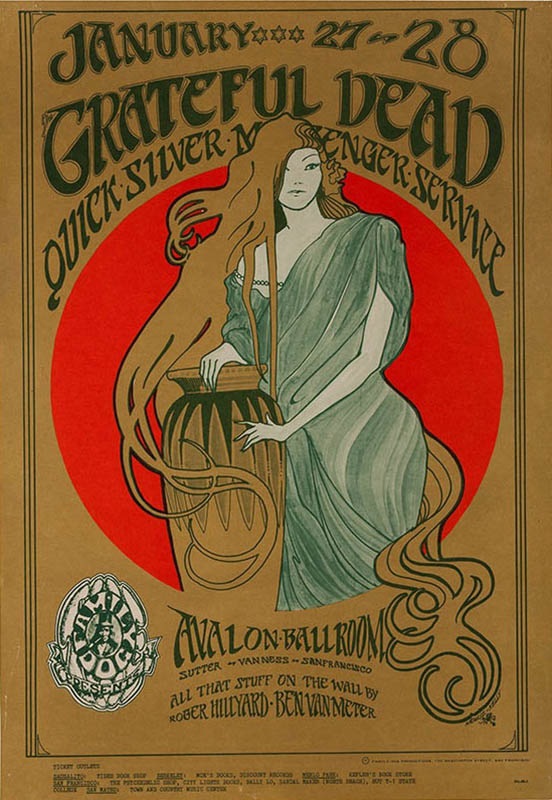
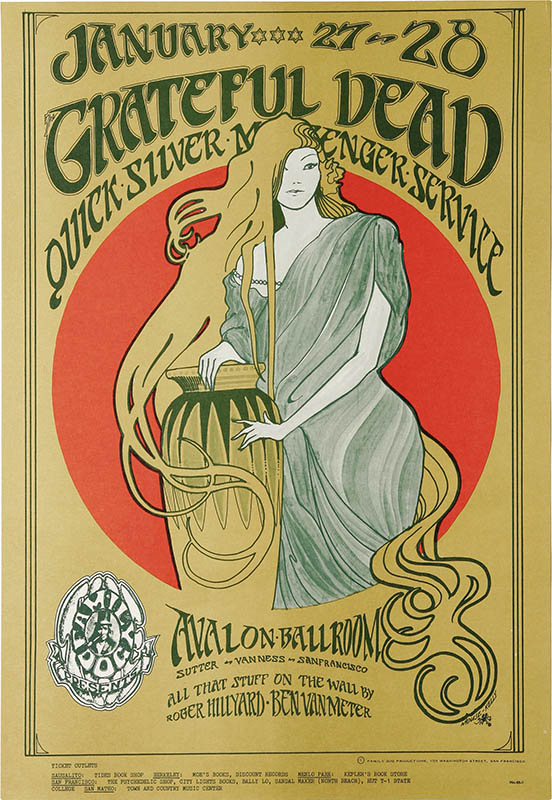
Concert posters became hot commodities for collectors during the counterculture movement of the late 1960s. They could be printed on different types of paper or with different shades of ink during a single print run. Sometimes posters were printed one day then printed again a few days later, causing tiny variations in the color of the poster. While these posters may appear a bit different, they are indeed all first printings.
Details on later printings can be as obvious as varying shades of colors or different colors altogether. They can be different sizes, have small variations in the art, were printed by another printer, or logos may appear different. Some can be recognized by printing flaws, where a smudge of ink is visible on all posters from that run. They can be made from a different type of paper or stock of paper, which can be determined by using a black light on the back of the paper to examine and compare the paper stock. They can also include numbered codes on the bottom corners of the posters to indicate which printing they come from.

Popular Topics
Overstreet Access Quick Links
Inside the Guide: Defining Multiple Poster Printings
Almost every type of collectible can become complicated once they are studied. In most cases, the items we enjoy collecting were not intended for that purpose, leaving an intricate, sometimes messy landscape. One such area within concert posters are the multiple printings.
For some concert posters there can be up to four printing runs, which is especially true for the mid-1960s to early 1970s posters. The original, or first printings, were created before the concerts to advertise and promote the show. If there was enough demand, after the concert authorized reprints – known as second, third, or fourth printings – were printed and sold to fans and collectors.
Concert posters became hot commodities for collectors during the counterculture movement of the late 1960s. They could be printed on different types of paper or with different shades of ink during a single print run. Sometimes posters were printed one day then printed again a few days later, causing tiny variations in the color of the poster. While these posters may appear a bit different, they are indeed all first printings.
Details on later printings can be as obvious as varying shades of colors or different colors altogether. They can be different sizes, have small variations in the art, were printed by another printer, or logos may appear different. Some can be recognized by printing flaws, where a smudge of ink is visible on all posters from that run. They can be made from a different type of paper or stock of paper, which can be determined by using a black light on the back of the paper to examine and compare the paper stock. They can also include numbered codes on the bottom corners of the posters to indicate which printing they come from.
Popular Topics
Overstreet Access Quick Links