




Castlevania’s Curse of Success
By 1989, Konami’s Castlevania had established itself as a franchise worth paying attention to. And when Castlevania III: Dracula’s Curse arrived on the NES that year, it helped seal the series’ legacy as one of the all-time greats.
First arriving for the Japanese Famicom in December 1989 before making its way west the following year, Dracula’s Curse takes place centuries before the events of the original Castlevania. In 1476, the vampire Dracula has sieged Europe with his monstrous army, and it’s up to Trevor Belmont to fight him. The church had once exiled the entire Belmont family from Wallachia, as they feared the family’s powers, but with Dracula menacing the nation, they were left with no other choice. Trevor is joined by the sorceress Sypha, the pirate Grant, and the dhampir Alucard – Dracula’s own son – in the fight against the vampire.
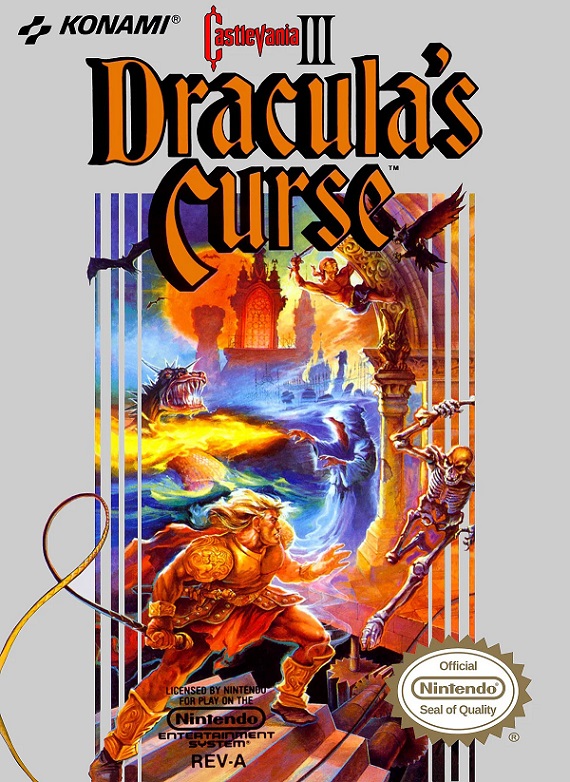
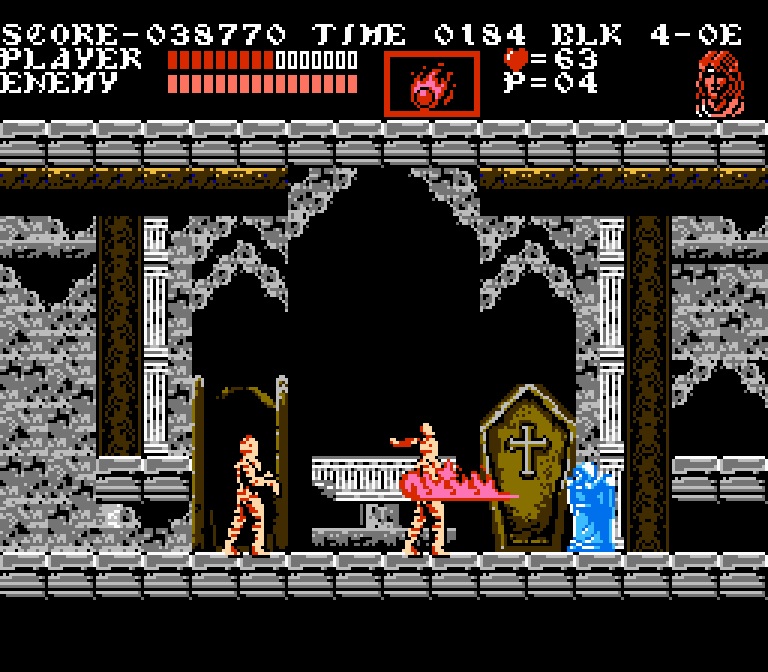
Dracula’s Curse combined elements of both Castlevania and Castlevania II: Simon’s Quest; it maintained the non-linear format Simon’s Quest while eschewing that game’s RPG elements in favor of more pure platforming like the inaugural title. The player can transform between Trevor and one of his companions, and the game’s ending depends on who he has with him at the end of the story.
The Japanese version of the game had some differences between it and the English release, with one of the biggest having to do with the sound chip. The Japanese cartridge featured an advanced VRC6 chip that allowed extra channels to be added, creating a more lush symphonic sound (especially for the time). However, this chip wasn’t compatible with English NES cartridges, and the music for the English release was downgraded. Other changes included sprite changes and weapon adjustments for the English release.
Dracula’s Curse was hailed as the best entry in the franchise at that time, and is considered one of the best NES titles of all time. The game was used as the basis for the 2017 Netflix Castlevania animated series.

Popular Topics
Overstreet Access Quick Links
Castlevania’s Curse of Success
By 1989, Konami’s Castlevania had established itself as a franchise worth paying attention to. And when Castlevania III: Dracula’s Curse arrived on the NES that year, it helped seal the series’ legacy as one of the all-time greats.
First arriving for the Japanese Famicom in December 1989 before making its way west the following year, Dracula’s Curse takes place centuries before the events of the original Castlevania. In 1476, the vampire Dracula has sieged Europe with his monstrous army, and it’s up to Trevor Belmont to fight him. The church had once exiled the entire Belmont family from Wallachia, as they feared the family’s powers, but with Dracula menacing the nation, they were left with no other choice. Trevor is joined by the sorceress Sypha, the pirate Grant, and the dhampir Alucard – Dracula’s own son – in the fight against the vampire.
Dracula’s Curse combined elements of both Castlevania and Castlevania II: Simon’s Quest; it maintained the non-linear format Simon’s Quest while eschewing that game’s RPG elements in favor of more pure platforming like the inaugural title. The player can transform between Trevor and one of his companions, and the game’s ending depends on who he has with him at the end of the story.
The Japanese version of the game had some differences between it and the English release, with one of the biggest having to do with the sound chip. The Japanese cartridge featured an advanced VRC6 chip that allowed extra channels to be added, creating a more lush symphonic sound (especially for the time). However, this chip wasn’t compatible with English NES cartridges, and the music for the English release was downgraded. Other changes included sprite changes and weapon adjustments for the English release.
Dracula’s Curse was hailed as the best entry in the franchise at that time, and is considered one of the best NES titles of all time. The game was used as the basis for the 2017 Netflix Castlevania animated series.
Popular Topics
Overstreet Access Quick Links