



COVER STORY: The Falcon #1
Marvel Comics; 60¢
What makes the best comic book covers? It’s a great topic for debate. For us as individuals there is no wrong answer, of course. It’s purely subjective. But with a little thought it is frequently possible to explain what it is about a particular image that grabs you. The best ones are the ones that make you stop and check out something you weren’t previously going to purchase – and in some cases, you even end up picking up a title you’ve never even heard of before.
The late 1960s and the 1970s were times of change in American culture, and this was reflected in superhero comics, which had become much more in tune with contemporary youth during the early years of Marvel Comics. One of the major areas of change during that period was race relations, and creators at the major comics publishers moved to include African American characters. Black Panther joined the Marvel universe and very quickly become a member of the Avengers. Slowly, other characters like Black Lightning at DC and Black Goliath at Marvel joined the ranks. Many of them, at least at first, had the word “black” in their name, almost as if it was required. But did you know one of the most prominent African American characters from this time was The Falcon?
First seen in Captain America #117, Sam Wilson was a street-savvy crime fighter on the neighborhood level. The Falcon quickly teamed up with Captain America, and by #134 the cover proclaimed a new title: Captain America & The Falcon, which became the first black and white duo in superhero comics. It would run that way for just about 90 issues before the characters theoretically went their own ways.
Along the way, readers discovered his true origins, changed costumes, got his famous wings (a gift from Black Panther), discovered his mutant ability to communicate with his bird, Redwing, and found out just what made him tick.
Even after his departure as a regular character in Captain America, the team-ups didn’t end. Falcon has been a member of the Avengers, once forced on the team as part of government regulations (complete with contentious supporters and detractors, much like one might expect in the real world), and later as an invited member.
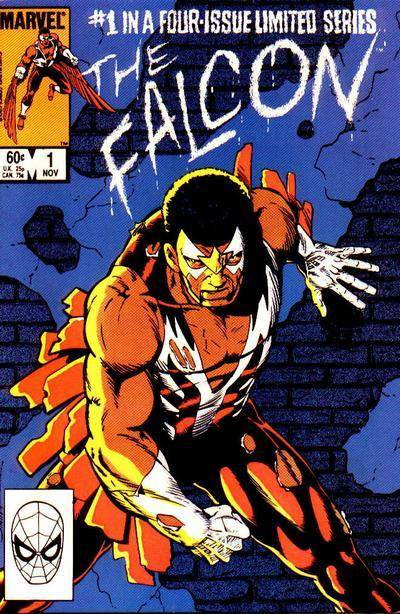
He starred in a try-out solo story in Marvel Premiere and then his own miniseries, the first issue of which featured a striking cover by X-Men artist Paul Smith. It put the spotlight on the tough looking version of The Falcon, who looked like he’d been through a fight but still remained defiant.
It remains one of the character’s most classic cover appearances.
The miniseries didn’t lead to his own series, but eventually the character rejoined the pages of The Avengers and has taken a prominent spot in some stories, particularly those during the tenure of writer Geoff Johns. He also teamed-up with Captain America again in a short-lived second title, Captain America & The Falcon.
Of course, his film appearance in Captain America: The Winter Soldier brought the character to a whole new audience, leading to his present MCU incarnation as Captain America and numerous storylines in the comics themselves.
– J.C. Vaughn

Popular Topics
Overstreet Access Quick Links
COVER STORY: The Falcon #1
Marvel Comics; 60¢
What makes the best comic book covers? It’s a great topic for debate. For us as individuals there is no wrong answer, of course. It’s purely subjective. But with a little thought it is frequently possible to explain what it is about a particular image that grabs you. The best ones are the ones that make you stop and check out something you weren’t previously going to purchase – and in some cases, you even end up picking up a title you’ve never even heard of before.
The late 1960s and the 1970s were times of change in American culture, and this was reflected in superhero comics, which had become much more in tune with contemporary youth during the early years of Marvel Comics. One of the major areas of change during that period was race relations, and creators at the major comics publishers moved to include African American characters. Black Panther joined the Marvel universe and very quickly become a member of the Avengers. Slowly, other characters like Black Lightning at DC and Black Goliath at Marvel joined the ranks. Many of them, at least at first, had the word “black” in their name, almost as if it was required. But did you know one of the most prominent African American characters from this time was The Falcon?
First seen in Captain America #117, Sam Wilson was a street-savvy crime fighter on the neighborhood level. The Falcon quickly teamed up with Captain America, and by #134 the cover proclaimed a new title: Captain America & The Falcon, which became the first black and white duo in superhero comics. It would run that way for just about 90 issues before the characters theoretically went their own ways.
Along the way, readers discovered his true origins, changed costumes, got his famous wings (a gift from Black Panther), discovered his mutant ability to communicate with his bird, Redwing, and found out just what made him tick.
Even after his departure as a regular character in Captain America, the team-ups didn’t end. Falcon has been a member of the Avengers, once forced on the team as part of government regulations (complete with contentious supporters and detractors, much like one might expect in the real world), and later as an invited member.
He starred in a try-out solo story in Marvel Premiere and then his own miniseries, the first issue of which featured a striking cover by X-Men artist Paul Smith. It put the spotlight on the tough looking version of The Falcon, who looked like he’d been through a fight but still remained defiant.
It remains one of the character’s most classic cover appearances.
The miniseries didn’t lead to his own series, but eventually the character rejoined the pages of The Avengers and has taken a prominent spot in some stories, particularly those during the tenure of writer Geoff Johns. He also teamed-up with Captain America again in a short-lived second title, Captain America & The Falcon.
Of course, his film appearance in Captain America: The Winter Soldier brought the character to a whole new audience, leading to his present MCU incarnation as Captain America and numerous storylines in the comics themselves.
– J.C. Vaughn
Popular Topics
Overstreet Access Quick Links