



RETRO REVIEW: Captain America #253-254
Marvel Comics; 50¢ each
In the light of some of the long and influential tenures on Marvel's Captain America, it might not seem like a brief nine-issue run that began with the July 1980 cover-dated Captain America #247 and ended with the March 1981 cover-dated Captain America #255 would be that much of a stand-out.
But it is.
Writer Roger Stern and artist John Byrne each had already impressive rosters of credits individually before they were teamed with inker Josef Rubinstein for their run on Captain America.
Stern served as editor for Byrne's initial run on X-Men with writer Chris Claremont, and he had also scripted a Rog-2000 story before Byrne's tenure. They would also go on to collaborate on other work at Marvel as well as working individually, and of course both contributed extensively to DC's Superman mythos.
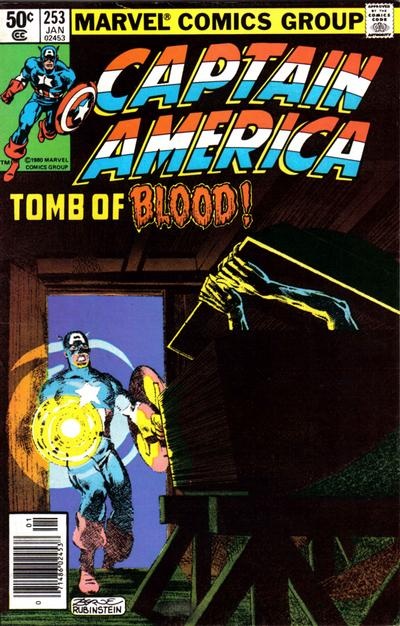
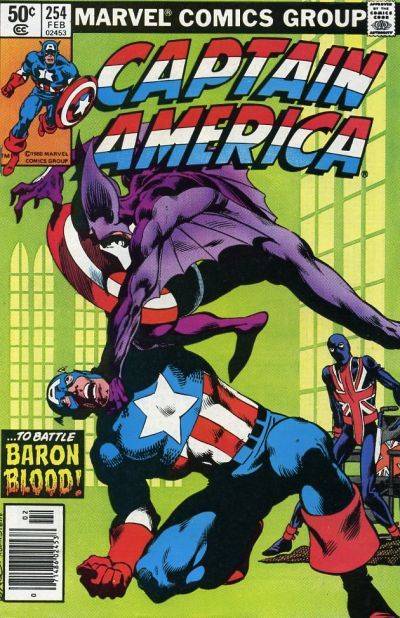
Quite simply, every issue they produced is a gem. It's difficult to pick the best story in the series – the "Cap for President" story in #250 would have to be considered – but the return of Baron Blood in Captain America #253 and #254 would get my vote.
The Invaders
This two-part story wouldn't have been possible if Captain America and Baron Blood hadn't tangled during World War II, and that, in turn, wouldn't have been possible if writer Roy Thomas and artist Frank Springer hadn't created The Invaders (1975-1979).
The series chronicled the World War II retro-continuity adventures of Captain America, Bucky, the original Human Torch, Toro, and the Sub-Mariner. The series gave Thomas a venue to showcase his impressive knowledge of Marvel's (Timely's) Golden Age heroes and fit their histories together with the then-modern Marvel universe.
During the run, he was able to relaunch older characters and launch new ones, including the Liberty Legion (Invaders #5), Spitfire (#12), the Kid Commandos (#28), and the formation of the villainous Super-Axis (#41). As fun as they were, most of them paled in comparison to the introduction of Union Jack (Invaders #7).
Lord James Montgomery Falsworth was a British aristocrat who had fought German agents during World War I as the agent-adventurer Union Jack. The character had no superhuman powers, relying instead on his athletic ability, combat training, and skill with weapons.
That same issue introduced and the threat of Baron Blood.
Baron Blood
Like Union Jack, Baron Blood's first appearance came in Invaders #7. Union Jack had battled Baron Blood during the first war, but had never actually defeated him. The Baron had reappeared, fighting on the side of the Nazis.
The details of the character's origin played out in the pages of Invaders #8 and Invaders #9. Bitter about being passed over for an inheritance, Lord Falsworth's younger brother, John had disappeared before the first World War. Years later, his son, also named John, appeared, telling the family that his father had been murdered in the Far East years earlier.
The story John told definitely left out some details. First, he wasn't John's son, he was actually John, who had had discovered the crypt of Dracula and been turned into a vampire for his troubles. Nazi scientists had given him the ability to endure small amounts of sunlight, unlike vampires of legend.
The Invaders, with Union Jack now as a member, battled Baron Blood. The battle left Lord Falsworth permanently disabled and Baron Blood – apparently – finally dead.
Other than flashbacks in Invaders #11 and #12, the character would not appear again until final two issues of the series, Invaders #40 and #41. For a character with such impact, it's a rather small number of appearances.
He would not show up again until Roger Stern and John Byrne brought him back for the two-part Captain America story.
The Story
With the possibility that a vampire was on the loose, Captain America arrived in England at the request of the aging Lord Falsworth, still forced to use a wheelchair decades after their World War 2 battle with Baron Blood. His daughter, Jacqueline Falsworth, who had been transformed into Spitfire during the war, but her powers had faded with time.
Lord Falsworth was convinced that Baron Blood had returned. Others were more skeptical, but Captain America agrees to investigate.
Naturally, Falsworth was right and Cap squares off against the vampire.
The climactic battle between Cap and Baron Blood has the kind of grit, connective tissue, and oomph on which the Marvel universe was built. With Lord Falsworth gravely weakened, Captain America is forced to destroy Baron Blood by decapitating him with his shield.
As a bookend to the story from Invaders #7-9, the tale of the two brothers and mortal enemies ends with Baron Blood destroyed and Lord Falsworth passing away.
How It Stands Up
The Baron Blood two-parter has remained a favorite among fans of Stern and Byrne's brief but celebrated time on the series. The duo co-plotted their stories. Stern had Captain America's voice down pat with not even the hint of a wrong note. Byrne's art told the story in equally pitch perfect style. Josef Rubinstein's inks added a different level of atmosphere – particularly in this story – than Terry Austin (whose work over Byrne is beyond outstanding) might have in that same period.
It reads as strong today as it did back when it was first released, which is great to be able to say.
Worth Noting
Both Union Jack and Baron Blood received later incarnations in the Marvel universe in the years after this story. It's hard to imagine a better costume than the one Frank Robbins cooked up for Union Jack, which might be part of the reason creators are drawn to revive him.
– J.C. Vaughn

Popular Topics
Overstreet Access Quick Links
RETRO REVIEW: Captain America #253-254
Marvel Comics; 50¢ each
In the light of some of the long and influential tenures on Marvel's Captain America, it might not seem like a brief nine-issue run that began with the July 1980 cover-dated Captain America #247 and ended with the March 1981 cover-dated Captain America #255 would be that much of a stand-out.
But it is.
Writer Roger Stern and artist John Byrne each had already impressive rosters of credits individually before they were teamed with inker Josef Rubinstein for their run on Captain America.
Stern served as editor for Byrne's initial run on X-Men with writer Chris Claremont, and he had also scripted a Rog-2000 story before Byrne's tenure. They would also go on to collaborate on other work at Marvel as well as working individually, and of course both contributed extensively to DC's Superman mythos.
Quite simply, every issue they produced is a gem. It's difficult to pick the best story in the series – the "Cap for President" story in #250 would have to be considered – but the return of Baron Blood in Captain America #253 and #254 would get my vote.
The Invaders
This two-part story wouldn't have been possible if Captain America and Baron Blood hadn't tangled during World War II, and that, in turn, wouldn't have been possible if writer Roy Thomas and artist Frank Springer hadn't created The Invaders (1975-1979).
The series chronicled the World War II retro-continuity adventures of Captain America, Bucky, the original Human Torch, Toro, and the Sub-Mariner. The series gave Thomas a venue to showcase his impressive knowledge of Marvel's (Timely's) Golden Age heroes and fit their histories together with the then-modern Marvel universe.
During the run, he was able to relaunch older characters and launch new ones, including the Liberty Legion (Invaders #5), Spitfire (#12), the Kid Commandos (#28), and the formation of the villainous Super-Axis (#41). As fun as they were, most of them paled in comparison to the introduction of Union Jack (Invaders #7).
Lord James Montgomery Falsworth was a British aristocrat who had fought German agents during World War I as the agent-adventurer Union Jack. The character had no superhuman powers, relying instead on his athletic ability, combat training, and skill with weapons.
That same issue introduced and the threat of Baron Blood.
Baron Blood
Like Union Jack, Baron Blood's first appearance came in Invaders #7. Union Jack had battled Baron Blood during the first war, but had never actually defeated him. The Baron had reappeared, fighting on the side of the Nazis.
The details of the character's origin played out in the pages of Invaders #8 and Invaders #9. Bitter about being passed over for an inheritance, Lord Falsworth's younger brother, John had disappeared before the first World War. Years later, his son, also named John, appeared, telling the family that his father had been murdered in the Far East years earlier.
The story John told definitely left out some details. First, he wasn't John's son, he was actually John, who had had discovered the crypt of Dracula and been turned into a vampire for his troubles. Nazi scientists had given him the ability to endure small amounts of sunlight, unlike vampires of legend.
The Invaders, with Union Jack now as a member, battled Baron Blood. The battle left Lord Falsworth permanently disabled and Baron Blood – apparently – finally dead.
Other than flashbacks in Invaders #11 and #12, the character would not appear again until final two issues of the series, Invaders #40 and #41. For a character with such impact, it's a rather small number of appearances.
He would not show up again until Roger Stern and John Byrne brought him back for the two-part Captain America story.
The Story
With the possibility that a vampire was on the loose, Captain America arrived in England at the request of the aging Lord Falsworth, still forced to use a wheelchair decades after their World War 2 battle with Baron Blood. His daughter, Jacqueline Falsworth, who had been transformed into Spitfire during the war, but her powers had faded with time.
Lord Falsworth was convinced that Baron Blood had returned. Others were more skeptical, but Captain America agrees to investigate.
Naturally, Falsworth was right and Cap squares off against the vampire.
The climactic battle between Cap and Baron Blood has the kind of grit, connective tissue, and oomph on which the Marvel universe was built. With Lord Falsworth gravely weakened, Captain America is forced to destroy Baron Blood by decapitating him with his shield.
As a bookend to the story from Invaders #7-9, the tale of the two brothers and mortal enemies ends with Baron Blood destroyed and Lord Falsworth passing away.
How It Stands Up
The Baron Blood two-parter has remained a favorite among fans of Stern and Byrne's brief but celebrated time on the series. The duo co-plotted their stories. Stern had Captain America's voice down pat with not even the hint of a wrong note. Byrne's art told the story in equally pitch perfect style. Josef Rubinstein's inks added a different level of atmosphere – particularly in this story – than Terry Austin (whose work over Byrne is beyond outstanding) might have in that same period.
It reads as strong today as it did back when it was first released, which is great to be able to say.
Worth Noting
Both Union Jack and Baron Blood received later incarnations in the Marvel universe in the years after this story. It's hard to imagine a better costume than the one Frank Robbins cooked up for Union Jack, which might be part of the reason creators are drawn to revive him.
– J.C. Vaughn
Popular Topics
Overstreet Access Quick Links