



RETRO REVIEW: The New Teen Titans #13
DC Comics; 60¢
Marv Wolfman and George Pérez kicked off the second year of their New Teen Titans series with one of the best issues of their entire run, the November 1981 cover-dated The New Teen Titans #13. One issue after a 10¢ cover price increase provided DC's issues with more story pages, the creative duo took full advantage of the extra space and packed extra adventure, suspense, and danger into the issue.
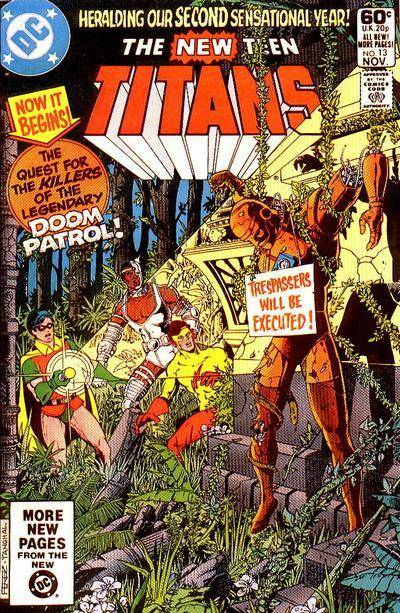
And it kicked off with an exceptional cover that grabbed readers and shouted "Read me!"
Background: The Teen Titans
The super team debuted in The Brave and the Bold #54 (June-July 1964) by writer Bob Haney and artist Bruno Premiani. It teamed Robin, Kid Flash, and Aqualad.
Wonder Girl joined the group in The Brave and the Bold #60 (June-July 1965). The team name, the Teen Titans, was also introduced in that issue.
After appearing in Showcase #59 (December 1965), their ongoing series launched Teen Titans #1 (January-February 1966), written by Haney and illustrated by Nick Cardy. This began a series that would run through Teen Titans #43 (February 1973). It would return for another 10 issues beginning with Teen Titans #44 (November 1976) and ending with Teen Titans #53 (February 1978).
It's definitely worth noting that the series featured some stunning covers by Cardy, and they're among the best covers of that era.
Wolfman, George Pérez, inker Romeo Tanghal and editor Len Wein introduced the revived team in the pages of DC Comics Presents #26 (October 1980), which was quickly followed by New Teen Titans #1 (November 1980). Robin, Wonder Girl, and Kid Flash returned with Beast Boy (renamed Changeling) and new characters Cyborg, Raven, and Starfire. The series was an immediate hit.
Background: The Doom Patrol
Led by Niles Caulder (also known as the Chief), Robotman, Negative Man, and Elasti-Girl were reluctant heroes whose extraordinary abilities made them outcasts to normal society, much in the mold of Marvel's X-Men. They debuted in My Greatest Adventure #80 (June 1963) from writers Arnold Drake and Bob Haney, artist Bruno Premiani, and editor Murray Boltinoff.
The feature proved popular enough that My Greatest Adventure was retitled Doom Patrol with #86 (March 1964). The series introduced such foes as General Immortus, the Brotherhood of Evil, and Madame Rouge.
The series had a dramatic conclusion, one that was highly unusual for comics of the Silver Age era. In Doom Patrol #121 (September–October 1968), in a story written by Drake and illustrated by Premiani, Madame Rouge and Captain Zahl trap the team and force them to choose to choose between their own lives and those of 14 innocent people. The Chief, Robotman, Negative Man, and Elasti-Girl sacrifice themselves and they apparently die in an explosion. It's a distinctive end for such a distinctive team.
The title would be brought back for three reprint issues in 1973, but it wouldn't be until Showcase #94 (August 1977) that writer Paul Kupperberg, artist Joe Staton, and editor Paul Levitz would revive the concept with Robotman and newcomers Celsius, Negative Woman, and Tempest. The new Doom Patrol also appeared in Showcase #95 (November 1977) and Showcase #96 (January 1978).
The Story
On the surface, things were pretty normal (at least for the relentless pace Wolfman and Pérez had set): the team split up on different quests. While Changeling's life hung in the balance as he received medical treatment on Paradise Island, Raven and Starfire were immersed in the island's culture. At the same time, Cyborg, Robin, and Kid Flash continued Changeling's search for Steve Dayton and the Doom Patrol.
What they found started with the fantastic Pérez and Tanghal cover depicting a battered and perhaps dead Robotman hung up as a warning to go no further. In the hands of lesser creators, this alone would have been enough for a great issue.
At every turn, though, Wolfman and Pérez peeled back layers and added character moments. By the time they were done, even readers who never heard of the Doom Patrol previously wanted their killers brought to justice.
The pacing, dialogue, and art all worked together brilliantly. The issue was an instant classic, and it remains highly readable today.
Worth Noting
The New Teen Titans was a big hit in its time. It spawned annuals and mini-series, and it introduced lasting new characters such as Deathstroke The Terminator. The series ran 40 issues before being retitled Tales of the Teen Titans in 1984. At that same time, DC launched an upgraded format New Teen Titans with the same creative team. Since then, the Teen Titans have had several new incarnations, as have the Doom Patrol.
– J.C. Vaughn

Popular Topics
Overstreet Access Quick Links
RETRO REVIEW: The New Teen Titans #13
DC Comics; 60¢
Marv Wolfman and George Pérez kicked off the second year of their New Teen Titans series with one of the best issues of their entire run, the November 1981 cover-dated The New Teen Titans #13. One issue after a 10¢ cover price increase provided DC's issues with more story pages, the creative duo took full advantage of the extra space and packed extra adventure, suspense, and danger into the issue.
And it kicked off with an exceptional cover that grabbed readers and shouted "Read me!"
Background: The Teen Titans
The super team debuted in The Brave and the Bold #54 (June-July 1964) by writer Bob Haney and artist Bruno Premiani. It teamed Robin, Kid Flash, and Aqualad.
Wonder Girl joined the group in The Brave and the Bold #60 (June-July 1965). The team name, the Teen Titans, was also introduced in that issue.
After appearing in Showcase #59 (December 1965), their ongoing series launched Teen Titans #1 (January-February 1966), written by Haney and illustrated by Nick Cardy. This began a series that would run through Teen Titans #43 (February 1973). It would return for another 10 issues beginning with Teen Titans #44 (November 1976) and ending with Teen Titans #53 (February 1978).
It's definitely worth noting that the series featured some stunning covers by Cardy, and they're among the best covers of that era.
Wolfman, George Pérez, inker Romeo Tanghal and editor Len Wein introduced the revived team in the pages of DC Comics Presents #26 (October 1980), which was quickly followed by New Teen Titans #1 (November 1980). Robin, Wonder Girl, and Kid Flash returned with Beast Boy (renamed Changeling) and new characters Cyborg, Raven, and Starfire. The series was an immediate hit.
Background: The Doom Patrol
Led by Niles Caulder (also known as the Chief), Robotman, Negative Man, and Elasti-Girl were reluctant heroes whose extraordinary abilities made them outcasts to normal society, much in the mold of Marvel's X-Men. They debuted in My Greatest Adventure #80 (June 1963) from writers Arnold Drake and Bob Haney, artist Bruno Premiani, and editor Murray Boltinoff.
The feature proved popular enough that My Greatest Adventure was retitled Doom Patrol with #86 (March 1964). The series introduced such foes as General Immortus, the Brotherhood of Evil, and Madame Rouge.
The series had a dramatic conclusion, one that was highly unusual for comics of the Silver Age era. In Doom Patrol #121 (September–October 1968), in a story written by Drake and illustrated by Premiani, Madame Rouge and Captain Zahl trap the team and force them to choose to choose between their own lives and those of 14 innocent people. The Chief, Robotman, Negative Man, and Elasti-Girl sacrifice themselves and they apparently die in an explosion. It's a distinctive end for such a distinctive team.
The title would be brought back for three reprint issues in 1973, but it wouldn't be until Showcase #94 (August 1977) that writer Paul Kupperberg, artist Joe Staton, and editor Paul Levitz would revive the concept with Robotman and newcomers Celsius, Negative Woman, and Tempest. The new Doom Patrol also appeared in Showcase #95 (November 1977) and Showcase #96 (January 1978).
The Story
On the surface, things were pretty normal (at least for the relentless pace Wolfman and Pérez had set): the team split up on different quests. While Changeling's life hung in the balance as he received medical treatment on Paradise Island, Raven and Starfire were immersed in the island's culture. At the same time, Cyborg, Robin, and Kid Flash continued Changeling's search for Steve Dayton and the Doom Patrol.
What they found started with the fantastic Pérez and Tanghal cover depicting a battered and perhaps dead Robotman hung up as a warning to go no further. In the hands of lesser creators, this alone would have been enough for a great issue.
At every turn, though, Wolfman and Pérez peeled back layers and added character moments. By the time they were done, even readers who never heard of the Doom Patrol previously wanted their killers brought to justice.
The pacing, dialogue, and art all worked together brilliantly. The issue was an instant classic, and it remains highly readable today.
Worth Noting
The New Teen Titans was a big hit in its time. It spawned annuals and mini-series, and it introduced lasting new characters such as Deathstroke The Terminator. The series ran 40 issues before being retitled Tales of the Teen Titans in 1984. At that same time, DC launched an upgraded format New Teen Titans with the same creative team. Since then, the Teen Titans have had several new incarnations, as have the Doom Patrol.
– J.C. Vaughn
Popular Topics
Overstreet Access Quick Links