



Creator Profile: Morrie Turner
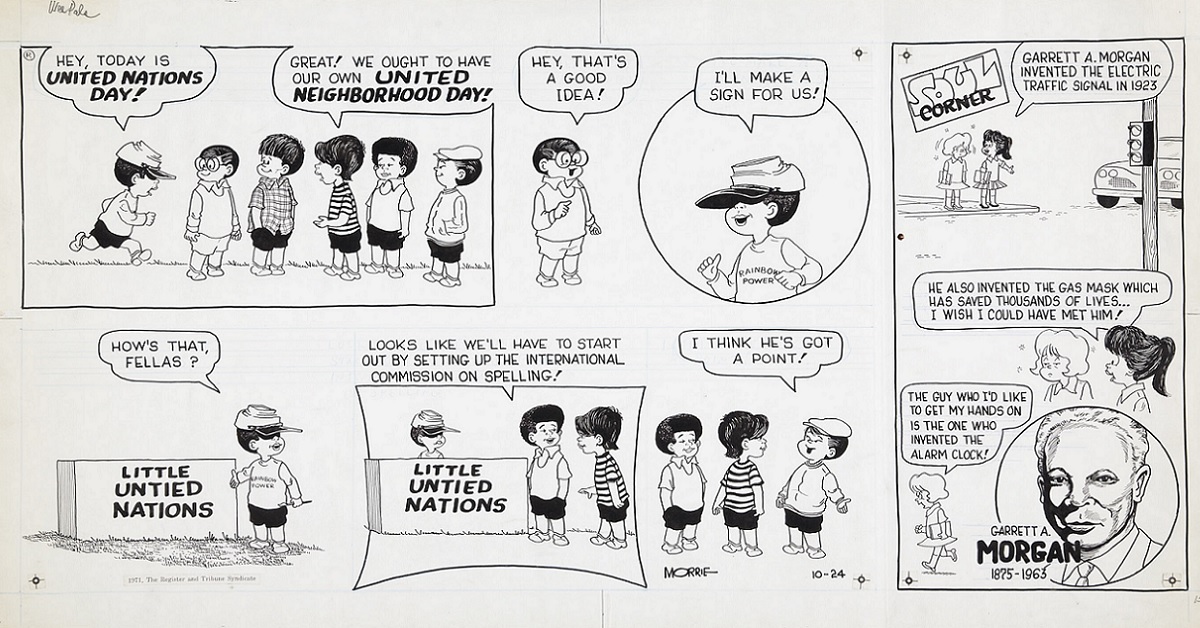
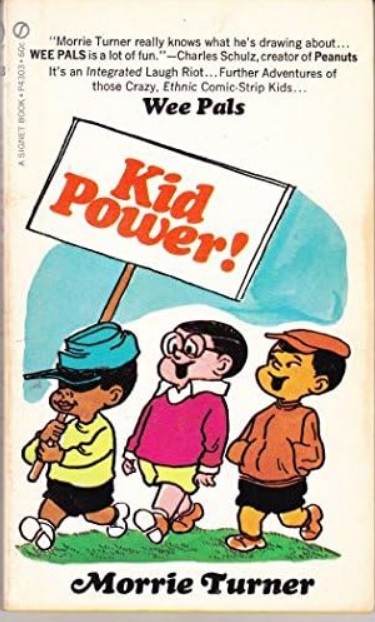
Did you know that cartoonist Morrie Turner created the first American syndicated comic strip featuring a racially integrated cast of characters?
Born in Oakland, California in 1923, Turner began drawing cartoons during elementary school. By the time he was in high school, Turner planned to pursue a career as a professional cartoonist. He began his professional cartooning career during his military service in World War II. Turner was a mechanic with the Tuskegee Airmen and provided illustrations for the Stars and Stripes military newspaper.
After his service ended, Turner worked with the Oakland Police Department and created the Baker’s Helper comic strip. In 1963, Turner joined the Association of California Cartoonists and Gag Artists where he became friends with well known cartoonists like Charles Schulz and Bil Keane. He wanted to help the Civil Rights Movement and talked to Schulz about how people of color were not well represented in comics. Schulz suggested that Turner create a strip based on his experiences and starring Black characters.
Turner created Dinky Fellas with an all-Black cast, but the Chicago Defender was the only paper that picked it up. He revised the strip by giving it a diverse cast with the aim of producing a wholesome, multicultural strip with child characters who weren’t prejudiced based on race
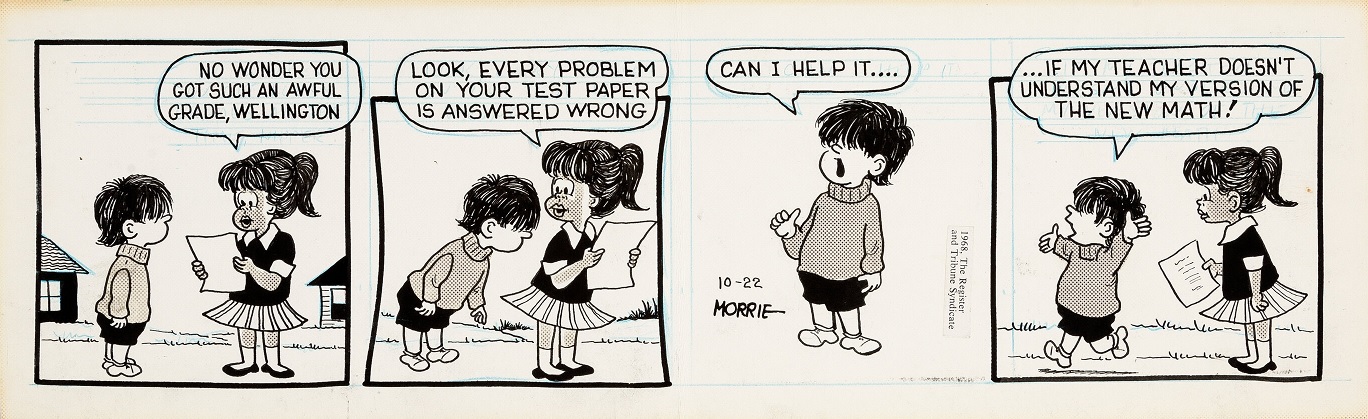
Only five newspapers took a chance on Wee Pals in 1965. It would be three years before the strip caught on, and its heightened popularity is attributed in part to Dr. Martin Luther King Jr.’s assassination in 1968. After King’s passing and the sociopolitical tensions that arose as a result, audiences sought artistic endeavors that championed the causes King fought for. Morrie Turner’s Wee Pals was one such work of art. The strip eventually appeared in 100 papers that year.
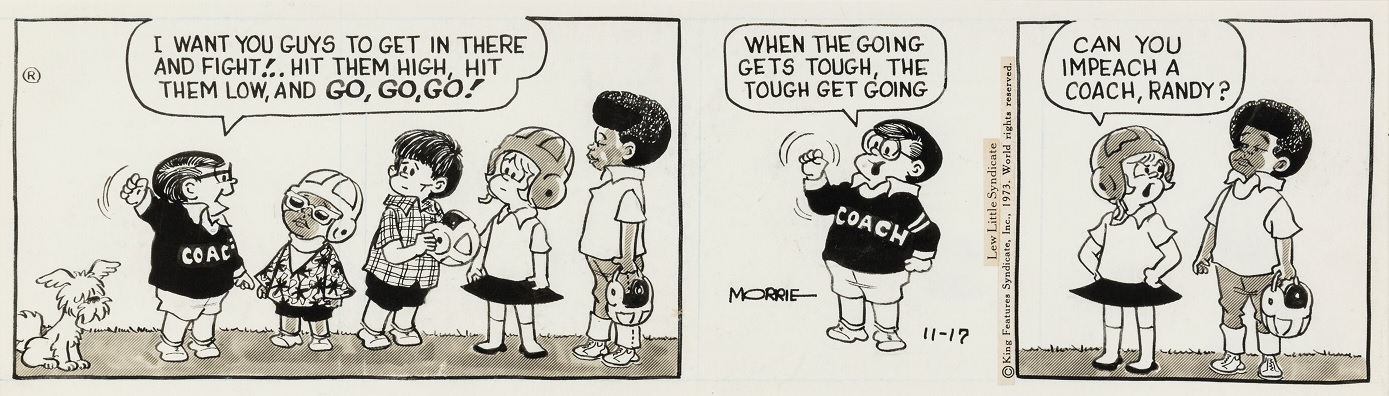
He made two appearances on Mister Rogers’ Neighborhood to talk about the comic strip and its characters. Wee Pals was adapted as the live-action TV series Wee Pals on the Go, which ran in 1972 to ’73. As the comic strip continued to gain popularity, Turner added new characters with other ethnicities and children living with physical disabilities.
The National Cartoonist Society invited him and five other cartoonists to visit US soldiers in Vietnam. Turner spent 27 days on the front lines and in hospitals, drawing more than 3,000 caricatures of service people.
In ’95, Turner launched summer art exhibitions at the East Oakland Youth Development Center.

Popular Topics
Overstreet Access Quick Links
Creator Profile: Morrie Turner
Did you know that cartoonist Morrie Turner created the first American syndicated comic strip featuring a racially integrated cast of characters?
Born in Oakland, California in 1923, Turner began drawing cartoons during elementary school. By the time he was in high school, Turner planned to pursue a career as a professional cartoonist. He began his professional cartooning career during his military service in World War II. Turner was a mechanic with the Tuskegee Airmen and provided illustrations for the Stars and Stripes military newspaper.
After his service ended, Turner worked with the Oakland Police Department and created the Baker’s Helper comic strip. In 1963, Turner joined the Association of California Cartoonists and Gag Artists where he became friends with well known cartoonists like Charles Schulz and Bil Keane. He wanted to help the Civil Rights Movement and talked to Schulz about how people of color were not well represented in comics. Schulz suggested that Turner create a strip based on his experiences and starring Black characters.
Turner created Dinky Fellas with an all-Black cast, but the Chicago Defender was the only paper that picked it up. He revised the strip by giving it a diverse cast with the aim of producing a wholesome, multicultural strip with child characters who weren’t prejudiced based on race
Only five newspapers took a chance on Wee Pals in 1965. It would be three years before the strip caught on, and its heightened popularity is attributed in part to Dr. Martin Luther King Jr.’s assassination in 1968. After King’s passing and the sociopolitical tensions that arose as a result, audiences sought artistic endeavors that championed the causes King fought for. Morrie Turner’s Wee Pals was one such work of art. The strip eventually appeared in 100 papers that year.
He made two appearances on Mister Rogers’ Neighborhood to talk about the comic strip and its characters. Wee Pals was adapted as the live-action TV series Wee Pals on the Go, which ran in 1972 to ’73. As the comic strip continued to gain popularity, Turner added new characters with other ethnicities and children living with physical disabilities.
The National Cartoonist Society invited him and five other cartoonists to visit US soldiers in Vietnam. Turner spent 27 days on the front lines and in hospitals, drawing more than 3,000 caricatures of service people.
In ’95, Turner launched summer art exhibitions at the East Oakland Youth Development Center.
Popular Topics
Overstreet Access Quick Links